Successful Blog

  • Home
  • Community
  • About
  • Author Guidelines
  • Liz’s Book
  • Stay Tuned

Why Automated Link Building is Bad For Your Business

March 22, 2013 by Rosemary

By Rob James

A few years ago, it was common practice for businesses and Search Engine Optimisation marketers to use automated link building to increase links to their sites, with the aim of boosting a website’s PageRank in Google. However, with Google clamping down on “black hat” SEO strategies in their Penguin and Panda algorithm updates, automated link building isn’t going to do your business many favours; instead, it’s better to focus on “white hat” and organic SEO to get the most out of search.

Primarily, automated link building is all about quantity, whereby you run software and join directories to multiply the number of backlinks to your page – blog comments, and filling blogs with low quality repeated content could also enable a single website to generate large numbers of links. However, while this might be an effective method for building up a page’s ranking, automated link building is less invested in getting good quality links from relevant sites, and has been increasingly punished by Google.

The main problem that Google has with automated link building is that it can effectively represent a form of spam – multiple links from low quality sites, or spamming comments boards with links, and posting content with awkwardly placed content distorts the actual relevancy of a page for users. In this context, your business may have a high search ranking, but not one that’s necessarily made up of the right kinds of associations.

Google’s Panda and Penguin algorithm updates were consequently designed to prevent PageRank, the main Google algorithm, from being manipulated. Panda has received 24 updates since February 2011, and crawls pages for low quality features and links to duplicate content – the emphasis with Panda is on duplicated and “thin” content, where the use of links isn’t contextually motivated, and closer to spam.

By comparison, Google Penguin, introduced in April 2012, comes down even harder on automated link building through directories – if you have a portfolio of links that are mostly from link farms and other low quality sites, then Penguin will ignore or rank these links as less relevant. It’s not perfect, but it means that Penguin is going to punish your ranking if you have too many links from low quality pages.

So, what kind of actions can you take to improve your SEO without automated link building? The most straightforward method is to focus on creating original content, and on getting high quality guest posts on blogs and pages that aren’t going to get singled out by Penguin – while there are ongoing questions about how effective Google can be at identifying the right pages to disregard, it’s clear that businesses will have to spend more time on creating great content.

It’s also important to optimise existing content and pages, and to ensure that your HTML and CSS on pages is clearly set up to ensure that they can be picked up by search engines; moreover, businesses can do their SEO a big favour by investing in social media content, which can be easily shared and recommended via social toolbars and buttons. The more organic links that you get from high ranking, trusted sites, the higher the chance will be that Google will increase the value of your own website.
Author’s Bio: Rob James is an online marketer and recommends DeepBlueSky web design to help you build a high quality site. In his spare time Rob can be found blogging about the many different linking techniques out there, which ones to apply, and which ones to avoid!

Filed Under: Blog Basics, Content, Links, SEO, Successful Blog Tagged With: bc, link-building, Links, Panda, Penguin, SEO

How to Stop the Content Scrapers

March 14, 2013 by Rosemary

Imitation is the sincerest form of flattery. Right?

Except when someone has done a wholesale ripoff of your creative idea or blog post.

For anyone who produces online content, it’s crucial to protect your assets.

Make Life Difficult for the Thieves

Alert the readers

It’s good practice to do spot checks on your best blog posts, to make sure they haven’t fallen victim to the “content scrapers” who ruthlessly roam the web looking for content to steal. Just go to Google’s Advanced Search and type the title (or a sentence) from your post in the “exact phrase match” box.

The silver lining for these automated scrapers is that they often take the whole post without a human reading it, so you can add a note to the end of the post that will notify readers of the original source (you’ll want to include a link to your actual site):

This post originally appeared on Rosemary’s Best Blog Site. If you’re not reading this via email or RSS feed from Rosemary’s Best Blog Site, it may have been stolen.

Check referring links

In your Google Analytics, look at your referred traffic periodically (you probably already do this). If you see anything suspicious, check the source.

Watermark

Any visual content you post, including photos and videos, should have your site name or logo watermarked on it. That way, even if it’s stolen, you’re getting credit. One option is an application like VisualWatermark.com.

Excerpts only

Try changing your RSS feed to excerpts only. The scrapers often like to use RSS feeds as a funnel for content; if you’re only sending excerpts, you’ve made their job much more difficult. The Advanced Excerpt plugin for WordPress is one way to do this.

How to Do a DMCA Takedown Request

Use a “whois” lookup to find out who the web host is for the site with your stolen content.

Most web hosts will have a DMCA form on their site for you to submit your claim. Click here to see Google’s copyright infringement form (if the content happens to be on a Google-hosted site like a Blogger blog).

Unfortunately, tracking down those who have stolen your content can be like a big game of “Whack-a-Mole.” But if you take precautions that make it harder for the scrapers to get your posts, maybe they’ll pass you by.

How have you dealt with the content thieves? Please share any special tips with us.

Author’s Bio: Rosemary O’Neill is an insightful spirit who works for social strata — a top ten company to work for on the Internet . Check out the Social Strata blog. You can find Rosemary on Google+ and on Twitter as @rhogroupee

Filed Under: Blog Basics, Content, Links, Successful Blog, Writing Tagged With: bc, copyright, DMCA, Plagiarism, scraping

Solve Communication Breakdowns with Your Blog

March 5, 2013 by Rosemary

By Brian Milne

Communication Breakdown,
It’s always the same,
Havin’ a nervous breakdown,
Drive me insane!

– Led Zeppelin, “Communication Breakdown”

Is it just me, or is all of this technology that’s “connecting us” actually discouraging real communication.

By definition, communication is an “exchange of information,” but even Webster suggests it should include a “personal rapport.”

But in today’s fast-paced, attention-deficit world, personal phone calls have given way to occasional emails and text messages. And, in many cases today, those one-on-one messages are being replaced by shotgun Facebook and Twitter blasts to a faceless social mediasphere.

So what about those defining moments in life, or business, that warrant more than 140 characters? Babies being born, companies doing actual good in the community and for the environment?

Those are the types of communications blogs were made for. Whether it’s a personal or corporate platform, your blog is your most important communication tool online.

Not only does the blog allow you to let your hair down, and write more freely about topics that will engage users, but it allows you to share that narrative with hundreds, thousands, even millions of readers.

And it allows you to complement your prose with strong images, videos and all of the other assets and plugins we can integrate into our blogs today.

But how do you make sure your blog doesn’t turn into another source of one-sided noise in this overly-saturated blogosphere? Here are six tips to help turn your blog into a two-way communication tool.

Use the Blog Often, and Well

They say quality over quantity. I say quantity AND quality.

For a majority of the blogosphere, blogs are successful because they do both. Their content is solid, so it gets shared. Their content is frequent, so it gets traffic.

A good blog is a two-headed monster, and you have to feed it often if you want your site to become a beast to be reckoned with online.

Don’t have time to blog as often as you’d like? Here are 10 tips for finding more time to blog.

Use the Blog to Keep Connections Updated

Ever have a situation where you’re traveling in a remote place, or are in the middle of an adventure and don’t have time to update all of your friends on your whereabouts? The blog is a great vehicle for updating the masses on your situation.

I used this same approach in 2007 when I paddled nearly 100 miles of California’s coast, and again this past fall with a photo blog from McCovey Cove during the World Series.

Posting updates to your blog will not only keep your friends and family informed, but it also saves you time so you don’t have to reach out to everyone in your social circle to give them a unique update.

Use the Blog to Share and Engage

For corporate blogs, running diaries like the examples above probably aren’t realistic, but taking the same, real-time updates approach will work for major events and conferences when content ideas are coming your way at a furious pace.

Take advantage of these events (which are content gold mines) by posting frequently around the topics and using social media (and the appropriate hashtags) to promote your work, because these types of milestones are often more timely and newsworthy than everyday posts.

Use the Blog to Collaborate

Have you ever thought of your blog as a collaboration tool?

Active online communities and blogs have amazing potential when it comes to collaborating online.

Turn your blog into a collaboration tool by: concluding posts with open-ended questions to drive reader comments, driving interaction through mobile engagement, and embedding polls, surveys and forms to pull user-generated content from the community.

The key is driving at that engagement and making sure your blog isn’t just a one-way communication.

Use the Blog to Motivate

The best part about having a phone conversation with a friend, colleague or mentor that you respect, is that the call is a two-way conversation.

Two-way conversations help resolve issues, breed new ideas and inspire and motivate both sides to strive for more.

Take the same approach on your blog.

The best posts in the blogosphere (think about all of the great content here on Successful-Blog.com) motivate and inspire, and your blog shouldn’t be any different.

Use the Blog to Listen

In conclusion, don’t just treat your blog as a one-way communication tool. Allow for comments on your posts.

Listen to and engage with those in the comments section and continue the conversation beyond the author tagline.

Take the discussion to your social networks to engage more connections in your social circle, and, gulp, even offline in the real world.

Imagine that, actually communicating with folks offline.

Robert Plant would be proud.

Author’s Bio: Brian Milne is the founder of the Hyped Blog Network and Meadows Interactive, an authorized seller of the WorkTraits behavioral assessment and work compatibility program. Share your communication tips and challenges with him on Twitter @BMilneSLO.

Filed Under: Blog Basics, Blog Comments, Content, Successful Blog Tagged With: bc, blog comments, blogging, communication

Who Is Your Marketing Content Written For?

February 19, 2013 by Guest Author

By James Ellis

Content marketers love to talk about the power of content. It slices, it dices, it makes unsightly blemishes disappear. Mix some with water to make a paste and it will polish the silver. Content is the cheat code of marketing

But when they talk about content, they usually focus on content that increases lead generation. That’s not a bad thing. We all love new leads. But content can do a number of different things. Content that excites and interests isn’t the same as content that convinces and assures.

So if content works at every level of the sales funnel (and I’m convinced that it can), you need some intentionality.

What do you want this content to do?

Break your sales cycle into stages. Everyone’s funnel is different depending on what book they’re reading at the time, but list every stage. What kind of content will speak to people at each and every single stage?

You might be concerned that your targets won’t know how to find the content for their stage, consider that people in each stage will be looking for different content and will use different terms depending on if they don’t know who you are and if they are trying to validate that you are the correct solution provider. At the awareness stage, their search terms will be about “how to fix…” while their validation stage might be “product name reviews.”

Having killer content at each stage in the sales funnel isn’t an accident. You need to be intentional and build for each stage.

Author’s Bio: James Ellis is a digital strategist, mad scientist, lover, fighter, drummer and blogger living in Chicago. You can reach out to him or just argue with his premise at saltlab.com.

Filed Under: Blog Basics, Content, Marketing /Sales / Social Media, Successful Blog, Writing Tagged With: bc, content marketing, lead generation, sales cycle, Writing

Google Quality Score – The Ultimate Guide

January 25, 2013 by Rosemary

By Deepak Gupta

Recently, Google took it upon itself to be the bastion of quality in the world of internet marketing. Every website promotion company is well aware of the recent search algorithm updates. However, it’s not only organic search that is being assessed by Google in terms of quality. Pay per click advertising or paid searches are subjected to quality checkpoints as well and in the end, a Quality Score is assigned to every keyword of your ad campaign.
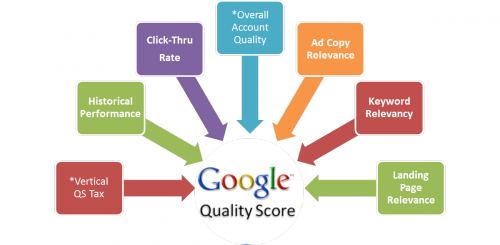
Google Quality Score Factors

According to the definition provided by Google itself: Quality Score is an estimate of how relevant your ads, keywords, and landing page are to a person seeing your ad. Having a high Quality Score means that our systems think your ad, keyword, and landing page are all relevant and useful to someone looking at your ad.
This definition may appear to be crystal clear, but very few marketers know how to deal with Quality Score. Here is a straightforward and simple guide that you can use in understanding Quality Score.

Understanding (not set) and (not provided) Keywords

Google Analytics (GA) is a tool that provides rich insights to a website promotion company as to how its paid search campaigns are doing. However, there are times that you cannot assess the quality of your campaigns because Google Analytics return (not set) or (not provided) keyword data when you extract a GA report. For a rookie website promotion company, this may be confusing and may even be used interchangeably although they are two very different concepts.

A (not set) keyword data occurs when something is missing between the GA tracking and the AdWords click. Typically, this happens with auto-tagging or when repetitive codes are found on pages or there are multiple GA accounts connected to your AdWords campaign.

Length of Display URL and CTR

An experienced website promotion company would know that a URL is not just a web address. In terms of PPC Quality Score, display URLs play a significant role, since one of the criteria used by Google to calculate for your Quality Score is the click through rates of your display URLs. Length and presentation of display URLs are critical factors as to whether searchers will click on your ad or not.

For one, Google will automatically add www to display URLs with fewer than 35 characters. Historical data will show that URLs without the www prefix get more clicks than those with the www prefix. Another not so known fact is that if you exceed the 35-character limit by two (37 characters) it is perfectly fine. Last, if you really can’t contain your URL within 35 characters, insert a few keywords so that when Google shortens it, your keywords are highlighted in the display URL. However, exercise extreme care as Google will decide how to shorten your URL. Basically, the rule of thumb is to target 35 characters without www.

The Surprise Perfect 10 and Pre-assigned Quality Scores

Getting a score of perfect 10 is every web promotion company’s dream. The excitement is equal to going viral in social media marketing services. But before you jump up and down, check for which keywords those perfect scores were given and most likely, you’ll find out that these keywords have zero impressions and zero clicks. Experts are now toying with and testing whether including “empty” keywords gets a perfect score of 10. Your ads won’t show up for these keywords. The goal is to increase the overall score for the entire campaign and raise an ad group’s eligibility for auctions.

Another crucial concept worth pointing out is that your ad groups and keywords have pre-assigned scores before you even launch your campaign and many experts have observed that most of these starting scores would be the end scores by the time a campaign is done. This particular information led PPC marketers to believe that you can actually modify your campaign’s architecture to boost your Google Quality Score even before you launch your ad campaign.

Multiple Groups for Keyword Match Type and Delaying the Use of Bid Management

Along with the campaign’s architecture, matching keyword types within ad groups can increase quality scores. To get the most impressions, it is encouraged that you use a number ad groups for all keyword match types that you want to target.

Finally, if your ad campaign is fresh and new, don’t use the automated bid management yet. Statistics will show that campaigns that were manually optimized during their early stages were more successful versus those that were introduced with the automated bid management system.

Google’s Definition of Quality Evolved

The Quality Score that every web promotion company is using today may not be the same a couple of years down the road. In fact, what Google considers as quality ad campaigns may not stand true in the near future. Who knows? Maybe social media marketing services will be closely tied into the PPC Quality Score. A lot of things can happen and the key is to always be on the lookout and satisfy whatever quality indicators there are.

Author’s Bio: The writer of this post is Deepak Gupta, who is an experienced internet marketing professional and active blogger. He is associated with a search engine optimization company in India that provides professional SEO services and takes care of the search engine marketing activities for clients.

Filed Under: Content, Links, Marketing /Sales / Social Media, SEO, Successful Blog Tagged With: bc, Google, optimization, quality score, SEO, social media marketing

Writers’ Resolutions for the New Year

January 23, 2013 by Rosemary

By Tiffany Matthews

One of the things that resonated with me as a writer during the new year is a wish that one of my favorite authors shared:

It’s a New Year and with it comes a fresh opportunity to shape our world.

So this is my wish, a wish for me as much as it is a wish for you: in the world to come, let us be brave – let us walk into the dark without fear, and step into the unknown with smiles on our faces, even if we’re faking them.

And whatever happens to us, whatever we make, whatever we learn, let us take joy in it. We can find joy in the world if it’s joy we’re looking for, we can take joy in the act of creation.

So that is my wish for you, and for me. Bravery and joy.

If you are familiar with this, then you know I’m talking about Neil Gaiman’s New Year’s wish. This is a wish that I feel resonates with every writer who is shaped by his or her experiences.

Bravery is a mantra that I think everyone should embrace this year, especially when we’ve been given a reprieve on doomsday last December. This is the year to make things happen and here are some resolutions that will help you achieve your writing goals.

Cruise, Drive, Fly

No matter how busy you are with writing, always set aside time for travel, to de-stress and unwind. Most writers, myself included, tend to be perfectionists and workaholics, which when combined can lead to being overworked and burned out. This is why taking a break every now and then is vital to keep your creative juices flowing.

Still not convinced? Perhaps this checklist can help shed light on why writers need to travel. Before you go on your adventure, keep in mind that travel is very unpredictable; therefore, it’s better to be prepared for the worst that could happen. Always take travel insurance with you as your backup plan.

Make a Booklist

You might wonder how a must-read list of books will help you achieve your writing goals. Author Stephen King in his book, On Writing: A Memoir of the Craft, shares this valuable piece of advice to writers:

“If you want to be a writer, you must do two things above all others: read a lot and write a lot. There’s no way around these two things that I’m aware of, no shortcut.”

The importance of reading is reiterated throughout his book, which is woven with his often humorous insights on writing as a craft. He further states, “Good description is a learned skill, one of the prime reasons why you cannot succeed unless you read a lot and write a lot.”

One Word at a Time

Getting published is one of writers’ dearest dreams, a dream that is riddled with hurdles like trying to survive daily life. Dreams don’t come true overnight and the reality is you have to work to survive. That doesn’t mean, however, that you can just abandon your dream of becoming an author. It can still happen, if you make it happen.

Set aside time to write for yourself and not just for work. You might feel overwhelmed at the sheer volume of words needed to create your book, but it’s never really about the words. It’s the story that you’re telling. Like what a friend of mine said when he paraphrased Lao Tzu’s famous quote, “The journey of a thousand words begins with one word.”

Swallow your fear and try to be brave as you take it one word at a time. Take comfort in what Stephen King said:

“The scariest moment is always just before you start. After that, things can only get better.”

Author’s Bio: Based in San Diego, California, Tiffany Matthews writes about travel, fashion and anything under the sun at wordbaristas.com. You can find her on Twitter as
@TiffyCat87.

Filed Under: Content, Idea Bank, Motivation, Successful Blog, Writing Tagged With: bc, joy, publish, reading, resolutions, Writing

  • « Previous Page
  • 1
  • …
  • 8
  • 9
  • 10
  • 11
  • 12
  • …
  • 28
  • Next Page »

Recently Updated Posts

Is Your Brand Fan Friendly?

How to Improve Your Freelancing Productivity

How to Leverage Live Streaming for Content Marketing

10 Key Customer Experience Design Factors to Consider

How to Use a Lead Generation Item on Facebook

How to Become a Better Storyteller


From Liz Strauss & GeniusShared Press

  • What IS an SOB?!
  • SOB A-Z Directory
  • Letting Liz Be

© 2025 ME Strauss & GeniusShared