Successful Blog

  • Home
  • Community
  • About
  • Author Guidelines
  • Liz’s Book
  • Stay Tuned

The Hotel, the Airline, and the Restaurant are all Publishers. Are You?

March 20, 2014 by Rosemary

At SOBCon Portland last year, I had the honor of interviewing Chris Erickson from the Heathman Hotel for one of our sessions. His hotel was in the news at the time because it had been used as the setting for the Fifty Shades of Grey books.

Rosemary ONeill Chris Erickson interview SOBCon Portland

However, as we all discovered, the hotel already had a well-deserved reputation for being forward-thinking long before E.L. James decided to give them a different type of fame.

One thing Chris said during our interview was, “I consider myself a publisher.”

There was definitely a moment of silence in the room as we all took that in. Imagining how far content marketing, social media, and digital outreach have come. A hotelier says he’s a publisher.

Chris explained that he considers it part of his job to produce content (in many different forms) that will support the Heathman’s reputation and business strategy.

But doesn’t it all go back a lot farther? The airlines have had in-flight magazines for quite a while now.

Chipotle is spending millions on well-executed mini-movies to sell carnitas burritos.

Is it time for every business owner and entrepreneur to think of themselves as a publisher? And how does this mindset shift your process, your work product?

According to Google, a publisher is “a person or company that prepares and issues books, journals, music, or other works for sale.”

Characteristics of Being a Publisher

  • By definition, a publisher is not an amateur. He/she is presenting items for sale, not as a hobby.
  • A publisher both “prepares” and “issues” the materials offered. He/she takes care that the items are error-free and ready to be issued to the world. By issuing, the publisher stands behind what he/she has prepared.
  • Publishers take a risk when they present materials for sale. They invest in the content, not knowing for certain what the reward will be.
  • Publishers must know their market. Is there room for this work? Is it the right time? Is this work creative and different enough to inspire others?
  • A publisher makes hard decisions.

Do you consider yourself a publisher? Why or why not?

Don’t miss out on SOBCon Leverage 2014 yet? You’ll definitely want to be in the room.
Author’s Bio: Rosemary O’Neill is an insightful spirit who works for social strata — a top ten company to work for on the Internet . Check out the Social Strata blog. You can find Rosemary on Google+ and on Twitter as @rhogroupee

Filed Under: Content, Marketing Tagged With: bc, content marketing, publishing, Writing

Content: Serving Up the Same Thing Differently

March 18, 2014 by Rosemary

By Lisa D. Jenkins

Where I used to live, there’s a thing called Bite-Size. When I moved there, I assumed it was similar to finger steak I couldn’t have been more wrong.

Bite-Size is made with 2-inch hand cut chunks of beef and each restaurant has its own proprietary seasoning and cooking technique. One does a dry rub with batter and deep fry, one marinates and broils, while another seasons and grills. You order it cooked to temperature, just like a steak and depending on where you go, it’s served au jus, with tartar sauce or with ranch.

In a town of 100k or so, there are no less than 10 privately owned restaurants that serve their own version of Bite-Size, and each restaurant’s version has a fiercely loyal customer base. Ask any meat-eater in the valley and they’ll tell you exactly why the Bite-Size they love is the best and why you should try it.

How does that happen with a product that’s basically the same? Easy; every customer has a unique set of taste buds. Even yours.

Content is a lot like Bite-Size.

Regardless of the industry you’re in, the content you publish most likely bears some resemblance to the content your competitors publish. “If that’s true, why should I bother,” I hear you ask. Because it’s the flavor of what you deliver that strikes a chord with your customers and makes them come back for more of what you’ve got.

While you and Competitor X are both publishing content around Widget A, your target customers are not the same. They’re segmented by their very real preferences for things like the language you use, color, brand voice, etc. And they choose who to do business with based on those preferences.

That’s why it’s important not to mimic what others in your industry are doing too closely. You don’t want everyone’s attention, you want the attention of people who are going to stay with you.

Individuality will draw the right people to you.

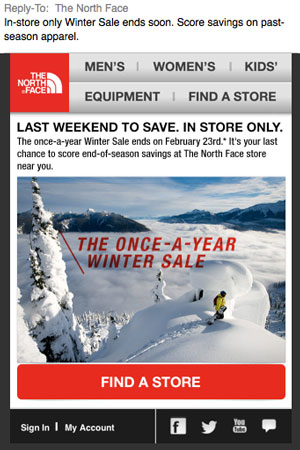
NorthFace is very down to business, no frills. The phrase high tech – low drag comes to mind. The Husband prefers NorthFace’s delivery and that’s what’s allowed in his Inbox.

NorthFace email newsletter

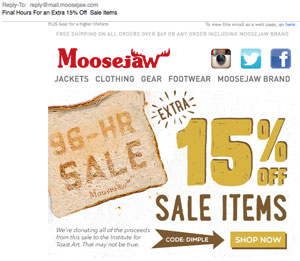
Moosejaw is all sorts of silly and fun. I giggle every time I see a newsletter from them in my Inbox and it makes me smile to spend my money with someone who understands the importance of humor.

Moosejaw email newsletter

Same basic products, different flavor.

Content strategy isn’t not about making sure you’re posting the same, keep-up-with-the-joneses content everyone else is. It’s about sharing that message with your own voice so that the people you want to attract find it valuable and recognizable.

Call it perspective, call it secret sauce, call it seasoning … how do you prepare and serve up your content to stand apart?

Author’s Bio: Lisa D. Jenkins is a Public Relations professional specializing in Social and Digital Communications for businesses. She has over a decade of experience and work most often with destination organizations or businesses in the travel and tourism industry in the Pacific Northwest. Connect with her on Google+

Filed Under: Content, Successful Blog Tagged With: bc, Content, email, newsletter

Connected Content. Get Some.

March 4, 2014 by Rosemary

By Lisa D. Jenkins

I live in a place that’s done a lot to embrace art in every day life. When I moved to Boise, I was giddy over the artist murals that cover the downtown traffic boxes. I have a favorite. It reminds me of a Miyazaki film.

A few weeks ago, I was invited to attend a gallery opening for the colleague of a friend. There were close to a dozen pieces on display and I was immediately drawn in by the artist’s palette – all blues and reds that remind me of lined, 3 ring binder notebook paper. I’ve a decidedly odd sense of humor and as I walked from piece to piece, I felt the glimmer of a connection.

Here was a gal I could relate to. I got her sly satirical wit. I recognized something familiar in the expressions she put on canvas. Art does that.

There was one piece in particular I couldn’t get out of my mind so the next week, I went to the gallery website to have another look. Imagine my surprise when I was looking through the artist’s bio and found an image of my favorite traffic box art. Same artist – Erin Ruiz.

Fare Thee Well Erin Rulz

The two pieces couldn’t be more different but I love them both and for me the connection was cemented. I wanted to own that piece in the gallery. The artists’ body of work, her content – found in two distinctly separate spaces, did that.

You can do that.

From your blog to Pinterest and Google+, the articles you publish, the images you post and the updates you share should all work together to spark and sustain that same feeling of recognition with people who want or need what you provide.

It’s not just a picture on Instagram, a link on Twitter or a result in someone’s Google search query. Every piece of content you publish is a touchstone; a neural reminder that your product or service is an option, that your unique approach lets you serve a specific customer in a way that complements their life or business.

Turn those content touchstones to converting stepping stones when you can. While the success of this ultimately lies within your strategy and the tactics you use, there are some simple things you can do to start connecting your content today.

  • Make sure every blog post you write includes at least one link to another piece of related content you’ve published. This will pull people deeper into your site and let you share just a bit more on the subject that interests your reader.
  • Add the link to a related article to the description of images you post to social networks. When people see an image that resonates with them, the link will drive traffic back to your site – to an article that links to another article. You see what I did there.
  • Secure your Google Authorship. Right now. This connects your name and face next to your content any time it shows up in a Google search result.

One could argue these are elementary content tactics. But sometimes it’s the simple things that trip us up – or move things forward.

Is your content connected?

Author’s Bio: Lisa D. Jenkins is a Public Relations professional specializing in Social and Digital Communications for businesses. She has over a decade of experience and work most often with destination organizations or businesses in the travel and tourism industry in the Pacific Northwest. Connect with her on Google+

Filed Under: Content, Successful Blog, Writing Tagged With: bc, Writing

Why Would you NOT Self-Publish a Book?

February 7, 2014 by Rosemary

By Angela England

Self-publishing is all the rage. I’ve been writing eBooks since before they were cool (aka pre-Kindle) and can testify to their power to transform a blog or business for the better. However, in the last five years I’ve seen truly horrible books being produced that did the author, and their business, no good whatsoever.

You might think it’s odd that someone who just launched a course walking people through the process of how to produce a book would warn people away. But let’s be clear, shall we? Writing a book, like running a blog or owning a business, is not for everyone. Some people should not publish a book – especially self-publish a book.

1. You want to get rich quick.

Did you know, the average self-published author only sells between 200 and 250 copies of their book? And traditional print may not be the answer, either – only about 20% ever see any royalty payments, if indeed your contract has royalty structure in place instead of one of the ever-more-common work-for-hire contracts that gives you an upfront payment only with no long-term revenue potential. The bottom line is, whether you go the traditional print route or the self-publishing route, you cannot be average.

The average author doesn’t sell enough copies to make it worth their while. The average author pays next year’s bills with next year’s books, creating a cycle of constantly searching for the next project and next contract, because last year’s book isn’t producing any extra income yet.

Self-publishing is, like most things worth doing, a bigger gamble with a far bigger reward than the safe mediocrity of punching someone else’s time clock.

2. Your book is too broad and not well-focused.

Publishing houses tend to like books that will appeal to a general audience. Broader titles are easier to get into bookstores and easier to get off the shelves as well. But self-published titles that are too broad and have no focus won’t be picked up by bookstores and libraries right away (if at all), so who will buy them? Well, unless you have thousands of rabid fans ready to invest in anything you tell them to, no one. Or at least not many.

One of the biggest mistakes I see self-published authors make is a failure to think about the book creatively. A self-published title needs to stand out. It needs to capture someone’s attention at a glance.

A brilliant example of this is Small Army Strategy by Srinivas Rao. I love the promise and premise that’s built into the title, and it certainly is different from a typical marketing book. It has to be, because do we really need another, “How to Market Your Business” book?

Don’t be bland. The benefit of self-publishing is the ability to have creative control. So don’t mimic the generality of mass-produced when you don’t have to.

3. You aren’t willing to invest in your book like a publishing house would.

Some authors just want to write and forget about it, then open a magic box from the publishing house 6 months later with their book inside. Fine – then you should be pitching legacy publishing houses for any of your titles, because self-publishing means YOU are the publishing house.

That means producing professional, high-quality graphic designs for the cover art and book layout. That means professionally formatted manuscripts that render correctly in every format you plan to offer (Kindle, Nook, etc.), with reader-friendly features like an Active Table of Contents where possible. It means professional-level editing as well. All of those things are probably going to cost you money, and you should gladly pay it.

When I took my self-published book on-air for a news segment in December, I had both it, and my first traditionally published book, side-by-side. And you know what the difference was when it came to quality? Nothing. Unless you looked at the front matter and made note of the publisher’s name, you would never know that was one Penguin and one was me. Only self-publish if you are willing to do the same with your book.

There are so many brilliant ideas yet to be brought into the world. Every day, I’m talking with amazing people who have breath-taking stories and incredible voices, and I can’t wait until those books exist in the world. But no brilliant idea should be overlooked because of an awful book production given today’s technology. If you take the time to self-publish a book, do it right and make it as outstanding as you are.

Are you considering publishing something this year?

Author’s Bio: Angela England is a mother of five living in rural Oklahoma but more, she’s also a problogger, speaker, and author of several books including Backyard Farming on an Acre (More or Less) and Getting Prepared. Her most recent projects are helping people transform their blogs and business by publishing amazing books and producing multiple books this year under the Untrained Housewife brand.

Filed Under: Content, Successful Blog, Writing Tagged With: bc, publishing, Writing

It’s All “About Us”

January 7, 2014 by Rosemary

By Myrna Vaca

The “About Us” page on your website provides a great way to give your potential customers the lowdown on why they should be doing business with you and to remind your current customers why they are purchasing your products and services. Unfortunately, some companies pass up this golden opportunity to tell the world how great they are.

Other than your home page, “About Us” is probably the most widely read section of your website. Visitors go there to find out more about your company and to decide if they want to continue searching your website for additional information. Don’t disappoint them.

Tell Your Tale

Your initial goal in creating your “About Us” page should be to grab the visitors’ attention and encourage them to stay a while. The story you tell should be interesting and well-written; if you’re not a writer, consider hiring one to turn your thoughts into a literary masterpiece – or at least into an engaging narrative.

Here are some ways to give people some insight into who you are and why they should trust you enough to do business with you. This is especially important for online stores because your customers don’t see you face-to-face.

  • Include a short bio about your background, education, experience and credentials, along with a photograph of yourself. If you have employees, include information and photos to introduce them to your potential customers as well.
  • Offer information concerning the products and services you provide.
  • Put together a statement that tells your potential customers what sets you apart from your competition.
  • Explain how and why you started the business.
  • If there’s an interesting story about the products you sell, tell it. And don’t be afraid or too humble to tell people about what motivates you. Tell them why you can’t wait to wake up every morning and get to work.
  • Do you have a vision for your business? If you do, tell your potential customers about your dreams and where you’d like the company to be in a decade or so.

Spreading the Word

There should be other important information on your “About Us” page besides your personal story and the story of your business. Here are some other important details for you to include.

  • Testimonials – These will help you establish credibility. Your satisfied customers are your best advertising.
  • Awards – If you’ve been cited by a professional or community organization, tell people about it.
  • Media coverage – If the local newspaper or an online magazine has published a story about you or your business, provide a link on your “About Us” page.
  • Press releases – If you aren’t a writer, hire one to put together press releases about your business. You can send them to print and online publications, and you should have them available on your site as well.
  • Newsletter – If you don’t have a newsletter that you send to customers and potential customers on a regular basis, maybe you should consider establishing one. The “About Us” page is a good place for a link that allows visitors to sign up for the newsletter.
  • Blogs – If you or your employees are blogging about your products or services, it’s a good idea to provide a link from your “About Us” page.
  • Social media – Make it easy for people to interact with you with links to your Facebook page and other social media platforms.
  • Picture this – Photos are great, but only if they are of real people and places.

Consider Your Customers

Now that you’ve put together all the important information about you and your business, you should dedicate some of the space on the “About Us” page to your customers and those that you hope will someday be your customers.

  • Facts are important – Boast about it if you know that your products are shipped on time 100 percent of the time and that you ship the right product 99.5 percent of the time.
  • But don’t make stuff up – If you don’t have statistics that make your business look reliable, don’t fabricate them. Instead, explain what your goals are and how you intend to meet them.
  • Congratulate yourself – Tell your potential customers about the important certifications you’ve earned and awards you’ve won. You’ll have to decide which ones are important and which ones aren’t.

Your “About Us” page can serve as a great marketing tool, but just because you’re happy with the page you create today doesn’t mean you should be satisfied with it tomorrow. You should continually update the page, especially when you enhance your education or experience, obtain major customers or gain a foothold in new markets.

Author’s Bio: Myrna Vaca is the Head of Marketing and Communications at Lyoness America, where she directs media relations, branding, advertising and website development. Lyoness is an international shopping community and loyalty rewards program, where businesses and consumers benefit with free membership and money back with every purchase. Check out Lyoness on Twitter.

Filed Under: Blog Basics, Content, Successful Blog Tagged With: bc, Content, Design, website

How to Make Your Blog Stand Out in the Crowd

December 24, 2013 by Rosemary

By Tracy Vides

To err on the side of diplomacy has always been a safer bet than being blunt. Diplomacy is everywhere. Being nice is an all-pervasive disease. To be boring, just like diplomacy, works for a lot of people.

As long as you don’t stand out, you don’t ask for trouble. To stay out of trouble is a global requirement.

People start blogs just as they start political parties, form governments, and start businesses. Since most people try to stay safe, their blogs will reflect that ‘safe’ vibe. As a result, the content is usually trite.

Rehashed, over-used, and boring blog posts are the staple of the blogosphere, as this slide deck from Velocity Partners makes painfully clear. It’s tiring to see just another blog out there.

We agree that there’s only so much information that can be shared on a topic. But who said that you’d have to keep it bland?

Popular blogs share the same content, but they do it differently.

Only a few bloggers stand out. They are different. Their voice is powerful. Their content is engaging. How do they manage to do that? What’s the secret sauce?

They are bold. They are beautiful. They write what they want to.

Here are some ways to make your own blog stand out from the rest:

Stick to Your Opinion, Don’t Waffle

Pick up a few facts, put your brain to this data, and craft your own opinion (rolled into a blog post). While you use your own voice, personality, and writing style to express your justified opinion, take a vow (in writing, if you can) that once the blog post goes live, you won’t budge from your opinion. Even if the string of virulent comments might want to make you think about your initial stand, don’t bother updating your blog post with the new school of thought.

Blogs get their mojo from opinionated writing. There’s no place for you to waffle here. No changing shoes once you wear them.

One caveat here:

One danger, when you’re writing lots of quick, opinionated blog items about the latest developments, is that you never get around to stating fully, in one place, what you think about a particular topic.

– Mickey Kaus

Write for the Emotion Connect, Not the Spider’s Web

Google is powerful. Bloggers all over the world love a continuous, incoming stream of traffic from search listings. Yet, you have to let go of the obsession to rank in search. I’m not knocking down SEO or SEM, do what you have to do. Just don’t assume that your blog promotions or marketing for your blog depends wholly and completely on Google.

Stop writing for search engines, because that makes your blogs read like school textbooks or poorly maintained journals of manipulative keyword-stuffing maniacs. Or worse, like The Dullest Blog in the
World
.

If you ever have to create a blog post, do it for the reader. Google search takes care of itself. Your readers will thank you for it.

Bring in the Fun

Whether it’s a blog post or the copy (long-form or short-form), you need to use interesting and engaging content to market your products or services. Work hard to bring in the fun in your writing.

Your ultimate goal: bring that smile on your readers’ face, convince and convert.

While your blog post should have facts and opinion rolled together, your sales copy would have to be brief. Yet, make sure you bring in the humor when you are writing.

Stop being a bore.

Plant the ‘Feel’

Marketers now need to don the role of publishers through blogging. All marketers must work to ‘plant the feel.’

What do I mean by that? By making customers ‘feel,’ you bring a string of emotions, desires, needs and wants to the fore. Your customers almost visualize what you are writing about. The ‘feel’ factor can do wonders to your blogging efforts whether you are a physics teacher blogging about quantum mechanics or a tiny mom & pop e-commerce store that sells handcrafts online.

Stay Consistent

Add blogging into your lifetime to-do list. Blogging ought to happen every single day (or whatever frequency you like to blog with). While you might think that this was probably the first lesson you learnt about blogging, it’s one of those things that will help you stand out from millions of other blogs.

Why?

Most other blogs are dead. Most bloggers don’t update regularly. Some lose steam, while others just aren’t blessed with the commitment it takes to see a blog through success.

By blogging regularly, you are already in the top percentile of bloggers who are real, professional and serious.

Hook Up with Readers Personally, the Human Way

Forget about building relationships through your blog the usual way. If it’s usual, then everyone does it. You’d still have to build relationships with your regular readers, but how do you make a difference? It’s called ‘The insane reach out plan.’

The Insane Reach out Plan for the time-starved reader (that’s you):

  • Got a comment? Go hunt that commenter down and then follow his or her blog. Leave comments to reciprocate.
  • Find out who your readers are and then connect with them on social media to continue the =93small talk=94 that forms the bridge between your relationships.
  • Find opportunities to highlight some of your readers. There’s a reason why widgets that show ‘recent comments’ or ‘top comments’ or ‘most active contributors’ are downloaded by the thousands.
  • Sit down and send out emails to some of your regular users. Most popular bloggers tend to get high volumes of emails from readers, most of which end up unanswered. Turn this practice upside down. Actively send out emails instead.
  • Whenever possible, call or meet your readers.

Hard work? Yes.

Payoffs? That’ll require another blog post.

Necessary? No. But mandatory.

The only blogs that’ll work today are those that continuously produce content that gives something to readers that they can think about. Your blog is like a public kitchen giving food for thought to your readers.

That’s a grim challenge, yes, but others are doing it already!

It’s useless to worry about word counts, SEO, the size of your social media network, the platform you use for blogging, and the hosting account your blog depends on.

Worry about value. Lose sleep over how to make your content better. Brainstorm ways you can make your blog engaging.

Write with your heart, not your fingers.

Author’s Bio: Tracy Vides is a content creator and marketer, who loves to blog about subjects as diverse as fashion, technology, and finance. She’s always raring to have a discussion on startups and entrepreneurship. Say “Hi” to her on Twitter @TracyVides. You can also find her on G+ at gplus.to/TracyVides.

Filed Under: Blog Basics, Content, Successful Blog, Writing Tagged With: bc, blogging, connection, personality

  • « Previous Page
  • 1
  • …
  • 5
  • 6
  • 7
  • 8
  • 9
  • …
  • 28
  • Next Page »

Recently Updated Posts

Is Your Brand Fan Friendly?

How to Improve Your Freelancing Productivity

How to Leverage Live Streaming for Content Marketing

10 Key Customer Experience Design Factors to Consider

How to Use a Lead Generation Item on Facebook

How to Become a Better Storyteller


From Liz Strauss & GeniusShared Press

  • What IS an SOB?!
  • SOB A-Z Directory
  • Letting Liz Be

© 2025 ME Strauss & GeniusShared