Successful Blog

  • Home
  • Community
  • About
  • Author Guidelines
  • Liz’s Book
  • Stay Tuned

What’s Your Answer? Do Consumers Always Know Their Own Needs Better?

December 11, 2008 by Liz

We say,
“Listen first.”
Do we listen to and about ourselves?

We say,
“Be part of the conversation customers are already having about your business and your products.”
Are we part of the conversation clients and corporations are having about us?

Recalling the powerhouse social media panel at AdTech in Shanghai, of which he was part, Lee Hodge reported …

All panelists were in agreement that to shunt conversation … is to assume that consumers are less informed about their own needs than the corporation that is pitching them.

When I consider conversations about “social media mishaps” of recent months I wonder. When I think about human nature and irrational choices I wonder even more …

Is the panel’s point valid?

Do consumers — even clients hiring social media firms — always know their own needs better?

–ME “Liz” Strauss
image: Wikicommons
Work with Liz!!

Get your best voice in the conversation. Buy my eBook.

Filed Under: Marketing /Sales / Social Media, Successful Blog Tagged With: bc, digital divide, social-media

Social Networking: If Someone Smiles on the Other Side of The World

December 10, 2008 by Guest Author

Guest Post by Vincent Wright

If you’re happy and you know it, thank your friends—and their friends. And while you’re at it, their friends’ friends. But if you’re sad, hold the blame. Researchers from Harvard Medical School and the University of California, San Diego have found that “happiness” is not the result solely of a cloistered journey filled with individually tailored self-help techniques. Happiness is also a collective phenomenon that spreads through social networks like an emotional contagion.

In a study that looked at the happiness of nearly 5000 individuals over a period of twenty years, researchers found that when an individual becomes happy, the network effect can be measured up to three degrees. One person’s happiness triggers a chain reaction that benefits not only their friends, but their friends’ friends, and their friends’ friends’ friends. The effect lasts for up to one year.

The flip side, interestingly, is not the case: Sadness does not spread through social networks as robustly as happiness. Happiness appears to love company more so than misery.

“We’ve found that your emotional state may depend on the emotional experiences of people you don’t even know, who are two to three degrees removed from you,” says Harvard Medical School professor Nicholas Christakis, who, along with James Fowler from the University of California, San Diego co-authored this study. “And the effect isn’t just fleeting.”

For over two years now, Christakis and Fowler have been mining data from the Framingham Heart Study (an ongoing cardiovascular study begun in 1948), reconstructing the social fabric in which individuals are enmeshed and analyzing the relationship between social networks and health. The researchers uncovered a treasure trove of data from archived, handwritten administrative tracking sheets dating back to 1971. All family changes for each study participant, such as birth, marriage, death, and divorce, were recorded. In addition, participants had also listed contact information for their closest friends, coworkers, and neighbors. Coincidentally, many of these friends were also study participants. Focusing on 4,739 individuals, Christakis and Fowler observed over 50,000 social and family ties and analyzed the spread of happiness throughout this group.

Using the Center for Epidemiological Studies Depression Index (a standard metric) that study participants completed, the researchers found that when an individual becomes happy, a friend living within a mile experiences a 25 percent increased chance of becoming happy. A co-resident spouse experiences an 8 percent increased chance, siblings living within one mile have a 14 percent increased chance, and for next door neighbors, 34 percent.

But the real surprise came with indirect relationships. Again, while an individual becoming happy increases his friend’s chances, a friend of that friend experiences a nearly 10 percent chance of increased happiness, and a friend of *that* friend has a 5.6 percent increased chance—a three-degree cascade.

For the rest of the story, visit Science Daily.

Thanks, and Keep STRONG!!
Vincent Wright
Image: sxc.hu
_______________
Vincent, you’re a happiness agent if I’ve ever seen one. Thank you for reminding us how this works.

–ME “Liz” Strauss
Work with Liz!!

Get your best voice in the conversation. Buy my eBook.

Filed Under: Marketing /Sales / Social Media, Successful Blog Tagged With: bc, Community, LinkedIn, social-networking, Vincent Wright

Guy Kawasaki Talks About Alltop.com and the Alltop.com Community

December 9, 2008 by Liz

Featured in Alltop

I work with companies who are watching in the way of new ventures — weight risks against benefits. Lawyers try to keep them conservative, while the “common wisdom” seems to tell them they need a blog. I’m finding that often a blog isn’t the answer, at least not the appropriate first step. User participation has many forms.

One of the best examples of a social media, user-centered endeavor is Guy Kawasaki’s Alltop.com Alltop gets it right in so many ways. FAQ 3 is part of the magic of the Alltop formula, and what we’ve been talking about — let the community help build the barn.

3. Q. How do you decide which sites and blogs are in a topic?
A. We use a patent-pending, semantic computational algorithm derived from the post-doctoral work of Guy at Stanford. Just kidding. We rely on several sources: results of Google searches, review of the sites’ and blogs’ content, researchers, and our “gut” plus the recommendations of the Twitter community, owners of the sites and blogs, and people who care enough to write to us. Let us declare something: The Twitter community has been the single biggest factor in the quality of Alltop. Without this group of mavens and connectors, Alltop would not be what it is today.

You can tell a person wrote that.

I’m lucky to be talking to the man behind Alltop —
Guy Kawasaki — about his thoughts on how businesses
can engage people as they move online. I wondered about low-risk choices that businesses might make when forming new social media businesses and communities online.


Hi Guy! About Alltop, I’ve been through it all in the past few days. I think most folks don’t realize the scope of the accomplishment you’ve built … it’s no wonder you’re always smiling.

Alltop really is more than it seems. What is Alltop really and why does it work?

Alltop is a digital magazine rack. We assemble (“aggregate”) subscriptions by topics, and we have approximately 400 topics ranging from Adoption to Zoology.

It works because there is so much information on the web and search engines are too good at what they do. For any topic, Google would find millions of hits. Most people do not have the time or ability to winnow this down.

For example, try typing “China” into Google then look at


What’s special about Alltop is the way people have taken a personal interest in it — especially the Twitter community. Did the Twitter community come first or did you grow the community as you grew Alltop?

Twitter as a service pre-dates Alltop by several years. Fortunately, the people who follow me have taken a liking to Alltop. They provide suggestions for topic and feeds for topics, and they help us spread the word about topics. Alltop would not be what it is without Twitter.


What was crucial to making it all happen efficiently? What was crucial to getting the community to buy in?

Many factors came into play: I had a large following because of my visibility so Alltop had a jump start; the product is truly useful; and we were more than willing to hear and implement what the community wanted. Twitter was made for Alltop, and Alltop was made for Twitter–you couldn’t have designed a better synergy if you tried.


What advice do you have for companies who worry about the risks of their first steps into the social sphere?

The willingness to open things up and to seemingly lose control is the only way to control social media. If you think you can control social media in the traditional sense, you shouldn’t even try it. Just stick to buying Super Bowl commercials instead.


What sort of projects might you suggest would offer low risk but high profile community relationship value?

The first thing most companies should do is go to search.twitter.com and search for anyone who mentions their products, services, or the company itself. Then it should help those people in any way possible.

To see how it’s done, they should watch @comcastcares on Twitter. That is a Comcast employee who monitors Twitter for people who have issues with Comcast. This is a great example of how to use social media. The cost is $0 and the upside is huge.

Thanks Guy! It was a pleasure, as always.
_________
Look closely and you see that Alltop.com is a magazine rack that draws people into a community. People help choose the topics. They suggest the sites included. People proudly display the badge of the Alltop domain and discuss Alltop blogs with @GuyKawasaki and @NEENZ on Twitter.

Guy let the people help build it, made the site about them and what they’re doing, and now they promote and protect it. It’s a community all right.

What do you think is the magic of Alltop? What bit of it could make work for you and the community you’re building?

–ME “Liz” Strauss
Work with Liz!!

Get your best voice in the conversation. Buy my eBook.

Filed Under: Interviews, Marketing /Sales / Social Media, Successful Blog Tagged With: Alltop, bc, communities, Guy-Kawasaki, LinkedIn, social-media

Not Every Town Square Needs to Be a Coliseum – Small Communities Grow

December 8, 2008 by Liz

Last week at lunch, Patrick Rooney and I were talking about the digital divide between the social media culture and the companies looking for ways to join it. We discussed how the lovely social media landscape can look a little unfriendly when you consider it from that perspective. We’ve all seen what social media backlash can do.

The expectation that a company will adapt immediately and seamlessly without error to new culture is unrealistic. You and I didn’t. Did we? What a business moving into social media needs is a way for people get to know them.

Not Every Town Square Needs to Be a Coliseum

The first time I went to London, I didn’t know much beyond the language. Luckily my friend, Richard, met me at the airport that morning. We went to a local eatery — a pub really — and he gave me a quick rundown on the currency and the “rules.” As a saloonkeeper’s daughter, my favorite was Don’t you dare tip in a pub that makes you get your own drink.

Culture. We learn it by sharing it. We pass it along to each other. As communities we build it and shape it together by talking about who we are, what we believe, where we’re going, what we do for a living, what we buy and sell, and what we need, want, and desire.

Piazza, Plaza, Commons, a Town Square, a Quad, the Food Court in a mall, a water cooler, a pub … almost every culture has theirs — a space where people gather for conversations like those.

In Mexico, these ubiquitous areas are called Zócalos. They are just as important today as ever – serving as a home for leisurely chats, special celebrations and neighborhood connectivity. While the most prominent Zócalo is located in Mexico City, smaller Zócalos exist in just about every Mexican community. –Zócalo Group

Not every town square needs to be a Coliseum or an Epcot Center. People meet on the stoops of a side street in New York City.

The biggest worries to companies coming online are fear of negative response, time investment, and skepticism of return. In a culture where the value shift has gone from one-size fits all to one at a time always, every business might try thinking small — smaller starts, smaller steps — but more of them.

Listen and make relationships. Then build something small. Small communities are investments. Small communities grow and as they grow, the business can build a unique culture with them.

Small Communities Grow

A great example of a business that’s doing this well is a client of mine. The core business is a seamless system of integrating human and technological translation for WordPress blogs and CMS.

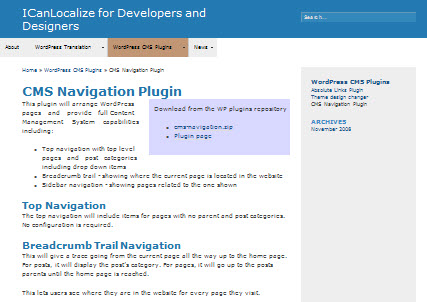
To offer value and build community, ICanLocalize has build a sister site, ICanLocalize for Developers and Designers a content site that has grown out of the work on the plugin that drives the translations. I asked Amir Helzer, the owner, why he developed this second site. He said,

I wanted to create a multilingual resource and an active community for people who are using WordPress to build complex websites. So I built Baripedia on a WordPress CMS and ICanLocalize for Developers and Designers.

Here’s the beauty of building by, for, and with the community.

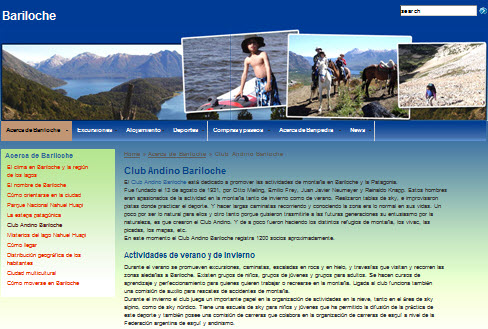
  • The proof of his credibility and commitment to the community is in Baripedia, a tourist site about Bariloche, Argentina. Whether they care about WordPress or their next visit to Argentina, the site has value. People can interact with site immediately.

  • As the site grows, visitors will be invited to add content, developers will be invited to participate in redesigns, and both communities can be invited to review what has been changed or added over time. The site will grow as the communities grow with it. The questions that arise with managing user-generated content can be staged and considered on their own.
  • At the same time, the multilingual site ICanLocalize for Developers and Designers will be built out on WordPressMU. A truly international WordPress discussion on CMS, plugins, design, and development will be available throughout the domain. Again the community will help form and shape the content as it grows.

Everything that ICanLocalize is doing builds the community and the business simultaneously. The community has a compelling reason to participate because the value is there, yet the invitation to add more is always open. And both community sites will bring interest back to the original business site by the way that they naturally feature the skills and expertise of the business that built them for the communities.

As they say, Bariloche wasn’t built in a … few lines of code.

Any business can do this. It’s building a business like we write a blog post. Leaving room for people to come in and add their own ideas, not tying it up with a bow so that all visitors can comment is “good job!”

Twitter. It began with a question, What are you doing? Look at it now. The community interaction made most of that.

Zócalos, Plaza, Piazza
a place where all traffic stops for coffee, conversation, community

How might you add a small community to a business site? What ideas would have for a business like Motrin, or Walmart, or maybe your local book store?

–ME “Liz” Strauss
Work with Liz!!

Get your best voice in the conversation. Buy my eBook.

Filed Under: Community, Marketing /Sales / Social Media, Successful Blog Tagged With: AmirHelzer, bc, ICanLocalize, LinkedIn, Patrick Rooney, Zocalo Group

What Do You Want to Contribute as Social Media Community Member?

December 4, 2008 by Liz

Building a Community

The irony is that so many of us work alone, yet we build communities. That thought struck me boldly when this week I heard three people say how much they were looking forward to working in an office with people.

That got me thinking that an essential part of knowing how to built a community is understanding what it means to be a community member.

On Monday when we were talking about how social media can help us build a better business, Richard Reeve beautifully wrote this post for me. He described his contribution to a community “barn raising.” He said …

When asked to come and help raise these boards, it means:

    1. I realize that I need to bring along a team of five other folks I can count on to handle our given task. Wood is heavy.

    2. Ask clear questions not only of what our team will do, but how it will fit into the overall scheme of the raising, so as to maximize the remaining sunlight.

    3. While staying focused on the assigned task, realize that things seldom go as planned, so keep a flexible attitude and be willing to lend a hand when and where needed. The overall goal is more important than the parts.

    4. The only result that matters, that every participant can take pride in the resulting structure…

    oh…and:
    5. Bring your own tool belt. Who has fifty hammers?

Who wouldn’t want those values and motives in every community member … ?

When a business, a non-profit, or an organization builds a space for us and makes all of the decisions without us, it’s like moving into a house that doesn’t have any of our stuff. We don’t own it. We’ll always be visitors. If that business, non-profit, or organization lets us contribute as the house goes up, we become a part of the process and feel ownership. Of course we don’t have time to contribute building to every space in which we participate, but when we do, it changes the the way experience that community in profoundly personal way.

What do you want to contribute as a social media community member? What can we expect from community members before we start?

–ME “Liz” Strauss
Work with Liz!!

Get your best voice in the conversation. Buy my eBook.

Filed Under: Community, Marketing /Sales / Social Media, Successful Blog Tagged With: bc, business, community building, community membership, social-media

How to Share the Vision and the Plan with a Business-Building Community

December 3, 2008 by Liz

Goals, Dreams, Visions, and Plans

Raising a barn is a spectacular goal. Getting a community to help makes it easier and harder. It’s important not to confuse goals with dreams.

A goal without a plan is just a wish.
Antoine de Saint-Exupery,
author of The Little Prince, said that.

Char Polanosky explains what that means.

To raise a barn or build a business with a community is a social collaboration. It competes with all of the other wonderful and pressing things in their lives. To capture their time and attention, we have to offer something that is smart, compelling, and easily fit into their lives — irresistible.

Share the Vision and the Plan

When the time comes to build, we’re not going to find a community who magically knows what to build and where to put their skills to work. A critical stage in social leadership is being ready for the community when they’re ready to help.

We have to be able to explain — what we’re building and what roles they might play.

Share the Vision

We gotta know the vision before we can share it. The vision has to be clear from the minute they arrive. We need to be able to articulate

  • what we’re building — what the parts are
    and how the parts fit together to make a whole.
  • how that whole will be useful and who will use it.
  • how that whole with make that real people’s lives
    better, faster, and more meaningful.
  • how you’ll reach the people who will use it.
  • how you know they will.

Seeing the vision gives a community a reason to do the work.

Share the Plan

We gotta have a plan before the work can start. The value of the work also needs to be shiningly apparent. We need to be able to communicate without hesitation a clear business plan that offers:

  • easily understood standards of quality
  • simple budget rules or a stated source of materials
  • a realistic schedule with an end date for their commitment
  • a clear description of job roles for volunteers

Knowing the plan offers security that the work will be time well spent.

The vision and the plan let the community see what we will be creating. The vision and the plan give us the confidence on which a community can plant their trust, energy, thought, and emotion. On the vision and the plan, we align our ideas and ideals — we agree on the work to be done.

Antoine de Saint-Exupery also said,
Your task is not to foresee the future, but to enable it.

Have you ever helped someone build a dream? What did you need before you invested?

–ME “Liz” Strauss
Want to build barn? Work with Liz!!
Image: NASA Image Exchange

Get your best voice in the conversation. Buy my eBook.

Filed Under: Marketing /Sales / Social Media, Successful Blog Tagged With: bc, business-plan, LinkedIn, social media business, vision

  • « Previous Page
  • 1
  • …
  • 101
  • 102
  • 103
  • 104
  • 105
  • …
  • 174
  • Next Page »

Recently Updated Posts

The Creator’s Edge: How Bloggers and Influencers Can Master Dropshipping

Is Your Brand Fan Friendly?

How to Improve Your Freelancing Productivity

How to Leverage Live Streaming for Content Marketing

10 Key Customer Experience Design Factors to Consider

How to Use a Lead Generation Item on Facebook


From Liz Strauss & GeniusShared Press

  • What IS an SOB?!
  • SOB A-Z Directory
  • Letting Liz Be

© 2025 ME Strauss & GeniusShared