Successful Blog

  • Home
  • Community
  • About
  • Author Guidelines
  • Liz’s Book
  • Stay Tuned

Internet Marketing and What it Means for Businesses Today

February 4, 2013 by Rosemary

By Rebekah Griffiths


It’s clear that the internet is becoming an increasingly important aspect of everyday life. From watching the latest TV shows and films to shopping for food and the latest fashion trends, millions of people all over the world connect on a daily basis. This means that by making the most of a strong online presence, perceptive business owners are able to easily tap into a national or even global market. Statistics in recent years have pointed to the eruption of e-commerce; in the U.S. alone, online sales grew from around $70bn back in 2002 to well over $250bn dollars today.


What does it mean for businesses?


With such a huge and active audience available, today’s businesses are advised to bolster their print advertising with online marketing campaigns. Many choose to place an even greater emphasis on modern online methods than they do with other, more traditional marketing means such as flyer distribution, TV commercials, and radio ads.


There are a number of options available when it comes to reaching an online audience and a combination of these, including an intelligent web marketing campaign, can be, for many, the difference between success and failure.


Social media


Today, millions of people are connected to one another via social media. Sites like Facebook, Google+, and Twitter have millions of active users. What makes it easier for businesses to reach individuals on these platforms is the passive way in which they are approached. Marketing via social media is all about connectivity – making it worthwhile for customers to reach the business, rather than the other way round. Businesses can offer humorous or relevant content to users, who can then follow their activity for the latest industry news and offers.


Not only are businesses able to reach a much broader audience through social media; it also allows companies to engage closely with customers, identify trends, and process customer feedback.


In a day and age when consumers are increasingly choosing vendors based on the quality and convenience of the experience offered, providing customers with exactly what they are after is a sure-fire way of maintaining the brand image.


Web design


Just as a store front or print campaign must be both aesthetically pleasing and practical, so too must a company’s website; it should look professional while at the same time point customers in the right direction. In terms of design, a website can be constructed to bear the same colors, logo, and typefaces as the company’s existing branding – which will increase brand recognition with online visitors while portraying a consistent, recognisable company image. Pages can be written with clear, concise, and promotional content, and the most tech savvy businesses will be aware of the effectiveness of search engine optimisation (SEO).


What is SEO?


Search engine optimisation is all about making a website attractive to the most popular search engines today, such as Google and Yahoo. Since the vast majority of internet users will find the sites they need through the offerings of the search engine listings, this is a crucial consideration for businesses looking at online marketing.


By implementing content that is relevant to what potential customers are searching for, sites will be ranked higher in the search engine listings and can experience vastly improved site traffic, which in turn can impact hugely on custom.


What can it mean for a franchisor?


Online marketing enables a franchisor to allow its individual stores to attract customers because, just as online marketing can tap into an international or global audience, so too can it help attract customers on a more local basis – which could, for instance, include the residents of towns and cities near to a store location. Individual stores can each have a presence on social media sites, and SEO can draw in traffic from the locality and drive regional sales.

How are you combining traditional and social media marketing for your business?
Author’s Bio: 

Rebekah works for Engage Web, an internet marketing firm based in the UK. With UK-based and international clients, Engage Web provides a variety of web marketing services, including SEO, social media, and web design.

Filed Under: Marketing /Sales / Social Media, SEO, SOB Business, Successful Blog Tagged With: bc, digital marketing, SEO, social-media, web design

Google Quality Score – The Ultimate Guide

January 25, 2013 by Rosemary

By Deepak Gupta

Recently, Google took it upon itself to be the bastion of quality in the world of internet marketing. Every website promotion company is well aware of the recent search algorithm updates. However, it’s not only organic search that is being assessed by Google in terms of quality. Pay per click advertising or paid searches are subjected to quality checkpoints as well and in the end, a Quality Score is assigned to every keyword of your ad campaign.
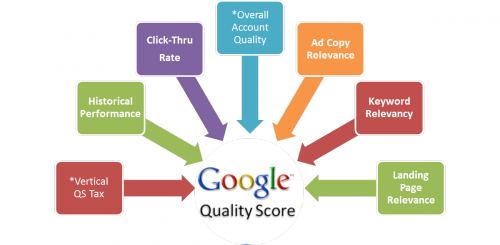
Google Quality Score Factors

According to the definition provided by Google itself: Quality Score is an estimate of how relevant your ads, keywords, and landing page are to a person seeing your ad. Having a high Quality Score means that our systems think your ad, keyword, and landing page are all relevant and useful to someone looking at your ad.
This definition may appear to be crystal clear, but very few marketers know how to deal with Quality Score. Here is a straightforward and simple guide that you can use in understanding Quality Score.

Understanding (not set) and (not provided) Keywords

Google Analytics (GA) is a tool that provides rich insights to a website promotion company as to how its paid search campaigns are doing. However, there are times that you cannot assess the quality of your campaigns because Google Analytics return (not set) or (not provided) keyword data when you extract a GA report. For a rookie website promotion company, this may be confusing and may even be used interchangeably although they are two very different concepts.

A (not set) keyword data occurs when something is missing between the GA tracking and the AdWords click. Typically, this happens with auto-tagging or when repetitive codes are found on pages or there are multiple GA accounts connected to your AdWords campaign.

Length of Display URL and CTR

An experienced website promotion company would know that a URL is not just a web address. In terms of PPC Quality Score, display URLs play a significant role, since one of the criteria used by Google to calculate for your Quality Score is the click through rates of your display URLs. Length and presentation of display URLs are critical factors as to whether searchers will click on your ad or not.

For one, Google will automatically add www to display URLs with fewer than 35 characters. Historical data will show that URLs without the www prefix get more clicks than those with the www prefix. Another not so known fact is that if you exceed the 35-character limit by two (37 characters) it is perfectly fine. Last, if you really can’t contain your URL within 35 characters, insert a few keywords so that when Google shortens it, your keywords are highlighted in the display URL. However, exercise extreme care as Google will decide how to shorten your URL. Basically, the rule of thumb is to target 35 characters without www.

The Surprise Perfect 10 and Pre-assigned Quality Scores

Getting a score of perfect 10 is every web promotion company’s dream. The excitement is equal to going viral in social media marketing services. But before you jump up and down, check for which keywords those perfect scores were given and most likely, you’ll find out that these keywords have zero impressions and zero clicks. Experts are now toying with and testing whether including “empty” keywords gets a perfect score of 10. Your ads won’t show up for these keywords. The goal is to increase the overall score for the entire campaign and raise an ad group’s eligibility for auctions.

Another crucial concept worth pointing out is that your ad groups and keywords have pre-assigned scores before you even launch your campaign and many experts have observed that most of these starting scores would be the end scores by the time a campaign is done. This particular information led PPC marketers to believe that you can actually modify your campaign’s architecture to boost your Google Quality Score even before you launch your ad campaign.

Multiple Groups for Keyword Match Type and Delaying the Use of Bid Management

Along with the campaign’s architecture, matching keyword types within ad groups can increase quality scores. To get the most impressions, it is encouraged that you use a number ad groups for all keyword match types that you want to target.

Finally, if your ad campaign is fresh and new, don’t use the automated bid management yet. Statistics will show that campaigns that were manually optimized during their early stages were more successful versus those that were introduced with the automated bid management system.

Google’s Definition of Quality Evolved

The Quality Score that every web promotion company is using today may not be the same a couple of years down the road. In fact, what Google considers as quality ad campaigns may not stand true in the near future. Who knows? Maybe social media marketing services will be closely tied into the PPC Quality Score. A lot of things can happen and the key is to always be on the lookout and satisfy whatever quality indicators there are.

Author’s Bio: The writer of this post is Deepak Gupta, who is an experienced internet marketing professional and active blogger. He is associated with a search engine optimization company in India that provides professional SEO services and takes care of the search engine marketing activities for clients.

Filed Under: Content, Links, Marketing /Sales / Social Media, SEO, Successful Blog Tagged With: bc, Google, optimization, quality score, SEO, social media marketing

How To Create Good SEO Content That Stands Strong

December 31, 2012 by Rosemary

By Carol Wales

Content

When it comes to search engine optimization, people all around the world prefer Google; It is one of the most popular and efficient search engines. Google used to favor websites that had more links to high page rank websites. In other words, a website could have a better ranking if it had more high PR links. This was considered as a vote of confidence in terms of the content of the website. Over time, there have been changes in the ranking criteria of Google; however, the prime focus is still the same – providing the best information to people. The new Google algorithm is based on quality signals and social media presence. Having informative and valuable SEO content is the key for developing a successful website or an online store. This is a tried, tested and a sure way of generating traffic and thereby driving sales.

How to create good content? Just keep these points in mind while you are creating.

Uniqueness

When you are creating content on any topic that is already present on many other websites, you must be creative with it and try to find a way of presenting this information in a unique way. Even if you see content on the same topic, research the other websites and check which points they have missed. You can incorporate new information, images and videos to enhance readability. You can also consider presenting the information in some other forum, for instance you can use an eBook instead of posting it in article directories or blogging websites. If you are operating a website, make sure it provides the most relevant information. The content can be added in the internal blog or in article directory or any other blogging website. Make sure that there is something different in the content published by you.

Right Keywords At The Right Time

Research and finalize the keywords you will be using. For creating good SEO content, it is essential to use the relevant keywords. Research commonly used keywords pertaining to your industry. You will come across many online software tools for finding new keywords. Google keyword tool is one of the most efficient tools that provides information on the global and local monthly searches of the keywords along with a wide range of keyword variations. Once you finalize the keywords, start using them in the content; however, make sure that it looks natural.

Precise

Web users normally have a short attention span. You must come up with short, precise and informative content that will hold the attention of the reader.

Headline With Keywords

Your headline is one of the strongest attributes of your content that creates the first impression in the minds of the readers. The title provides the users with an idea about what can be expected from the post. It also appears in the email newsletters, social media shares, RSS feeds and ofcourse in the search engines.

Highlight The Important Aspects

If you have written a long, in-depth article, there is no doubt that it will provide value to the users. However remember that brevity is most important. At times readers only scan pages for some important and interesting information. Highlight the crucial aspects through the use of a table of contents, headline and sub headings along with the right keywords. Preferably make use of short paragraphs so that it is easier to read.

Use Simple Language

When you are setting up a website for a global audience, using simple English is advisable so that it is easier to read and understand the information given. Also try to put yourself in the shoes of the reader so that you will know which information must be presented to them.

Accuracy

Make sure that whatever information you are providing is accurate and is up to date. If you are taking the information from somewhere, ensure that it is an authoritative resource.

Editing

Once you are done writing the article, make sure to proof read and edit it properly. If you have completed the post, do not publish it right away. Read it and give yourself time to edit it. By doing this you will be able to improve on the content further.

Including Images And Videos

An article with images and videos surely has an edge over just a plain article. When it comes to videos, add them only if you think they can provide value to the users. Images can perfectly synchronize with your post; whatever topic you are writing on, you can always find relevant images. Make sure you use high quality images that can also be viewed on mobile devices.

The content creation tips mentioned above are simple and can be implemented right away. You can count on these points in terms of creating the most impressive, efficient and readable content.

Author’s bio: Carol Wales specializes in writing on topics related to technology, search engine optimization and prominent web hosting platforms like Cloud Web Hosting, VPS and Dedicated Server UK. Her aim is to provide users with the most authentic information that can be utilized by them in the best possible way. She believes good content will always be the king and therefore she strives for the best.

Filed Under: Blog Basics, Content, SEO Tagged With: bc, content creation, keywords, SEO

Search Engine Ranking Factors: Understanding the Lingo

December 14, 2012 by Guest Author

by
Richard Soto

cooltext443809602_strategy

When it comes to the world of search engine optimization, we tend to use a lot of lingo, jargon and parlance that just doesn’t exist anywhere else. In fact, most of us don’t like these peskily arbitrary words. But without them, we would have no common language with which to ensure our sites are fully optimized, fully performing, and fully earning their weight in Web gold.

That being said, breaking into this messy world of confusing phrases can be rather difficult. In order to help you gain an initiation, we’ve compiled below a set of some of the more common search engine ranking factors, as well as what they mean for you and for semantics.

Let’s get started!

Search Engine Ranking Factors: Understanding the Lingo

On-the-Page Factors: These are those factors that are contained within the body of your content, no matter what that content may be, and are fully within your control to operate. These can be things like HTML tags, keyword densities, or even just the raw content of your site. All of this counts, and if you get the hang of it, the term on-the-page factors really does make a lot of self-explanatory sense.

Off-the-Page Factors: In comparison, these are those factors that are not controlled by you or your content. They’re typically the product of a third-party source, like a social networking site, a collection of backlinks, or even just your brand and the way that it’s perceived.

Violations: This is a very important word to understand, as it can very drastically affect the way in which your page and its content ranks. Any violations are bad violations, and if they’re left unchecked, they will seriously compromise your site’s performance. To give a definition to this word, a violations is essentially anything that a search engine sees within your content or third-party extensions that it doesn’t like. This could be something like a too-dense keyword set, or perhaps graphic content. No matter what the root, if Google or other search engines find a violation, they may black-list your site and all of its content.

Weighting: This is a more abstract sort of concept, but it’s one that’s very important in today’s SEO terms. Essentially, weighting is the practice of giving certain optimization tricks and tactics more importance than others. This is usually due to a change in the way that Google crawls websites. In essence, it’s like changing the lineup of your team before a big match. If you pick the right players for the job, they’re likely to perform well—and they’ll take the whole team up with them. It’s a complex and ever-changing idea, but it’s one that’s really quite simple at its core.

Author’s Bio:
Richard Soto is the President of VIP Realty, the premier firm in Austin Tx real estate. Contact VIP Realty for more information or visit us online for up-to-date real estate information and news. You can find him on Twitter as @viprealty

Thank you, Richard. Agreeing on the vocabulary is always the best start.

–ME “Liz” Strauss

Buy the Insider’s Guide to Online Conversation.

Filed Under: SEO, Successful Blog Tagged With: bc, LinkedIn, search engine ranking factors, search engine terms, search engine vocabulary, SEO, small business

5 Important Reasons to Hire Professional SEO Services

August 3, 2012 by Liz

by
Prarthana Majumdar

cooltext443809602_strategy

5 Important Reasons to Hire Professional SEO Services

When you take your business online, it becomes vital to hire professional SEO services. It is the SEO experts who take care of optimizing your website to search engine requirements. That will help you achieve the boost in traffic that gets search engines to move you forward in their listings.

Here are 5 important reasons to hire professional SEO services:

  1. Professional SEO services are designed to increase the visibility of a website and facilitate in better traffic flow along with improved profit sales return.
  2. SEO professionals take the help of various SEO tools and techniques like keywords analysis, link building, on-page, off-page SEO, directory submission etc. in order to increase your webpage ranking in search indexes.
  3. A website can rely on a professional SEO service to make choices that generate quality and relevant traffic.
  4. Using the right set of keywords suggested by a professional SEO service will work in attracting related traffic flow to a website.
  5. Link building, another essential aspect of professional SEO services, can seriously increase the popularity of a website among the top search engines.

Make sure that you choose these services from cost-effective and affordable SEO service.

Author’s Bio:
Prarthana Majumdar is an expert SEO writer with considerable years of experience. This article has been solely written to provide you with an expert SEO solution and guide. To learn more on these SEO topics like professional SEO services and affordable SEO service visit his website.

Buy the Insider’s Guide to Online Conversation.

Filed Under: SEO, Successful Blog Tagged With: bc, hire SEO services, LinkedIn, online business presence, optimize your website, Reasons to Hire SEO, SEO, small business

Do You Have an SEO Game Plan for Your Small Business?

July 18, 2012 by Guest Author

by
Miguel Salcido

cooltext443809602_strategy

SEO and ROI

With all that small business owners have to do on a daily basis, a thorough SEO game plan can often fall by the wayside.

In fact, some business owners end up neglecting SEO altogether, leaving them with missed opportunities for traffic back to their sites and a better return on investment (ROI). Think about it, your small business could very easily be missing out on free traffic, from qualified leads, who are interested in your products and services.

As a small business owner, do you feel you have a strong SEO game plan in place, an average one or you’re simply missing the boat when it comes to SEO?

Do You Have an SEO Game Plan for Your Small Business?

Get Started
BigStock: Get Started!

In the event you find yourself in the latter category, take some time now before you fall further behind to see how you can get on the boat and sail towards better returns.

Among the advantages for your business having a solid SEO presence include:

  • Increasing sales through qualified business leads from search engines;
  • Better Web site performance and more traffic showcasing your brand awareness;
  • Added credibility and legitimacy for your brand;
  • Tie in to specific keywords that consumers will utilize to come to your site.

In taking a look at some of the above-mentioned items, keep in mind that your goal at the end of the day is to drive traffic to your site, preferably traffic that is interested in purchasing from your business. With the right SEO game plan, you are able to gain the attention of top business prospects, increasing the chances of a sale.

Another factor to keep in mind is that you are better served putting out products and services based on the keyword search terms that led visitors to your site in the first place.

Okay, doing what was just mentioned above makes sense, right? In order to successfully do that, you need to be recording and analyzing your SEO metrics.

Make sure you are able to see via statistics where you have a competitive edge over the competition and where you need to increase your efforts. Find the keywords that rank best for you in leading traffic back to your site, stay on top of the ones that are working, and look to improve upon other terms that need a little boost.

Lastly, many small business owners are working on tight budgets to begin with, so they go back-and-forth as to whether or not they should hire someone for in-house SEO or outsource it.


Remember that the most important question to answer is discovering how many people are searching for what you sell.

If you are a tech-savvy business owner or have a tight budget, you may look to do SEO efforts on your own or contract them out. If you have more of a budget to work with, consider hiring a company that specializes in delivering SEO results to small businesses.

At the end of the day, your small business wants and needs a steady stream of referrals coming to your site with the potential to buy.

When deployed properly, SEO marketing can be a very cost-effective means by which the small business owner drives quality traffic to their site, traffic that can very well lead to a purchase.

Author’s Bio:
Author Miguel Salcido, held executive positions with large search marketing agencies over the years and now runs an SEO consulting services agency and loves fielding questions over at his organic SEO blog so feel free to reach out to him there.

Thank you, Miguel. Understanding SEO as part of social business is so important.
–ME “Liz” Strauss

Buy the Insider’s Guide to Online Conversation.

Filed Under: SEO, Successful Blog Tagged With: bc, business growth, business referrals, LinkedIn, SEO, small business

  • « Previous Page
  • 1
  • 2
  • 3
  • 4
  • 5
  • 6
  • …
  • 8
  • Next Page »

Recently Updated Posts

Is Your Brand Fan Friendly?

How to Improve Your Freelancing Productivity

How to Leverage Live Streaming for Content Marketing

10 Key Customer Experience Design Factors to Consider

How to Use a Lead Generation Item on Facebook

How to Become a Better Storyteller


From Liz Strauss & GeniusShared Press

  • What IS an SOB?!
  • SOB A-Z Directory
  • Letting Liz Be

© 2025 ME Strauss & GeniusShared