Successful Blog

  • Home
  • Community
  • About
  • Author Guidelines
  • Liz’s Book
  • Stay Tuned

10 Prompts to Start a Blog Post When Your Screen Is Blank

January 14, 2010 by Liz

Start with a Few Words

cooltext443809674_ideation1

Sometimes a few words can get a whole lot started. Try these prompts when you’re facing a blank screen and don’t know where to go …

  1. When I look at all of these social media tools, I think we need . . .
  2. Enough of this . . .
  3. When I started hanging out online, I thought it was about …
  4. If someone offered $500K to move away from network of friends and family, . . .
  5. Every relationship has an ROI. . . .
  6. Marketers dream of . . .
  7. Can you help me out here? Is this a new thing? . . .
  8. All the talk about smart phones . . .
  9. Every Friday, . . .
  10. At this very moment, somewhere in the universe, . . .

Add your own in the comment box if some jump to mind.

–ME “Liz” Strauss

Related articles
Eye-Deas 1: Have You Started Seeing Things?
GAWKER Design: Curb Appeal as Customer-Centered Promotion
SUCCESSFUL SERIES PAGE

Filed Under: Successful Blog, Writing Tagged With: bc, blog prompts, LinkedIn, Writing

What If the Social Web Froze Over and No One Came?

December 27, 2009 by Liz

cooltext443860173_ive-been-thinking about communities and harbors online and off.
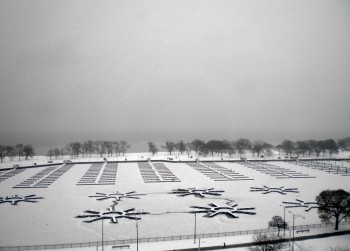
I like watching the harbor out our window change. A recent snowfall covered it. The foggy diffused sunlight softens it, and tricks my eyes into thinking the whole world has gone black and white. A faint shimmer on the icy snow calls back to last spring when sailors filled it with life.

winter_harbor_2009

I suppose few sailors who keep their boats in the harbor ever have a chance to see the harbor this quiet way. I wonder how it might change their experience next spring if they were looking at the lonely, frozen-over beauty I see out my window today.

The harbor is a community. I watch it as the boats come to take their places each season. I see the people with so much and so little in common take their places and have conversations. I see other people sail and watch without saying much of anything.

Can’t help but wonder what a sailor or two might do if when they returned next spring to find the harbor somehow was forever frozen over and empty.

Then this morning I read this morning that Yahoo! Will Kill MyBlogLog Next Month.

What if the social web froze over and no one came? Would you read and blog anyway? Would you just visit your harbors offline?

Liz's Signature

Like the Blog? Buy my eBook!

Filed Under: Business Life, Marketing /Sales / Social Media, Motivation, Successful Blog, Trends, Writing Tagged With: bc, blogging, LinkedIn, social web

Why People Pay Attention…

November 26, 2009 by Liz

A Hospital with ADD

relationships button

In the ER
It was a long flight home from Amsterdam through Madrid to Chicago. I expected to be tired on arrival, but the day after I arrived something terrible was wrong. I felt like I was shot in my left side. The pain was constant, strong, and worse than childbirth. Five hours in, I knew I needed to find out what was going on.

My husband had H1N1. No way he could come with me. I went to the ER alone. In a short time they found me a place. set me up for a x-ray and a CT scan. A friend caught up with me via text and came to sit by me for hours while I waited. My cell phone didn’t work so I couldn’t call home.

My mouth was dry, too dry to talk. They gave me ice chips when they remembered. They never gave me a way to call for more. On the way back from the x-ray I asked for more ice or water. An hour later, I was still without.

When the tests were over, they said I had a mass in my lungs (pneumonia), a blood infection (ecoli), and kidney stones. Maybe and hour later or so, they said were going to admit me. My friend went home.

After being alone for a long while, I sent a note to the ER desk asking someone to call my husband or my son before they admitted me to tell them what was going on. The Dr. in charge of ER that night pronounced that he didn’t have time to make such a call. He spoke loud enough for me to hear him, but couldn’t walk the ten steps over to tell me himself.

I’d now been gone from home almost 6 hours. My husband had no idea what was happening with me. By then what the doctor had told me was a faint memory. I wasn’t able to answer questions about it. The pain was still there despite the pain meds they’d given me.

In the Room
The first doctors I saw were residents. They didn’t introduce themselves as such they just started asking questions about what medications I take. One took notes and took the name of my pharmacy wrote both in my chart

She told me to keep taking those meds.

I asked three times to be sure that was what she wanted, explaining that I have gone as long as week with out those meds and she said keep taking them.

Apparently this information was not important enough for other doctors to read.

This proved a serious mistake when they put me out for the procedure to remove the kidney stone. Because my meds interacted with the meds they gave me for procedure.

My oxygen level dropped deadly low — well below 80, I heard as low as 60 — causing me twice to have seizures on the table while they were getting me ready to go for removal of the stone.

I didn’t die, but I could have.

Back in my room I was on oxygen and a monitor now. Some help that monitor was. If I moved a certain way, the alarm on the monitor would show zero and sound an alarm. No one would come. We timed it once at 20 minutes without a response. Another friend who was there every day to watch over me knew how to turn off the noise.

I asked the charge nurse why bother with a machine if they weren’t going to come. The answer was a weak smile, a look away with her eyes, and a blanket apology.
“I’m sorry.”
“No. You are not.”

I can’t help but wonder what was more distracting or important than reading the charts and answering alarms?

What was more worth their attention?

Some people don’t pay attention even when it’s their job.

A Community Who Paid Attention

I was released after 8 days. The surgeon who performed the procedure hadn’t been to check that all was well with the stent he’d left in. I’d not seen him since 5 days before. I went home with about half as much pain as when I had arrived.

Then something beautiful, embarrassing, and unexpected happened. People started to tell my simple story of how hospital stay had knocked me low. They shared it on their blog and on Twitter and in messages to me that are unforgettable. Thank you, Deb Ng, Lucretia Pruitt, and Jenn Fowler for thinking of me. Thank you everyone who chipped in. And thank you to Kathryn and everyone who guest posted for all of the work you did keeping my blog going on.

People pay attention because they care.

717691_joy

I am grateful this Thanksgiving for every second of your attention.

–ME “Liz” Strauss
Work with Liz on your business!!

Buy the ebook. Learn the art of online conversation.

Filed Under: Blog Comments, Marketing /Sales / Social Media, Motivation, Successful Blog, Writing Tagged With: bc, Community, healthcare, social-media

How Do You Transition or Repurpose Content for the Web?

October 13, 2009 by Liz

Don’t Endow Me

Power Writing Series Logo

Anyone who has had to give a demonstration, deliver a report, or teach a class knows the importance of tuning the information to the audience. Anyone who been to a class that involves learning software knows that students is likely to include folks new to the subject and the most savvy experts who want to refine their skills.

Sharing information with people is easier, more efficient, and more meaningful …

  • when we’re speaking one-to-one and can tailor the information to that individual.
  • when the people receiving the information offer feedback about the information they’re receiving.
  • when we know the experience of the people who are receiving the information.
  • when all of the people who are receiving the information are from the same culture, speak the same first language, are at the same functional level, have the same skills, and relate to the topic the same way we do.

It’s hard to do these when we’re working with a group that is all in the same room. This problem becomes even more difficult on the web. Here, we’re tasked to share information meaningfully when we’re in a new genre and blind to the audience. We’re writing for an unknown number of people who could be from anywhere and know absolutely nothing on our subject or have significantly more experience than we do.

How Do We Write Meaningful Content for People We Can’t See?

Writing for the web gets easier when we realize the words carry a different load than words in print. Words online are lit and hit the eye differently. People access them with a different intent. It’s a different experience to read a device than to read a book. It’s different experience to read and respond to a blog than to read a newspaper and write an email back.

I’ve been repurposing content and publishing online and offline since the 20th century. Here are some tips about transitioning and writing content for the web.

  • Titles Are Invitations. The title of this post tells you exactly what you get by reading it. Had I more metaphorically called this Snapshots of Web Writing, you might have thought this would feature pictures and writing samples. Use a title to attract people who want exactly the content that will be under it.
  • Brevity is Beautiful. Fifty-one word sentences and half-page paragraphs don’t work with the backlighted, fast-paced format of the web. Attention in harder to keep in this visual venue. Long sentences lose their meaning before we get to the end of them. Long paragraphs have the same effect. Easy to read can still be intelligent … To be or not to be. is possibly the most easily read graduate level sentence ever written. Short words are powerful tool.
  • Subheads Are Relevancy Signposts that Show Respect. When we break up content with subheads, we give people a chance to know what’s coming next. Readers have so little time. When we offer a simple subject that telegraphs the idea in the next section, we allow them an option to choose whether to skip ahead. Who wouldn’t appreciate that to having to crawl through unwanted information searching for what we really need?
  • Everyone likes to learn. No one likes to be taught. Often we take our responsibility to share information so seriously that we undercut our own effectiveness. We stand at the podium hoping it will give us expertise so that our words will be heard. If we step away from being the “sage on the stage,” and instead take on the role of the “guide at the side,” we can share what we’ve learned rather than tell what we know.
  • Write for one person who wants to know what you know. It’s easy to get overwhelmed by writing to a diverse group. Think individuals and include yourself. It’s WE — the audience and me — not me and them. We write more effectively when we consider what we’d want to learn. Write for someone intelligent and savvy as yourself, who wants to know or be reminded of what you know.

Great titles, short paragraphs, small words, subheads for navigation, a learner’s voice, and content leveled and chosen by you as a partner with the audience <-- that's a formula for transitioning content to the web. Have you repurposed content for the web? What have you found works best? --ME "Liz" Strauss Liz can help with a problem you're having with your writing, check out the Work with Liz!! page in the sidebar.

I’m a proud affiliate of

Teaching Sells

Filed Under: Blog Comments, Marketing /Sales / Social Media, Successful Blog, Writing Tagged With: bc, LinkedIn, repurposing-content, Writing

Imitation

April 9, 2009 by Guest Author


“Imitation is the sincerest form of flattery.”
Coined by Charles Caleb Colton in 1820 in his ‘Lacon.’

“Imitation” happens all the time on the web and is the source of much frustration for newspaper and other print media. The concept of “fair use” and “scraping the web” are terms mostly used when talking about copyright infringements for print media producers. The idea that citizen journalists can now report on news and other happenings with information taken from news sites it a disturbing phenomenon for many journalists to deal with, not to mention print media in general.

But is this type of imitation really flattering? Is this plagiarism? You’ve worked hard on your post. You’ve taken the time to think about it and possibly, do some research. You’ve carefully written and posted it on your blog. It’s your content based on your idea. Later , you discover through Twitter, or a friend that the very same content has been taken, copied and posted on someone else’s site! Sound incredible? It happens.

I’ve even seen it happen even on Twitter! We all know, or learn quickly (there is a LOT of twitter advice out there) the idea of the RT. You see something of value from someone else and you share. The RT is the attribution, the link back. Twitter has been called micro blogging – when you see something you’ve found and shared go by two seconds later from one of your followers with no RT, do you feel flattered by the “imitation”? I don’t.

I think it’s important to protect you work, your ideas, your content. The very idea of taking the time to think about, write and post your ideas deserves respect. That respect should allow you the right to not have your work copied without permission. Creative Commons is an excellent resource to help you with this. There are different licenses you can apply to your work that will protect it. A great resource for questions regarding this issue is Jonanthan Bailey, @plagiarismtoday on Twitter. He would be happy to discuss anything related to “imitation” with you.

Have you had experience with this and your writing? Do you see this as a problem?

from Kathryn Jennex aka @northernchick

photo credit: The Green Album

Filed Under: Successful Blog, Writing Tagged With: bc, Content, creative commons, imitation, Jonathan-Bailey, Kathryn Jennex, LinkedIn, Plagiarism, practiical communication, Twitter

Seven Ways to Offer an Irresistibly Readable Blog to the Undecided Readers of Your Blog

March 30, 2009 by Liz

Who Decides to Read Your Blog?

I went back to the archives to find, revise and expand, and bring this one back to you. The content is even more relevant now that the conversation has moved to so many locations and the noise is so much louder.

In just a brief one-twentieth of a second–less than half the time it takes to blink–people make aesthetic judgments that influence the rest of their experience with an Internet site.

–Kamakshi Tandon
REUTERS, Internet users judge Web sites in less than a blink
Jan. 17, 2006
Liz reading computer

We’ve got less than a blink to grab a reader’s attention. The reader clicks in. Looks. Decides and then . . . and then what? . . . Do they stay or do they leave? If they stay, did what they see lend our words more credibility or did it take some away?

Design, curb appeal, packaging — whatever you call it — it’s what brings customer-readers further into our businesses and our blogs. They recognize what works for them and what doesn’t. If it doesn’t, they’re gone so quickly that even our stats programs don’t know. Try the Blink Test if you want a baseline idea of what your readers are seeing before they blink.

What about reluctant readers, undecideds who decide to stay a little longer? What can we do to convince them to stay? Better yet, how can we turn them into fans?

Capturing the Attention of Reluctant Readers

Uber Reader Sign

In educational publishing, we use a euphemism, “reluctant readers.” It’s meant to describe kids who, rather than read, they turn away to find their inline skates or a shiny object online. To get those customer-readers engaged you don’t forget them, you off them something. As a product builder, they’re my favorite customers to write for and to write about.

Why am I talking about this when you write for literate adults? The interwebs offer so much that this information has become vitally important to every person who writes a blog. .

. . . You see, with no time and too much information to sort and process, we’re all reluctant readers and becoming so more and more. If you’re a skeptic, try reading the tax code –or any “have-to” document on your least favorite subject. You’ll wish that there were something more to see than long columns of endless text, something to break up the boring words.

If we want our customer-readers to stay long enough to hear what we’re saying, we need to offer an experience that’s irresistible. We’ve got to

  • offer information that’s useful and makes sense to them
  • appeal to their sense of fun, offers a beautiful experience, or moves them emotionally
  • deliver it in ways that fit into the time their life has available

Irresistible is all about the engaging the folks who come in all three ways above.

Reader Support as Part of Your Brand

Those kids we call reluctant readers leave their inline skates to read what they’re madly interested in — books on extreme sports and the latest gaming websites and blogs — if they’re made right. As educators, we keep them using the research that show us how to construct information so that they’re reading faster and with more satisfaction.

You can use that same educational research to engage your customer-readers. Brand your blog as a worthwhile source of quality content. It’s one more way, that you can make customer-reader support a resounding part of your offer.

  1. Tell the story of the information. Quality is essential, but know that quality information can’t carry the load. If people only want information sources are plenty. The story of the facts, your experience or response to them is only where you are. It’s the story that gives connects people to the information. Give your words and your blog life, appeal, and meaning and you’ll be most of the way there.
  2. Use sub-heads liberally. Sub-heads break the text into shorter bits. Subconsciously that not only tells me what this bit is about. It also says I only have to read this far and then I get to breathe again. Our brains like subheads. Search engines like them too. The keywords are guideposts that organize our thoughts.
  3. Use everyday words. Everyday words keep the reader moving forward. Big words make us stop to consider them. Think about it. The word use is a fine one, use it. Do you really mean utilize? Use keeps me going. Utilize makes me stop to wonder whether you mean something other than the what use would have said. Anything that stops a reader works against your message being heard.
  4. Use one or two pictures, images, art, and color to enhance your message. Place them with care where add value to the text. Put images where readers expect to find them. If you’re not sure ask a customer-reader to give you feedback on how you’re doing. Design seems easy, but it’s not.
  5. Take the time to write something short. The point here is to make every word count. Be lethal. Remove every word that you don’t need. It’s amazing how many extra words you can find when your quest is to go looking for them. A few sentences ago, I turned this into two posts instead of one.
  6. Use typographic cues, such as bold and italic, to show what’s important. Be consistent and try not to make everything important. If you use underlined text to show what is a link, don’t use an underline for anything else. If you make everything important, then nothing is.
  7. Show up to let folks know you want them there. Write with room for them to add their view. Consider the questions you ask them. When they take the time to respond, let them know that you heard. Take time to answer back with your thoughts and if you can, ask another question.

Each of these points are about helping reluctant readers access your message in the easiest most straightforward way. When you support me like that I feel like we’re both smart.

Ever read something that made you feel like the writer was saying something you always thought? . . . or something that just made you feel smart for reading it? Bet you went back to see what else that writer had to say . . . . These are just a few more ways to a fan.

What makes an irresistibly readable blog for you?

–ME “Liz” Strauss
Work with Liz!!

Buy the ebook.

Register for SOBCon09 NOW!! Invest, Learn, Grow!

Filed Under: Marketing /Sales / Social Media, Successful Blog, Writing Tagged With: bc, blogging, irresistible, LinkedIn, Marketing /Sales / Social Media

  • « Previous Page
  • 1
  • …
  • 23
  • 24
  • 25
  • 26
  • 27
  • …
  • 64
  • Next Page »

Recently Updated Posts

Is Your Brand Fan Friendly?

How to Improve Your Freelancing Productivity

How to Leverage Live Streaming for Content Marketing

10 Key Customer Experience Design Factors to Consider

How to Use a Lead Generation Item on Facebook

How to Become a Better Storyteller


From Liz Strauss & GeniusShared Press

  • What IS an SOB?!
  • SOB A-Z Directory
  • Letting Liz Be

© 2025 ME Strauss & GeniusShared