Successful Blog

  • Home
  • Community
  • About
  • Author Guidelines
  • Liz’s Book
  • Stay Tuned

Cool Tool Review: Google Alerts

May 27, 2010 by Guest Author 1 Comment

Todd Hoskins Reviews Tools for Business

cooltext451585442_tools

Todd Hoskins chooses and uses tools and products that could belong in an entrepreneurial business toolkit. He’ll be checking out how useful they are to folks who would be their customers in a form that’s consistent and relevant.

Cool Tool Review: Google Alerts
A Review by Todd Hoskins

Do you know the people, posts, and sites that are influencing your brand and industry?
Are you engaging in the most relevant conversations?

Google Alerts is one of the most valuable free services on the web. With Google’s indexing power, you get immediate or regular notification in your inbox or reader on topics or keywords of interest.

With the advent of the real-time web, you no longer need to wait a few days or even a week to learn that you’ve been praised or defamed on some obscure site. Alerts represent an early advancement from search-based tools to discovery on the web. Alerts is rather infantile in this sense – you have to tell Google exactly what you’re looking for. So, the key is determining:

What’s important to YOU and YOUR business?

Here’s a simple way to think about what alerts you should create:

1) Companies
2) People
3) Products
4) Issues

The first alert someone sets up (other than their own name), is usually your company. Make sure to also add alerts for competitors. Google lets you determine the frequency at which you get alerts. So, for a primary competitor, you may want immediate alerts. For others, daily or weekly may be fine. As the notifications are sent to your inbox or reader, you want to manage how much volume you get on an ongoing basis.

For the people category, monitoring executives, analysts, and industry luminaries allows you to stay up to date on what is being said about whom. Whether or not you choose to set up alerts for your employees is up to you. I would question anyone who spends a good portion of their week monitoring what their people are saying. If alerts are set up for the other three categories, you should get any post that is relevant without playing big brother to your employees.

Products is a no-brainer. My only caution here is, if you are setting up alerts for more than a dozen products, you may want to consider a social media monitoring solution. Nathan Gilliat watches the industry closely. There is value in getting the additional analysis and tracking, but you pay for what you get.

Finally, the category that most people miss: issues. Too many companies are jumping into blog and Twitter conversations only when their company is mentioned. Consider the values, objectives, and challenges your company is pursuing and facing. Listening and participating in conversations about “financial transparency,” “deregulation,” “surfing,” or “single payer health insurance” will both enliven your content creation and allow you to highlight what is important to you as an individual or a company.

Setting up Google Alerts takes less than five minutes. But thinking about the keywords and themes you want to monitor should be an ongoing process.

Summing Up – Is it worth it?

Enterprise Value: 2/5 – more sophisticated tools with graphs, charts, and sentiment analysis exist for a cost

Entrepreneur Value: 5/5 – if you know of a more simple way to quickly get the info you need, please let me know

Personal Value: 4/5 – tracking your favorite band, athlete, or ex-boyfriend provides some balance to the more professional alerts


Filed Under: Successful Blog, Tools Tagged With: bc, Google_Alerts, LinkedIn, social media montioring, Todd Hoskins

You Can Do It: 4 Celebs Who Lost It All and Came Back Again

May 27, 2010 by Guest Author Leave a Comment

A Guest Post by Katheryn Rivas

cooltext443809602_strategy

If your life is suffering because of the economy, personal issues or relationship failures, you still don’t need to give up. As you’ll see below, even some of the most successful and popular public figures of our time are not invulnerable to losing it all. See how these actors, producers and business moguls turned their lives around and got it all back.

1. Mickey Rourke

At fifty-seven years old, Academy Award-nominated actor Mickey Rourke has had a roller-coaster life in and out of the Hollywood spotlight. But with the 2008 film The Wrestler, many fans and industry insiders were excited to see Rourke make a comeback after he spent nearly a decade on the fringes.

Rourke broke into acting during the 1980s with small appearances in films and in TV movies, and became a veritable celebrity after roles in 9 1/2 Weeks, Barfly, and Year of the Dragon. In the 1990s, Rourke felt like he was a terrible actor and turned to boxing, almost as a way of punishing himself. Despite his success in the ring, he underwent lots of plastic surgery — some needed and some not — and many outside observers wondered what direction Rourke would take next.

Mickey Rourke had a hard time making it back into the spotlight over the next several years, but he allowed himself to take small roles — even in Enrique Iglesias’ “Hero” music video — in order to rebuild his repertoire with critics and the public. In 2008, The Wrestler opened to immense critical acclaim and public excitement, and the film and Rourke were nominated for — and won — several prestigious awards. With the summer 2010 release Iron Man 2 many believe Rourke is continuing his comeback.

Robert Downey, Jr.

Another actor who was popular in the 1990s but who suffered a long-term absence in Hollywood is Robert Downey, Jr. Downey has been working in the entertainment industry since he was a child, and has been a high-profile, critically and commercially successful actor since his 1992 Academy Award-nominated role in Chaplin.

Along with his movie successes, however, Downey was known for having serious drug problems, landing in jail and rehab centers several times and getting kicked off movie sets. Relationships with actresses like Sarah Jessica Parker also failed during that time allegedly because of his drug use. Because of his talent and charisma, however, Hollywood continued to give Downey second chances, and in 2000, he joined the cast of the then-popular TV series Ally McBeal. He won a Golden Globe for his work, but was arrested and sent to rehab soon after.

When Downey finally decided that he could regain control over his life, he — like Rourke — turned to small roles and even music videos to get work. Friend Mel Gibson paid Downey’s high insurance bill as a favor, and Downey was allowed to work on Gibson’s film The Singing Detective. Directors continued to hold back some of Downey’s salary until after filming for their own insurance purposes, and higher profile roles in films like Zodiac and Good Night and Good Luck, Downey was rewarded with blockbuster roles in Iron Man, Iron Man 2 and Sherlock Holmes. Downey has been married to his wife Susan Levin — the producer of Iron Man for five years.

Drew Barrymore

Today, actress and producer Drew Barrymore is known as a bubbly star who supports environmental issues, works regularly, and wins awards, such as her 2010 Screen Actors Guild and Golden Globe awards for her role of Little Edie in Grey Gardens.

But after she won over Steven Spielberg and the public with her adorable portrayal of Gertie in 1982’s E.T., Barrymore fell into a life of alcohol and hard drugs. She allegedly was already into cocaine by the time she was just 13 years old, and attempted suicide at age 14. After rehab and becoming emancipated from her mother, Barrymore began to work again in her late teens. During the 1990s, she appeared in films like Poison Ivy but refused to give up her rebellious attitude. She posed nude for playboy and even flashed talk-show host David Letterman while standing on top of his desk during filming.

Her buoyant, positive attitude today has helped Barrymore to win over critics and the public, and she was hired to star in a string of successful movies like Riding in Cars With Boys, Scream and The Wedding Singer. By 1995, Barrymore started her own production company, which backed films like Never Been Kissed and Charlie’s Angels, which were both big hits. Today, Barrymore continues to act in romantic comedies and more independent films, and is a vocal supporter of women’s and children’s rights, as well as the environment.

Martha Stewart

By the mid-1990s, Martha Stewart was one of the most powerful women in the country, and also one of the richest. She began her own catering business in her Westport, CT, basement in the 1970s, and quickly expanded her network and experience, starting a partnership with Clarkson Potter, which published many of her cookbooks and and homemaking books. Stewart appeared on talk shows like Oprah, had her own newspaper column, and even got her own magazine, and by 1997, she was chairman, president and CEO of the Martha Stewart Living Omnimedia company. Going public with her stock two years later, Stewart was officially a billionaire, until she lost it all.

Stewart — a former stockbroker — was pursued by the U.S. Securities and Exchange Commission for insider trading, and by 2003, was indicted on nine counts of fraud and other crimes. Besides stepping down from her business duties, Stewart had to go to federal prison for five months.

Almost immediately afterward, Stewart began publicly working on several lucrative projects, including collaborations with Kmart, Macy’s, and other top retailers. She also has her own radio channel is slowly building up her multimedia empire once again.

Four celebrities each went down a bad road that led them away from their success. The powerful point is not in where they went wrong, but how they are working their way back. Certainly, with the odds they face and people watching them, any one of us with the right focus and determination can get our lives going in the direction we choose.

Katheryn Rivas writes on the topics of jobs and online universities. She welcomes your comments here. You can find her at katherynrivas87 @ gmail [dot] com .

–ME “Liz” Strauss
Work with Liz on your business!!

Filed Under: Business Life, Community, Successful Blog Tagged With: bc, jobs, LinkedIn

Write For A Blog Reader And Not A Book Reader

May 26, 2010 by Guest Author 17 Comments

By Terez Howard

How to blog series
cooltext455576688_blogging
When you sit down to read a book, you read from left to right, paragraph to paragraph, page one to page two. That’s how I read a book, anyways.

When you read a blog, how do read it? I scroll like I’m looking for something, even if I don’t know what I’m looking for or what I’m going to find. I go up and down like a yo-yo, deciding whether or not a post is worth my time to read it. I check out subheadings, bullet points, bold characters, italics, a discernable font, and I love short paragraphs.

Time for a new paragraph. That last one was getting too long for my eyes. Why should you care how people read blogs?

First impressions – the worst impressions?

Because if readers don’t like the way your blog looks, even if you’re a first-rate writer, they are not going to read what you write. I do it all the time. I discover a post with an interesting headline and excitedly click on that link. When I see huge clumps of text and yellow-colored, size 8 font on a black background, I’m done.

It doesn’t matter what that blogger wrote. I’ve made a judgment call. Slap my wrist and tell me that I’m wrong. I don’t care. I’ve decided that if that writer doesn’t know the basics about blogging, then he/she couldn’t possibly have anything worthwhile to say.

It’s not the nicest way to be. I wasn’t always like this, tough. I’ve stumbled upon poorly constructed blogs that I have attempted to decipher. A deeper dig reveals typos galore, poor English and terrible content again and again. So why waste my time trying to translate?

You never get a second chance to make a first impression

Make a good first impression on your readers. First and foremost, you need original, well-written content. That is the foundation of a great blog.

Second, and this may seem ridiculous to say, but please make sure that people can read the size and style of your font. If you try to be too fancy, say with a script-type font, people will click away. If your words are too small for the average pair of eyes, people will click away. If the font is too big and overbearing, people will click away.

Either while you write or after you write and edit, you should try to include:

  • Subheadings. These break up text and summarize what readers can expect as well as build anticipation.
  • Bullet points/numbered lists. These are my favorites to read and write. They, too, break up text so well. I notice that if I read nothing from a blog post, I will read the list.
  • Bold, italics, underline, etc. Pepper your post with these font features when you want to stress something. But do not inundate a post with them. No need for the entire post to be bold.
  • Short paragraphs. Don’t write an entire blog post with just one paragraph. Staring at a computer screen with one long block of text is rough on the eyes. You can’t see anything. Experienced bloggers recommend three to four sentences per paragraph.

Use common sense

When you write for blog readers, don’t be a stickler to any rules. You’re thinking, And what’s the reason for this post if I can do whatever I want?

Well, of course you can do whatever you want. I’m saying that you don’t have to count the number of sentences per paragraph or include a bulleted list in every single post. Be natural. Think about your audience. Remember, write how you read.

A computer screen looks much differently than a book. Make it easy for people to read your blog.

How do you write for blog readers?

—
Terez Howard operates TheWriteBloggers, a professional blogging service which builds clients’ authority status and net visibility. She regularly blogs at Freelance Writing Mamas . You’ll find her on Twitter @thewriteblogger

Thanks, Terez!

–ME “Liz” Strauss
Work with Liz on your business!!

Filed Under: Blog Basics Tagged With: bc, blog readers, blogging, business-blogging, How-to-Blog, LinkedIn, Terez Howard

Social Media Book List: Managing Sales People & Social Media 101

May 26, 2010 by teresa 3 Comments

A Weekly Series by Teresa Morrow

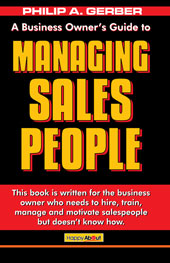
I’m Teresa Morrow, Founder of Key Business Partners, LLC and I work with authors and writers by managing their online promotion. As part of my job I read a lot of books (and I love to read anyway!). I am here to offer a weekly post about one book author I am working with and one book I have put on my reading list. This week I will be highlighting ‘A Business Owner’s Guide to Managing Sales People’. and ‘Social Media 101’ by Chris Brogan. The books will cover topics such as social media (Facebook and Twitter), organization, career building, networking, writing, self development and inspiration.

A Business Owner’s Guide to Managing Sales People

managing_sales_peoplemid

This book is divided into 6 main chapters: hiring, training, managing, motivation, telemarketing and sales.

Here are few key points highlighted in the book:

~Just because a salesperson is likable, he or she does not necessarily meet the key criteria for success.
~Intangible sales are in the mind and tangible salesare in the hand.
~A service is always intangible, even if you make a presentation with a brochure or an agreement.
~Many scheduled appointments will be no-shows.
~Not hiring a salesperson is better than hiring a bad salesperson.

About the Author:
Philip Gerber talked the talk and walked the walk for over 40 years. The knowledge he acquired from selling to small organizations as well as to Fortune 500 companies has translated into his ability to train salespeople all over America. Phil has owned over a dozen small businesses ranging from one employee to over 75.

His company, Bottom Line Consultants, has successfully trained salespeople and sales managers for over 15 years.

You can purchase a copy of ‘Managing Sales People’ online at ThinkAha books or at Amazon.

This blog post is part of a virtual book tour done by Key Business Partners and I have received a complimentary copy of Managing Sales People by the author.

Social Media 101 by Chris Brogan

Now I would like to highlight a book on my “review” reading list–Social Media 101.

Here is some great information that Chris shared on Amazon about the book:

100 ways to tap into social media for a more profitable business

In Social Media 101, social media expert and blogger Chris Brogan presents the best practices for growing the value of your social media and social networking marketing efforts. Brogan has spent two years researching what the best businesses are doing with social media and how they’re doing it. Now, he presents his findings in a single, comprehensive business guide to social media.

You’ll learn how to cultivate profitable online relationships, develop your brand, and drive meaningful business. Brogan shows you how to build an effective blog or website for your business, monitor your online reputation and what people are saying about your business online, and create new content to share with your customers.

* Presents specific strategies, tactics, and tips to improve your business through improved social media and online marketing
* Looks at social media and the wider online universe from a strictly business perspective

About Chris:
Chris Brogan is President of New Marketing Labs, a new media marketing agency. He works with large and mid-sized companies to improve online business communications like marketing and PR through the use of social software, community platforms, and other emerging web and mobile technologies.
*courtesy of Chris Brogan.com

You can purchase a copy of ‘Social Media 101’ on Amazon.

I truly hope you will check out these books and please comment and let me know your thoughts on them.

Filed Under: Business Book, Business Life, Successful Blog Tagged With: bc

21 All-Star Entrepreneurs’ Best Decisions to Grow Their Business

May 25, 2010 by Liz 21 Comments

cooltext443809602_strategy

2009 … We couldn’t get it far enough behind us. Who wasn’t ready for the calendar year to turn? We were ready to be back on the winning team again. Many of us revisited our thinking, our our strategies, our resources, and our work styles to be on our best game.

What Was the Best Decision You Made to Grow Your Business in 2010?

I asked 21 entrepreneurial All-Stars (add me and you get 22) to share in a few words what was the best decision they made in 2010 to keep their businesses growing. The answers sorted easily into five major ideas — best practices for sure.

Here’s what we all said. [I’ve included the links to their blogs and their twitter streams. If you subscribe to them, you’ll have your own online entrepreneurial advisory board.]

Have a strategy

Strategy is a practical plan to move forward over time. Great strategy is based on a solid foundation based on who we are, where we sit in the overall picture,the current conditions and the unique opportunities that are ours.

Sheila Scarborough, @SheilaS jumped on this with her thoughts …
My best move this year was to embrace the realization that even as only one person, I have as much ability as a “big agency” to attract quality clients. Why? Because in 2010 I saw that my supposed weakness (being one lone person) is actually my strength. As a solo operator, I don’t have to deal with time-suck meetings, clients that are assigned to me, having to go through a bunch of committees to get things approved, etc. I can organize my time, smarts and effort to be more nimble, more responsive, more knowledgeable and quicker-on-the-draw than anyone else. That rocks!

Carol Roth, @caroljsroth added foundational wisdom to support what Sheila laid out …
Let myself take a few steps backwards in order to build a foundation to make leaps and bounds forward. In concrete terms, this meant not taking on a few very lucrative clients and projects in order to invest more time and effort in a foundation that will allow me to achieve the next level of goals for my business. As difficult as it was to let the proverbial bird in the hand (or should I say “Benjamins” in the hand) go, the potential ROI from the investment more than makes up for that risk.

Turn Decisions into Action

We can strategize ways to grow our own food and cook it, shop for salad, order in, or dine out. But if we don’t decide, execute on a plan, and eat. We’ll be dead.

Michael Martine, @Remarkablogger has decided …
The best decision I made was to decide to grow it instead of just wishing it had already grown, setting goals, then creating and following a plan to reach those goals.

Britt Raybould, @britter moved to action on a long-term plan …
Attending SOBCon helped me kick off a long-awaited project to add knowledge products to my business, creating an additional income stream separate from my hourly and project-based work. The time investment now in creating these products will pay off huge during the next five years. It’s will also add some much-needed balance to my business.

Jason Falls, @JasonFalls decided focus is crucial….
The best decision I made in 2010 was to eliminate distractions and really focus. The flood of messages, requests, things to do and what-not that social media brings will drown you. Prioritize, eliminate the unnecessary and focus on the important parts and you’ll see a noticeable difference in moving your needles.

Pamir Kiciman , @gassho has put his strategy to work in new venues to get new results …
I opened a personal Facebook account. This has helped engage my audience much more directly. For instance, people who weren’t subscribing to my blog via email/rss, did start following it via NetworkedBlogs. This also attracted others on the periphery. And many more people are voluntarily promoting my content. This, and starting a YouTube Channel have put me on the map in new ways.

Stay a Learner

A growing business needs growing leadership to move it forward. Leaders listen, learn, and reach out to others who are finding new solutions, who are testing new ideas, and who have been where we’re trying to go.

Christina “CK” Kerley, @CK says is moving outward …
The best decision I’ve made in 2010 to grow my business is, consequently, the best decision I’ve made in other years, namely: to keep breaking new ground through learning new methods, new media and new solutions around which I can build new practice areas for my business. In 2010, it’s ‘B2B mobile marketing’ just as in years past it’s been around B2B social media, Speaking, Training, Strategy and more.

Terez Howard , @thewriteblogger learns from the best …
The best decision I’ve made this year is to follow the advice of seasoned professionals. I look to successful freelance writers and bloggers to give me the guidance I need to succeed.

Jyl Johnson Pattee, @jylmomIF is getting uncomfortable …
The best decision I made in 2010 to help my business grow was to go outside my comfort zone and do things I didn’t know how to do—things that were necessary to take my business to a new level. This has required putting fear aside, asking for help, listening, and being willing to shift directions. Ultimately, it has helped me grow my skill set, increase my knowledge, and form amazing relationships. It has helped me see that the path to business success is made up of opportunities that require dedication and pushing forward, even when that forward motion is, at times, foreign and/or difficult.

Sally Hogshead , @SallyHogshead is using her beginner’s mind.
I aspire to be the dumbest person in the room. I surround myself with people who are smarter than I am: people with knowledge, experience, skills, network that’s greater than my own. If I’m intimidated by a certain person or group, all the better — these are the people who can challenge and inspire and push me to the next level.

Hank Wasiak, @HankWasiak isn’t holding back …
“Embrace Risk, make a mistake and then fix it better than anyone else. This is the first time in history that how we address and correct a mistake or deal with an issue is perhaps even more important than the mistakes themselves. I see it as a way to put my values and commitments on the line and an opportunity to create a distinct advantage and leapfrog competition.”

Enlist Reinforcements

A person who walks solo is limited by what one person can do, see, perceive, learn, and know. Great businesses are build on relationships that align goals to build something greater than anyone person can alone.

Barry Moltz, @barrymoltz explains how is investing in others …
I invested money in smart people to help me evolve my business thinking and execution.

Janet Fouts, @jfouts deepening relationships ….
I decided not to go in for the conventional business promotion ideas like yellow pages and print ads and trust my instincts. i know that almost all of my business is word of mouth referrals, so I dedicated more time to deepening existing relationships on and off line to encourage the people I know and work with to help me promote my business. I got more speaking opportunities which led to more business as well as a second book!

Shelly Kramer, @ShellyKramer is including others and herself in her business plan …

I’ve made two strategic decisions thus far in 2010. First, I follow Hank Wasiak’s advice and collaborate more instead of less. Today’s business world is about collaboration, not competition, and the people who get that are, in my opinion, strategically positioning themselves for growth and prosperity. Secondly, I consciously try and pay myself first. That means that instead of always letting others’ needs (including my clients) come before my own, I make a concerted effort to pay myself first. That means writing blog posts for MY blog, doing press releases about MY business, and never forgetting that I’m the only one responsible for growing and maintaining my business.

Lorelle Van Fossen , @lorelleonwp gives herself over to the team.

Collaboration. I realized a long time ago that I couldn’t do it all alone. In order to make my business dreams come true, I needed to throw off the mantle of “I am the only one who can do it all” and realize that it takes a village.

Coming on board the incredibly creative team of Woopra a few years ago brought home this thought of the joy of teamwork actually ingnited by my work with Liz Strauss on Successful and Outstanding Bloggers Conference (SOBCon) and other projects. She taught me how to “play nice” again with others, something I abandoned years ago when I left the corporate world with intent, an atmosphere of “if you can’t step on them, fire ’em.”

Last year, I solidified my investment in Bitwire Media with the innovative thinker and rule breaking producer, Dave Moyer, and Kym Huynh, the Aussie surfin’ lawyer. With their help, I’ve put passion back into my work and my life. Working with people who challenge you to be you all the time, call you on your ignorance, and make you sit up straight, pay attention, and think harder and faster than ever, as well as produce better and with greater quality – it’s so exciting.

I’m now bringing this same energy and enthusiasm – okay, call it passion – to all of my work, with all of the customers, clients, and companies I work for, to my training programs and workshops, keynotes, and every part of my life. All because I changed my thinking. You cannot do it all alone. Reach out. Connect. Share. And mean it.

Let Go to Create!

Holding tightly to what once worked or to what might earn some currency or credit can also make it hard to grab hold of the opportunity that will take us to our ultimate dream.

Tammy Lenski, @TammyLenski
“I decided to stop offering peripheral services that took time and energy away from work that’s at the core of my value to clients, even though the peripheral services were bringing in income. The new doggedly focused approach has been substantial growth.”

Oded Noy, @SocialApproach adds a measure of awareness …
Have the discipline to let go of those aspects of the business that don’t work.

Toby Bloomberg, @tobydiva points out that to grow it’s important …
To take more chances to color outside the lines.

Rajesh Setty , @UpBeatNow chimed in with a similar thought …
Letting go of deals that were not there in the first place. Just that one action saved a lot of time that I was able to put to use more productively.

Nurture and Feed Your Purpose

Tending the dream fire and keeping the resources that ignite it could be the most important idea of all. Building a business takes energy, passion, and a willingness to work when the work isn’t always fun.

Becky McCray , @BeckyMcCray added something that we often overlook …
I took time away from my business, in order to grow my business. After three days at a terrific business conference, I took three days of quiet reflection with only a few friends. The result is a better focus, renewed purpose, and many new ideas, and now I’m sure I’m on the right course to grow in 2010.

Live the Person You Want to Be

More than half of any business success is showing up with all that you have — integrity, consistency, competence, confidence, and compassion.

@LizStrauss
The best thing I did for my business this year is decide to “kill off all other options” to be known for the unique, strategic, innovative, community builder I am. I am showing up fully, entirely, and living my abilities and passion full out. I am focused on my priorities, with a clear vision of where I’ll be when the year is done and where I’m going after that.

To keep me on that path, I’ve built the following model on which to test everything that comes up.

  • How can I incorporate this idea, action, or plan onto the path that moves me to my destination? If I cannot, who would could gain traction from this great idea, action, or plan?
  • Does this offer to speak, work, or volunteer move toward my goal?
  • Is there a way to partner with others with similar goals so that we all benefit at the same time?

What about you? What is the best decision you made for growing your business in 2010?

–ME “Liz” Strauss
Work with Liz on your business!!

Buy the Insider’s Guide to Online Conversation.

Get a Great Deal When You Join Third Tribe Before June 1, 2010. I’m a proud affiliate.

third-tribe-marketing

Filed Under: Business Life, Marketing /Sales / Social Media, Successful Blog, Trends Tagged With: bc, Business development, LinkedIn

Get Visible! Grow UP! Solve Your Problem for Everyone

May 24, 2010 by Liz 6 Comments

When Location Becomes Solution

cooltext443809602_strategy2

In the days of my dad’s saloon, everything was location, location, location. If you wanted to be noticed, you put your store at the corner of State and Main. Every car driving past, every person on the sidewalk saw you.

Big brands and entrepreneurs now find ourselves in a 24/7 world where time and space don’t limit our community as they once did. Many businesses only meet customers on their computer screens.

And location is taking on new meaning online and off.

Now the grand location might be at the top of the search engine page 1 or a huge twitter retweet list. Social Media’s new Location, Location, Location is another thing. It’s showing up on your smart phone screen.

To do that it’s really solution, solution, solution. Solution is the new location. People search for answers to the problems they have.

So it makes sense to have a problem-solving mindset.

Solve problems in your own business.
Solve problems that everyone has.
Solve problems that will still be problems when the social media tools change.

Make a habit of recognizing what’s a problem in your business and solve that problem for everyone else. It’s a strategy that works to raise visibility and grow a business because …

  • Though we may think we’re the only ones who have a certain fear, problem, or issue, a conversation about almost any problem will prove that we’re not.
  • The people you can reach as clients, customers, and readers are a lot like us. It’s the nature of how people connect. We gravitate toward those who have similar values and think in similar ways.
  • Some of those people are looking for the same solution. If we talk to them about solving their problem, we move outside of our view of the problem and our feelings about it. Being outside of the problem brings new perspective, new ideas, and new approaches to solutions.

With a problem-solving mindset, we stay in a learning and listening attitude. Leaders who reach out to listen and learn, to find solutions and value the people who share their ideas are irresistibly attractive. The leaders grow and so do their businesses.

1110956_pencils

And when you’ve tackled one problem, look again for the problems or glitches inside that new solution, the discomfort around the new process, or the old habits that no longer work. That’s how we keep our growing businesses growing up when we reach a small hitch.

Which of your business problems can you solve for someone else?

–ME “Liz” Strauss
Work with Liz on your business!!

Buy the Insider’s Guide to Online Conversation.

I’m a proud affiliate of

third-tribe-marketing

Filed Under: Marketing /Sales / Social Media, Successful Blog Tagged With: bc, LinkedIn, problem-solving, Strategy/Analysis

  • « Previous Page
  • 1
  • …
  • 275
  • 276
  • 277
  • 278
  • 279
  • …
  • 959
  • Next Page »

Recently Updated Posts

The Creator’s Edge: How Bloggers and Influencers Can Master Dropshipping

Is Your Brand Fan Friendly?

How to Improve Your Freelancing Productivity

How to Leverage Live Streaming for Content Marketing

10 Key Customer Experience Design Factors to Consider

How to Use a Lead Generation Item on Facebook


From Liz Strauss & GeniusShared Press

  • What IS an SOB?!
  • SOB A-Z Directory
  • Letting Liz Be

© 2026 ME Strauss & GeniusShared