Successful Blog

  • Home
  • Community
  • About
  • Author Guidelines
  • Liz’s Book
  • Stay Tuned

80-20 Rule of Customers: Stop Thinking 20th Century! Attract Only the Top 20%

March 22, 2011 by Liz

10-Point Plan in Action

Who’s Not Your Ideal Customer?

insideout logo

I was sitting waiting for a friend in a San Francisco Bistro. The art designer at the next table was bemoaning his business clientele. He said,

20% of my customers are a pleasure to work with. 80% are not, but they pay the bills.

It was all I could do to say, STOP THINKING 20TH CENTURY!!

80-20 Rule of Customers: Quit Thinking 20th Century! Attract Only the Top 20%

In the 20th Century, when we were stuck in geographic niches, we were been limited by location and broadcast advertising. We might have had to serve more people who weren’t our ideal clients and customers. Word of mouth referrals could only reach so many more like the ones we loved already.

The Internet and social business through social media together have blown that 20th century notion apart.

Whether we’re a one-person shop or a huge corporation, we can identify our ideal customers — those 20%-ers that make our work faster, easier, and more meaningful. We can get to know them and let them get to know us. We can develop trust and relationship, discuss solutions and suggest creations, so that by the time they find our front door, they’re already in our community of fans.

Here’s how to do attract those 20%-ers …

  • Build an offer that only can deliver. Design it to the detail to suit the customer group you know best. Set your highest standards for the outcomes it guarantees. Know every detail of its execution and performance. When you can believe in your head, heart, hands, and soul that you and every member of your team can consistently deliver on it. You’re ready to talk to the people you want to attract.
  • Have standards for customer relationships. Whether your customers buy pencils or designs for major stadiums, know what behaviors you believe in as eithical and trustworthy. Offer those behaviors to your customers and expect those behaviors in return. If a customer disrepects your product or the people who make or sell it — no matter what that product or service is — send the customer packing. No money is worth your ethics or the self-respect of your business.

    Take a minute to remember your best customers – those 20%-ers. The qualities they have in common probably add up to something like these: They

    • Understood your product or service and its value.
    • Were willing to pay a fair price for great work.
    • Saw your unique contribution.
    • Trusted your expertise.
    • Communicated their problems with concern for their needs and yours.
    • Were happy to talk their friends about you and your work.
    • Working with them made you better at what you do.

    So look when you want to identify new 20%-ers that you want to work with, look for people who

    • See how your product or service can improve what they do.
    • Agree on the value of the work and the relationship.
    • Know their own unique expertise and recognize yours.
    • Communicate well and honestly.
    • Share your values and are open with their friends.
    • Enjoy great working relationships.

    Holding your standards on customer relationships will attract customers who have the same standards as you.

  • Invite, don’t sell. The difference between inviting and selling is the strength of your trust relationship. Pack that invitation with the offer you guarantee to deliver on. Describe it with the values you hold for relationships and how that pays off in having more time to building quality and real return on investment.
  • As @MichaelPort of Michael Port says, “Match your offer to the level of trust you’ve developed.”

    Example these words mean something different from someone we love than from someone we just met …

    Come to my room. I guarantee you an unforgettable night of sex.

    Speak with and show respect for work and the people with whom you work. Handle your products like valuable investments. Describe your services with calm and passionate reverence.

  • And as @SteveFarber Steve Farber says, “Do what you love in service to the people who love what you do.” You’ll know in seconds if the people you’re talking with don’t “get” the value you’re offering. If they don’t “get” your products and services don’t try to convert them, they won’t stay converted and they’ll keep asking more of you.Instead find the people who value you.
  • Deliver on every promise so that folks feel proud to talk about you.

Great businesses don’t qualify our customers based only on interest and cash to buy. Though crucial, as our only gating factors, those two alone will lead us to serving folks who don’t value what we do.

80%-ers don’t build our businesses. They take more time, They question every price and every action because they don’t trust. If they’re loyal, they’re loyal to price or because we’re the ones who tolerate their indecision, misbehavior, lack of communication, without charging for time lost

The 20%-er Attraction Standard

When we hold ourselves to our best standards and performance, people notice.
When we treat people with trust and respect, trustworthy and respectable people come to us.

When we invite the right people to try our best offer, we make it easy to choose our products and services. We also make it easy to share our best offer with friends. 20%=ers think of us when they’re asked “Who do you know that can …? ”

And soon those 20%-ers we invite bring their 20%-er friends who want to enjoy that same standard of products, service, value, and respect.

Because 20%-ers know, as we do, that alignment like that is easier, faster, and more meaningful. And we all know that working with lower standards attracts lesser customers, wastes time, costs more, and leaves us feeling like less. Find the fit that matches your 20%-er values.

Have you set your standards high enough to attract only that best 20%?

That’s irresistible.

–ME “Liz” Strauss
Work with Liz on your business!!

Buy the Insider’s Guide to Online Conversation.

Successful-Blog is a proud affiliate of

third-tribe-marketing

Filed Under: Marketing /Sales / Social Media, Successful Blog Tagged With: attracting customers, bc, LinkedIn, relationships

Are You Ready to Claim the Right Things You’ve Done?

March 21, 2011 by Liz

We’re Awfully Good at Debriefing Failures and Just Toasting Our Success

insideout logo

It takes a team to achieve a major business initiative. The research, the trials, the final product, the sampling effort, the trade shows, the tests and metrics, the PR, marketing, and social media effort designed amplify the buzz all took people, time, money, resources invested where it counts.

And when that sort of investments fails, we’re all over it to figure out where it went wrong. We hold meetings to debrief our choices, our missteps, and errors like so many grains of broken glass ground down to sand. In the name of learning from our mistakes we own our loses like so many merit badges. Sometimes we beat the losing horse until it’s long past dead with a mantra never to forget or to repeat the mistakes we made again.

But when we win, we toast to our success and move ahead.
What if we put the same rigor to debriefing our success?

How to Claim the Right Things You’ve Done

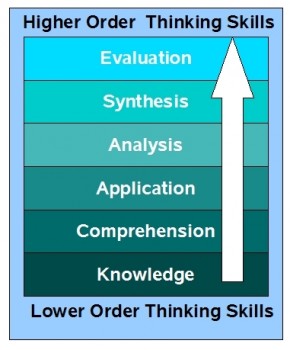
We’re great about learning from our losses. We’re not so great a learning from our success. A quick look at Bloom’s taxonomy will show that what we often do when we debrief a losing situation is we work all of the way up from knowledge through evaluation of what didn’t work.

blooms_taxonomy

Suppose we followed that toast to our success with an equally granular discussion of what worked with our success? It might look like this.

  • Knowledge – What it is we accomplished? What were the key parts that led to the success?
  • Comprehension – What do we know now about the project, the team, the customers that we didn’t know before?
  • Application – How can we use what we’ve learned from this success to build the next initiative like this one?
  • Analysis – How is this project similar and different from other projects we undertake?
  • Synthesis – What overall learnings can take forward from this success?
  • Evaluation – How as this win change what we understand about what we do as a business?

Raise that toast to your success. Then ask the six simple questions to claim what you’ve won.
The moments of reflection that bring you to the answers are the time you need to incorporate, internalize, and own what you’ve done — to move the “winning behavior” from a possibility into a natural response.

The evaluation of the win is the way to claim your rewards, to own them, and to leverage that learning from then on.
When you own your success, it shows every time you walk into a room. That’s how claiming rewards from success leverages itself into more success.

The good news is we can all go back — alone or with our teams — and claim our rewards for every success we’ve ever won.

Not everything we learn has to come from what we do wrong. Are you ready to learn from every right thing you’ve done?

Be irresistible.

–ME “Liz” Strauss
Work with Liz on your business!!

Buy the Insider’s Guide to Online Conversation.

Successful-Blog is a proud affiliate of
third-tribe-marketing

Filed Under: Blog Comments, Business Life, Marketing /Sales / Social Media, Motivation, Successful Blog, Writing Tagged With: bc, claiming your rewards, LinkedIn

Powerful Blogging: Can Twitter and Email Replace Comments?

March 18, 2011 by Guest Author

A Tools Review by
David Berti

cooltext451585442_tools

Can You Sleek Down YOUR Life This way?

Whether you’re a blogger or an entrepreneur, you’re probably using the net to get in touch with lots of people out there. You also know what to do, how to do that. But you feel there is always something missing to get to that so called “next step” everyone of us is longing for.

As bloggers, we can absolutely tell that wonderful feeling… that feeling of having our digital life going great, that side of our digital existence handled for good; I will be serious about that. The best advice I have been able to find on the net goes like this:

“write the greatest, deepest content you can produce and let the machines do the rest, without worrying about visitors, comments and similar stuff”.

That is to say: all the effort you really have to make is about content. Creating, is the only thing we, as bloggers, editors and writers, are allowed to worry about.

What is not so clear for the vast majority of bloggers is that the interface between the user and the internet can become a great obstacle because of the vast choice of applications, addons, plugins and widgets that are available for us to use on our pages. These features are totally irrelevant on the quality of the material we can find on a blog page.

By simplifying the blog interface, I guess I have made one of the most important and wise decisions ever in my (digital) life. What did I do, exactly to simplify my blog interface?
1. I removed the comments section under every post
2. I removed plugins and reduced my blog interface to the essential

No need for comments and features that bloat my page. I need content that is valuable for what it is. Looks doesn’t really matter to me, and all I want to look at is the content I am interested in. That is why I also removed comments.

The Results:

I uniquely use 2 communication channels that are completely free: my email account and my Twitter. This way, I don’t create clutter in my life and all I do in the virtual world remains there.

Plus, my blog remains clean and usable; no visual clutter is present on my screen and whenever I feel like I can read what I write with no need to close and click ads, useless windows and pop-up stuff.

Moreover, in absence of plugins and different elements I can have a blog which is usable and viewable by almost every kind of device out there, and doesn’t make the user wait for the content to appear and load.

No time to waste, no clutter. Just you and the deep content you’re going to enrich your existence with.

What might you gain or lose by sleeing doen your down your (digital life) to these two communication channels?

David Berti is the creator of the Ubuntulook project. His webisite is(unbuntulook You’ll find him on twitter as @ubuntulook

_______

Thanks, David! Always love a distinctively new point of view!

–ME “Liz” Strauss
Work with Liz on your business!!

Buy the Insider’s Guide to Online Conversation.

Successful-Blog is a proud affiliate of

third-tribe-marketing

Filed Under: Successful Blog, Tools Tagged With: bc, blogging, comments off, LinkedIn, tools

Debate or GO?

March 17, 2011 by patty

by Patty Azzarello

cooltext466496263_leadership
debate-or-go

Organizations waste a lot of time communicating badly.

They fall into the trap of talking about things that have already been decided, or not talking when input is genuinely needed.

Problem 1. People don’t speak up when they should

Executives don’t know all the answers (even if they act like they do).

They rely on healthy debate from their team to get all the important information, opinions and concerns out on the table.
Without that, they can’t make a good business decision.

But the other side of the story is that people often feel punished for speaking up.
When they try to give feedback to the executives they get shot down. It feels like their inputs are unwelcome.

If this happens often enough they stop even trying. Why bother if my ideas are never acted on, and I only get grief for speaking up?

Problem 2. People keep talking when they shouldn’t

I have seen management teams waste huge amounts of time by revisiting decisions over and over again, questioning the direction and circling back for more data.

When this happens, the organization is slow to engage because they perceive the continued discussion to mean that the direction is still in question. So they wait for the answer instead of moving forward. Or they continue to add to the conversation, raising even more issues or data to help inform the decision.

SInce the executives think the decision has already been made, they get really frustrated that people are slow to act, not engaged, and stalling forward progress with more questions, inputs and arguments.

DEBATE or GO?

One of the best tools I have used to fix this is a simple model of Debate Phase vs. Go Phase. I make it clear that for every initiative or decision, there is DEBATE time and there is GO time.

Debate Time: Talking, Questions, Input, Arguments are welcome.

During debate time, I make it clear that I want to hear people’s opinions. I want to hear the arguments. I want everyone to fight for their point of view.

That’s how I get the best and most complete information.

Make a Clear Decision

After debate time is over, I make it clear who owns the decision, and make sure the decision gets made.

GO Time

Then I make it clear that we are in GO time. The decision is communicated and the action is officially kicked off. This is the time to engage in the work, not in the debate. The debate phase is over.

Expected Behavior & Trust

This simple frame and set of labels builds an atmosphere of higher trust because people can understand the rules of the game. They know when and how to participate without getting their head handed back to them.

You give them a chance to feel safe raising their opinions or arguing the point (which you need them to do) because by definition you are in debate phase.

By setting this structure, you can make it clear that during debate time, the expected and valued behavior is to speak up.

Then once you announce the decision has been made and make it clear that it’s GO time, people trust that you will stick to the decision, and that the expected and valued behavior is action, not more talking.

How do you get your team to decide and move forward?

Leave your ideas in the comment box below!

—–
Patty Azzarello is an executive, author, speaker and CEO-advior. She works with executives where leadership and business challenges meet. Patty has held leadership roles in General Management, Marketing, Software Product Development and Sales, and has been successful in running large and small businesses. She writes at Patty Azzarello’s Business Leadership Blog. You’ll find her on Twitter as @PattyAzzarello. Also, check out her new book Rise…How to Be Really Successful at Work AND Like Your Life

Successful-Blog is proud affiliate of

third-tribe-marketing

Filed Under: management, Successful Blog Tagged With: bc, Business Leadership, LinkedIn, Patty Azzarello

You Don’t Have To Be The Stereotypical Blogger

March 16, 2011 by Guest Author

cooltext455576688_blogging

By Terez Howard

When I visited dictionary.com to see what it had to say about a stereotype, I read, “The cowboy and Indian are American stereotypes.” They are “a simplified and standardized conception or image invested with special meaning and held in common by members of a group.”

In classic Western shows, cowboys are white men. But cowboys were also of African American, Mexican and Native American decent. And we all know that the Indians that go with cowboys are not from India.

Why the stereotypes?

I don’t really know. I believe that someone or group of people somewhere decide that this is going to be the norm. Cowboys will be white, and Indians will be Native Americans. They will never get along, and it will be a fun game for kids to play. Then, that norm transforms into a stereotype. Before long, the actual truth of a matter is lost. A stereotype becomes truth.

This is why when most people speak of a stereotype, it engenders thoughts of something bad.

What is the stereotypical blogger?

I have been thinking about this for a while.I suppose the stereotypical blogger knows everything there is to know in her niche, at least everything thinks she does. She posts frequently, well, regularly.She is witty, conversational and informative, all wrapped up in a delicious but very real blog.Readers hang on her every word. She posts pictures and video, too, because she wants her blog to have it all.She knows everyone, and everyone knows her.

The stereotypical blogger doesn’t sound bad at all. In fact, it sounds like the type of person that every serious blogger wants to become. But, why? Because those characteristics equate success? Is it because that is what all of the top, authority bloggers are doing? Just because they’re doing it, you have to do it too. They’re successful, and there’s no other way for you to be a successful blogger. Is that so?

I’m not that kind of blogger

Yep. I’m not that kind of blogger. I’m not saying that I don’t want to be. I wish that I could post every single day and that I understood the ins and outs of html. I don’t, and I can’t. I am not ashamed.

I have made another observation about the stereotypical blogger. She has very limited time for the rest of her life. She’s always answering e-mails. She’s constantly tweeting her stuff and everyone else’s. She always seems to be on every blog related to her niche, commenting and guest blogging. She is everywhere, and everyone loves it.

If you’re not going to be the stereotypical blogger, then you know by now that you are letting some things go. Your blog might not have everything, every tool and form of media, right away. I believe that if you want to have a life outside of your blog and you’re patient, you can eventually have everything on your blog.

Also, your name will not get to be all over the Internet immediately when you aren’t the stereotypical blogger. You will not have the time. Slowly, you can make connections that will boost your image. You may never be No. 1 in your niche. Is that OK?

It’s OK with me. No. 1 has too much responsibility. I’m content doing what I can do, having fun writing, collecting my money and then having a life.

I’m not ashamed to say that I don’t have the time to be the stereotypical blogger. I will never be that girl. I do what I do. I enjoy what I do. And blogging is only a small part of “what I do.”

What do you think? Are you or do you want to be the stereotypical blogger?

—
Terez Howard operates TheWriteBloggers, a professional blogging service which builds clients authority status and net visibility.  She has written informative pieces for newspapers, online magazines and blogs, both big and small.  She regularly blogs at Freelance Writing Mamas. You’ll find her on Twitter @thewriteblogger.

Thanks, Terez!

–ME “Liz” Strauss
Work with Liz on your business!!

Filed Under: Business Life, Successful Blog, Writing Tagged With: blogging, LinkedIn, Terez Howard

Be Irresistible: Want to Own Your Space? Own Up to Your Highest Standards!

March 15, 2011 by Liz

10-Point Plan in Action

What’s It Mean to Own It?

insideout logo

Going back down to SxSW reminds me of a conversation I had with @copyblogger, Brian Clark at SxSW 2008. It was in the early hours. We were at a club and found a place where we could talk for a minute or two. We were talking about SOBCon and how it had grown. We were talking about how people were coming because of the people who were in the room who were coming because of the people who were in the room.

It wouldn’t surprise me at all if Brian doesn’t remember what he said that night, but I do.

He said: “You and Terry are doing something important.

I said: “i know.”

Then he said: “But you gotta OWN it! Because without it where would I be?”

I replied something flippant like: “Still running the stealth intelligence network of the universe?”

He ignored my attempt at humor and continued with: “You gotta OWN it seriously.”

That advice stayed with me. I told Terry about it.

“Gotta OWN it! We own it, don’t we?”

But for the next year that idea became a mantra, “I’m OWNING it.”
Now I know what that simple sentence means.

Want to Own Your Space? Own Up to Your Own Standards

A few months later, I was at SOBCon 2008 with Brian’s words ringing in my ears. The thought kept running through my mind, “What am I not owning here?”
And as I opened my eyes, I realized that, in an effort to be “easy to work with,” I’d been holding back my best. My job is the content design an execution and we’ve always delivered more, different, and better than the rest, but not as well as I was capable of delivering. I’d let speakers slide just a little, then felt they could’ve shined more for themselves and for the audience. I’d been nice to sponsors and let them be less engaging than they might.

I realized then and there that companies make that mistake all of the time. We lower our price, change our offer, compromise for a vendor. We don’t own what we’re doing, instead we give away what we own.

What we should be doing instead is building trust and proving we’re the best at doing what we do to attract the people who recognize excellence and want to work be in a space that we own.

Every teacher, saloonkeeper, consultant, great business of one or corporation has a responsibility to own our role as a leader, to set the standards of our business so that the people who are in it with us know why and how to reach their greatest potential and so that the business can thrive and grow.

Here’s what I learned about how to do that:

  • Have a vision that is huge, powerful, and worth working toward to building. No smaller vision is worth owning or asking people to take part in. No lesser quest will bring you to put your heart, mind, hands and soul behind it.
  • Set goals that are worth reaching. If you want commitment and high performance, give everyone something to go for that feels like a massive win when they achieve it.
  • Invite only the best to participate in what you’re doing. Own the potential of your investment in the people you ask to come along. Friends are fun to play with, but owning a business requires that you own the responsibility of giving folks a team that they want to work with and for.
  • Make the vision and the goals far bigger than you can control, but the outcome and your belief in it so inspiring that everyone is drawn to work in the same direction . That way people can bring their own best potential to the building, but be building one vision that you protect for them.
  • Be a model of your version of the standard of ethics and excellence. Then layout the challenge for everyone to bring their own version of how they might add value to same standard with their own talents in ways that show their own excellence.

Owning our role, our values, our standards and our value proposition makes it easier for everyone else to own their role with the same values, standards, and value proposition. Like a great bartender or a community manager, we keep the space safe for people to be extraordinary without fear that they will lose by winning.

Own it. Don’t telephone it in.
Make a space, a place where people can show you what their best is and feel that you’ll notice, celebrate it, and protect it.

Do that and they’ll think of your business as owning the space you’re in, because to them it will be better than home.

That’s irresistible.

How do what you do, hold it up to the highest standards, so that the people who work with and for you can know they are working with the best in the business?

–ME “Liz” Strauss
Work with Liz on your business!!

Buy the Insider’s Guide to Online Conversation.

Successful-Blog is a proud affiliate of

third-tribe-marketing

Filed Under: Community, Marketing /Sales / Social Media, Successful Blog Tagged With: bc, Community, LinkedIn, management, owning your offer, value prposition

  • « Previous Page
  • 1
  • …
  • 80
  • 81
  • 82
  • 83
  • 84
  • …
  • 190
  • Next Page »

Recently Updated Posts

Is Your Brand Fan Friendly?

How to Improve Your Freelancing Productivity

How to Leverage Live Streaming for Content Marketing

10 Key Customer Experience Design Factors to Consider

How to Use a Lead Generation Item on Facebook

How to Become a Better Storyteller


From Liz Strauss & GeniusShared Press

  • What IS an SOB?!
  • SOB A-Z Directory
  • Letting Liz Be

© 2025 ME Strauss & GeniusShared