Successful Blog

  • Home
  • Community
  • About
  • Author Guidelines
  • Liz’s Book
  • Stay Tuned

Make It Happen

May 30, 2012 by Guest Author

by
Susan Bulkeley Butler

cooltext443809602_strategy

CEO of Me, Inc.

Early in my career at Accenture, I didn’t get promoted when I thought I should have. I didn’t have the necessary skills to perform as a consulting manager. This prompted me — with the help of my mentor — to realize the following: I needed to undertake the responsibilities of the position I wanted before I could be promoted to it. I had to take responsibility for myself … I needed to figure out who I wanted to be and how to make it happen. Ultimately, I became the CEO of Me, Inc. This professional epiphany opened the door to a promotion as Senior Executive, the Office Managing Partner of Accenture’s Philadelphia office and the Managing Partner of the Office of the CEO at Accenture.

Changing roles in the workplace isn’t always easy, but I facilitated my new roles through my Make-it-Happen (MIH) Model, which consists of four easy-to-follow steps:

1. Set a clear vision

Just like the CEO of a corporation has a vision for their company, you need to have a vision for your company (You, Inc.). Take a moment to think about your future. What are you doing in five years? For example: “I am a partner at Accenture, in the Government Services practice, and my team just won a contract with the Department of Defense to implement a new human resources system.” Send an e-mail to someone, describing what you wish to be doing, and date it five years from today. By doing this, you’re talking with others about your aspirations and you’re committing to make it happen.

2. Build a team that supports you

You know what they say: two heads are better than one. Your team will serve as the Board of Directors of You, Inc. They will help you gather the necessary resources for you to achieve your vision. Your team should include people who: you admire, will open doors for you, and will recommend you for the opportunities you need to gain valuable experience. These people can be experts, mentors, advocates, executive coaches, stakeholders, etc. When I was at Accenture, my team included my peers, my clients, people I admired, and people who were in positions that I aspired to have (in addition to others in senior positions).

3. Develop a detailed plan

What do you need to do to obtain the promotion you want and how will you do it? What kinds of skills, experience, and knowledge are required to achieve your vision? Think of your plan as a roadmap or a GPS. You’d never leave for a long road trip without one of these, right? Developing a detailed plan will get you from where you are to where you want to be. Be clear, be concise, and set goals with dates. This way, you’ll always know where you are and what you need to do next.

4. Navigate the journey

BigStock: The Winding Journey

Once you have your vision, your team, and your plan set in place, it’s time to put You, Inc. into motion. Be aware of your product and its packaging. You should also be aware of how you’re presenting and marketing You, Inc. As you navigate through your journey, monitor what’s going on around you. Which parts of your plan are successful? How about the parts that didn’t work out quite as you planned? Learn from any possible mistakes and move on. Look back at your original plan and make adjustments as needed. I proactively change my plan every 3-5 years. My end goal is to make myself indispensable. As the strategy of your organization changes, you need to change to be indispensable.

Ultimately, to make change happen, you must embrace these four steps and proactively seek opportunities for yourself. As I always say: make things happen for you, don’t just let them happen to you. Take responsibility for yourself. If you do this, you’ll be well on your way to achieving your goals and becoming the CEO of You, Inc.

—-

Author’s Bio: Susan Bulkeley Butler is the founder and CEO of the Susan Bulkeley Butler Institute for the Development of Women Leaders. Susan is also author of “Become the CEO of You, Inc.: A Pioneering Executive Shares Her Secrets for Career Success” (the Revised and Expanded Second Edition was published in May 2012) and “Women Count: A Guide to Changing the World” (). You can find her on Twitter at @SusanBButler.

Thank you for adding to the conversation!

–ME “Liz” Strauss
Work with Liz on your business!!

Buy the Insider’s Guide to Online Conversation.

Filed Under: management, Personal Branding, Successful Blog Tagged With: bc, Business development, LinkedIn, personal-branding, personal-development, small business

How to Start a Kiosk Business

May 29, 2012 by Guest Author

Kiosk Business Series

by
Jason Phillips

cooltext443809602_strategy

A Checklist for Starting

While perhaps not as “sexy” as other forms of small businesses, kiosks offer a viable and practical way to earn a great living, all without dealing with the substantial challenges required for many small businesses operating out of traditional brick-and-mortar storefronts.

Yet even thought kiosks offer greater flexibility and less red tape than traditional businesses, they still provide their own laundry list of steps to complete before you can get your new enterprise up and running.

  • First, you need to decide between purchasing or leasing your kiosk business. For many business owners, the seasonality of their market settles this decision for them. The more seasonal your product, the better of an option leasing appears. The more “evergreen” your product, the greater chance buying will appeal to your bottom line.

    Whether buying or leasing, keep in mind the price you pay for your kiosk depends on a variety of factors, including the time of the year and how much foot traffic your location receives. The higher the potential of your kiosk’s desired location, the more you will pay for it.


  • BigStock: Kiosks at Shopping Mall

    Determine the right size for your kiosk, and find the perfect location. When it comes to the size of your kiosk, you should select the smallest location you need to sell your products. While brick and mortar stores can make good use of extra space, kiosks benefit from a focused, efficient layout.

    Choosing a location for your kiosk seems like a no-brainer, but there’s more to profitable positioning than simply selecting the highest traffic space you can find. Heavy foot traffic passing your kiosk is good, but only if that traffic is composed of your product’s primary demographic.

  • Run the numbers. Compared with brick-and-mortar stores, kiosks require relatively low overhead, but that doesn’t mean you should approach your financial analysis and planning with a cavalier attitude. Factor in every cost associated with not just setting up your kiosk, but also running your kiosk from day-to-day. Be conservative with your cash flow estimates and then decide whether taking the plunge and establishing your new business is fiscally sound.
  • Acquire your financing. Kiosks represent a smaller financial investment than brick and mortar stores, but you still probably won’t be able to set up your business with whatever free cash you have on hand.

    Once you have the details of your kiosk in line, along with your financial projections and your anticipated expenses, you will be ready to apply for the credit you need to launch your business and keep the lights on as it establishes itself.

  • Finally, you need to round up all of the necessary paperwork, complete it, and file it. If you’re starting a kiosk business in a space that has already been highly developed and already provides a home to many kiosks, such as within a mall, then your new landlord will likely be able to help you breeze through the red tape as quickly and as easily as possible. However, if you’re trailblazing a new location, prepare yourself for a potentially frustrating bureaucratic slog.

    The volume of licenses you need to apply for depends almost entirely on what you’re selling. For example, a food kiosk needs to abide by far more legal regulations than a kiosk selling something as inert and harmless as sunglasses.

    Once you’ve acquire all of the licenses and forms of insurance you require, you will be ready to finally launch your business and move forward with this next step of your professional life!

Congratulations, now it’s time to get to work.
—-

Author’s Bio: Jason Phillips started with a BPO industry and now he is a market analyst. Now he is planning to become a kiosk manufacturer, he has vast experience in developing complex and custom kiosks.

Thank you, Jason!

–ME “Liz” Strauss
Work with Liz on your business!!
Buy the Insider’s Guide to Online Conversation.

Filed Under: Business Life, Successful Blog Tagged With: bc, Kiosk Business Series, LinkedIn, small business

How Historic London Shoppers’ Markets Get Global

May 28, 2012 by Guest Author

by
Julien Renault

cooltext443809602_strategy

The Past to the Future

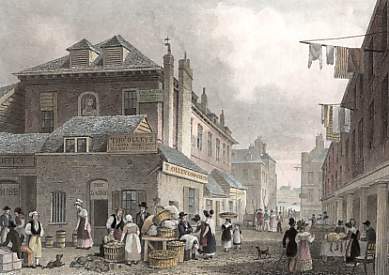
Markets are a particular feature of London which gives the city something vibrant, something that you cannot feel without living it. Have you ever asked yourself where London’s oldest market is – where it all began? Let’s go down memory lane, let’s turn back the wheels of time and return to the past.

London Market

Image: AntiquePrings.DE

When did it start? The first London market was set up around 1680. That’s pretty dated, isn’t it? Anyway, who started it? Sir Edward Hungerford had been authorized to hold a market three days a week who then gave his name to the market calling it ‘Hungerford market’.

Where was it? It was set up at the stretch on a street called the Strand going from Trafalgar Square to the Temple Bar, near the current Charing Cross station which by the way opened in 1864. It was not an open market but a covered one, housed in two different buildings. One has to wonder if the weather in London was similar back then – did it rain in the summer – maybe it did!

What did they sell? Basically grain was sold in the market. Well, it’s not very exciting when you think of the authentic and unique items you can grab now, but there’s a first time for everything — such as the groovy vintage fashion of Oh, I’m So THEA.

Image: I’m So THEA at Camden Market

The future: London had already demonstrated that she has a real flair for wares much to the delight of everyone. What’s more? Now there are about 70 markets in London – large and small, established and fledgling. Good thing is – now it can all be found in one place – myMzone. myMzone is a savvy collective who noticed our love for London’s market culture and developed it to a globally inclusive level, effectively bringing the quirky markets of Camden Market, Spitalfields, Portobello, Bricklane, Sunday Up Market and many more to our front doors.

Author’s Bio: Julien writes for different fashion blogs among which myMzone where you can learn more about events and fashion in London, but mainly about London markets as Camden, Brick Lane or Portobello. You can find him on Twitter as @Julien_Renault or @myMzone

Thank you, Julien. More small local businesses could find solutions like that.

–ME “Liz” Strauss
Work with Liz on your business!!

Buy the Insider’s Guide to Online Conversation.

Filed Under: Strategy/Analysis, Successful Blog Tagged With: bc, LinkedIn, London markets, markets, small business

6 Ways to Promote Your Business Online Using Green

May 25, 2012 by Guest Author

by Jen Thames

Wind Mills
Image Credit: Wind Energy by JanieHernandez

Green Marketing

A few days ago at a favorite deli there was a new sign. The sign said:

“We are now Powered 100% by Wind Energy,”

Unconsciously I gazed up. There aren’t any windmills around here! I thought. Yet the message stuck and it made me think: If a deli that specializes in large greasy meatball sandwiches on soft white bread is promoting Green, maybe more businesses need to start using Green marketing.

These days Green marketing thrives far beyond co-ops and solar energy companies. Other businesses need to think about adding Green to their brands. Most importantly small businesses and large companies alike can all use Green to enhance customer relations. It’s an easy way to connect to customers because the underlying message is, “We care about the same things you do,” rather than, “Buy our product or service.” Here are 6 ways to use Green marketing for a small business or a blog.

Incorporate a Green Spring Giveaway into a Mobile Smart Phone Promotion

Mobile marketing through smart phones is a fast growing online trend. According to Google, mobile searches with a local intent were up 400% between 2010 and 2011. Signing up for a location based service like Foursquare or WHERE and offering a free Green spring give away can draw customers into your store and improve your image at the same time. Make the promotion fun and tailor it your business. For example, a children’s clothing store could have a free plant your own tree promo for kids while a bakery could offer a class on decorating spring cupcakes naturally without using food coloring. Get creative!

Offer an Online Green Promotional Product on Your Website

Ben and Jerry’s Ice Cream invented this idea with their Rainforest Crunch Ice Cream. A percentage of sales were set aside to help nut-shelling cooperatives in the Brazilian Rainforest. Unfortunately, the company was stretching the truth a bit and they were forced to pull the marketing from their packaging. Ben and Jerry’s is mentioned because Green claims need to be truthful with genuine intent or a promotional campaign can backfire.

Keeping Green product campaigns short is one way to get the message out, give properly and make money. In addition, time limited promotions encourage action. For example, “Buy from our website during the next two weeks and we will donate 25% of your order to Greenpeace.” A further advantage of a short Green campaign is that you can pre-advertise and post-advertise the campaign online through the press wires. Charity and giving pieces are almost always picked up quickly and spread widely. Press wires can drive online traffic for months.

Think about incorporating Green into your Business Brand

Make Green a real commitment. Then methodically publicize your Green stand online through every channel possible. There are separate marketing channels for Green Businesses like Green Tweets and Facebook Pages. Like the deli above, you don’t have to be a health food store to endorse Green and incorporate it into your brand image. Green makes people feel better about eating ice cream and 1000 calorie meatball sandwiches. Maybe it can work for your business too!

Use Green Promotional Gifts to Spread the Word

Traditional promotional gifts now come in a variety of Green alternatives. Green shopping bags and coffee carriers are an excellent way to get your brand out there while promoting a Green lifestyle.

Start a Green oriented blog, email newsletter and RSS feed to get your chosen Green message out.
The deli above chose wind energy so a blog about wind energy, clean energy and hiking (where you need to take sandwiches) would be fitting for them. Encourage customers to participate in the blog to lessen the writing work and gain fresh perspectives.

Turn Green Milestones into SMS events

Once the Green campaign is up and running use a quick messaging event to broadcast how well the campaign is doing or how well it went. This is a great soft-sell way to encourage further customer interaction and increase brand awareness and loyalty. For example, “Our store just surpassed our yearly giving goal to Greenpeace! A big Thank You to all our customer’s- we couldn’t have done it without you.”

Success often increases with giving. Green is a wonderful way to thrive and give back not only to your community but also to the world.

—-

Author’s Bio: Jen Thames writes about marketing and business at SixSigmaOnline. You can find her on Twitter as @SixSigmaAveta


Thank you, Jen. Great green ideas!

–ME “Liz” Strauss
Work with Liz on your business!!

Filed Under: Marketing /Sales / Social Media, Successful Blog Tagged With: bc, Green marketing, Guest-Writer, LinkedIn, small business

What to do when you have Twitter block

May 24, 2012 by Rosemary

by
Rosemary O’Neill

cooltext443809558_authenticity

So you’ve decided to use Twitter as one of your content marketing tools. You’ve built up a respectable following, you engage with people, send out a steady stream of diverse original content and RTs, and you occasionally attend a Twitter chat. Everything is good, until….Twitter block!

It’s similar to writers’ block, except in 140 characters. You see, if you aren’t contributing a reasonable number of Tweets throughout the day, you won’t be seen in your followers’ streams.

The average lifespan of a Tweet is supposedly only one hour, according to ReadWriteWeb. That means you need to space out your Tweets in order to keep your voice “in the stream.” I believe that the optimum number of Tweets per day is somewhere around 5-10 for the normal user.

Here are 10 solid tips on how to stay visible without driving yourself insane.

  • It’s OK to tweet an important piece of content 2-3 times in one day, at different times; just change your Tweet wording up a bit to keep it fresh.
  • It’s OK to use a scheduling app like Buffer or Crowdbooster to space out your Tweets, as long as you are actually available to reply to people who respond to your content.
  • Look for 5 people who recently RTd you, and RT something of theirs that you think will resonate with your followers.
  • Take a pretty picture and add a relevant comment to it.
  • Find 5 people who follow you who you haven’t directly engaged with yet, read their bio and/or website, and mention them with a comment or compliment.
  • Use the “OH” tag to tweet something interesting you heard someone else say IRL.
  • Don’t resort to quotes all the time! But if you’re reading something interesting on your Kindle app, highlight a great phrase and Tweet it out using the integrated share tool.
  • Ask a question. It could be something industry specific, or as minimal as “what should I watch on Netflix next?”
  • What big project are you working on? Can you “leak” out a little tidbit of it as a teaser? People love to be on the inside, behind the scenes.
  • Do a series of Tweets that are related…Christopher Penn does “#the5” which is the five things you need to know that day. Could you do 3 tips for starting your day happy? Perhaps a series of 10 great blog links?

Where do you find great stuff to share with your connections? Have you ever felt Twitter block?

_____

Author’s Bio: Rosemary O’Neill is an insightful spirit who works for social strata — a top ten company to work for on the Internet . Check out the Social Strata blog. You can find Rosemary on Google+ and on Twitter as @rhogroupee

_____

Thank you, Rosemary!

You’re irresistible!

ME “Liz” Strauss

Buy the Insider’s Guide to Online Conversation.

Filed Under: Marketing /Sales / Social Media, Successful Blog Tagged With: bc, LinkedIn, small business, social-media, Twitter

Customers Who Care: Four Ideas for Inspiring Loyalty

May 23, 2012 by Guest Author

by
Anita Brady

cooltext443809602_strategy

Quality and Service

Some rookie business owners seem to think that they can swing open their doors and the world will step inside. Others recognize the importance of marketing, but put all their effort into selling their concept while allowing their product to suffer.

Smart entrepreneurs (and their employees) know that quality and service reign supreme. It’s rare that one exists without the other. I’m recalling the TV show Seinfeld’s ‘Soup Nazi,’ an episode where people stood in long lines for soup, despite horrible service, because the product was so good. That doesn’t often happen in real life.

Likewise, the most charming salesman might sell you a bad product once, but you’ll never buy another if it breaks as soon as you get it home.

The bottom line is this: Offer a consistent, excellent product with a smile, and customers will remember and return. Fortunately, in a competitive market place, there are plenty of ways to make your business stand out from the pack. Adopt a few of these ideas and you’ll have your own line halfway around the block — just be nice to them when they get to the counter.

Introduce Yourself

Down the street from my house, a new surf-themed restaurant and tavern opened last year. Eager to try something new, I gave them a shot their first week in business. Immediately upon entering, I was faced with a crowded bar of people enjoying happy hour drinks. I was scanning the room for a table when the bartender reached his hand across the bar and greeted me, “Hi, I’m Perry. Welcome to the Wave Bar. Grab a table wherever you like.”

Perry later walked over to my table and reintroduced himself as the owner. He asked me my name and learned that I lived down the street. A few weeks later, I returned, and Perry remembered my name.

Nowadays, it’s the first place I take relatives when they come to visit. They think I’m really something when everyone waves and greets me by my first name when I walk in the door. Had I not been immediately made to feel like a valued local customer, I’d have probably returned, but not nearly as often.

Seek Out Customer Opinions

There’s a difference between an anonymous comment box by the door and actively asking your clients for feedback. Don’t get me wrong — a comment box is still a great tool — but don’t be afraid to take criticism in person as well. If someone has spent their money with you, they’re already invested in your business.

The produce manager at my local grocery store once asked me if there was anything they didn’t carry that I wished they did. I told him that I often go to a competing store, farther away, because they carried tempeh, a tofu-like meat substitute that I often use in tacos and pasta (don’t laugh). He had it in stock the next week, and I’ve hardly returned to the other store at all.

Don’t be afraid to solicit your customers’ honest advice. You may be able to tailor the services or products you offer more to their needs, and they’ll then be far more likely to return and recommend you to friends.

Reach Out on Social Media

BigStock: The Boxer and the Rose

Facebook, Twitter, and Pinterest give business owners an unprecedented ability to play a role in their customers’ lives. Design attractive, informative pages at each social media portal for your business, and then carve out time to visit the pages of people who ‘Like’ or subscribe to your page. Don’t be afraid to leave comments on their pages, giving them compliments and offering advice.

This shouldn’t be confused with direct marketing — although there is a place for advertising via social media, we’re talking right now about acting just as a friend would. Don’t spam your customers. Engage with them.

Say ‘Thank You’ In Every Possible Way

Your customers are far likely to return if they feel appreciated. Start with the most obvious method — give each person who makes a purchase the most genuine, thoughtful ‘Thank you!’ that you can muster. If your clients are online, a quick “We really appreciate you” email can work wonders.

If it seems appropriate, even sending handwritten notes to large clients and customers will ensure that you’re remembered. Keep a stack of stationary on hand to make this easy.

I was recently shopping at a local boutique clothing store, and after making a purchase, the proprietor handed me an invitation to a cocktail-hour and special product showing the following week. The timing was convenient for me, so I stopped in, enjoying champagne and finger food catered by the bakery next door. Guess what? I couldn’t help but buy something that day.

Let your customers know that you appreciate them, seek their input, and stay in touch. As long as your product is good, you’ll find that they’ll take pride in your business and help spread the word. What other ideas have you used for inspiring customer loyalty?

—-

Author’s Bio: Anita Brady is the President of 123Print.com, one of the foremost suppliers of customizable custom designed business cards and other items for small businesses and individuals. She is an industry veteran who has managed strategic marketing and other efforts for companies small and large.

Thank you, Ann. Loyalty is key to a strong business.

–ME “Liz” Strauss
Work with Liz on your business!!

Buy the Insider’s Guide to Online Conversation.

Filed Under: Customer Think, Successful Blog Tagged With: bc, Guest-Writer, LinkedIn, small business

  • « Previous Page
  • 1
  • …
  • 35
  • 36
  • 37
  • 38
  • 39
  • …
  • 73
  • Next Page »

Recently Updated Posts

Is Your Brand Fan Friendly?

How to Improve Your Freelancing Productivity

How to Leverage Live Streaming for Content Marketing

10 Key Customer Experience Design Factors to Consider

How to Use a Lead Generation Item on Facebook

How to Become a Better Storyteller


From Liz Strauss & GeniusShared Press

  • What IS an SOB?!
  • SOB A-Z Directory
  • Letting Liz Be

© 2025 ME Strauss & GeniusShared