Successful Blog

  • Home
  • Community
  • About
  • Author Guidelines
  • Liz’s Book
  • Stay Tuned

How to Cut Down on Business Travel Expenses

June 5, 2013 by Thomas

As a small business owner, you or your employees may need to do quite a bit of business travel.

So, it should not come as a surprise that this can add up to be a hefty expense, leaving you to maybe think it’s one area where you could cut some spending.

Over the past years, travel expenses, from airlines to hotels to dining, have increased.

But how can you cut travel expenses while still meeting the needs of your clients?

Check out these ideas to help you do both:

1.     Air Travel

*  Carry on your bags instead of checking them. Often airlines charge a fee for checked bags and you can save a bit here, plus it saves time in the airport.

* Use the long term or off site parking at the airport instead of the high cost hourly parking.

* Check around for flight differences and book the cheapest, even if it’s not the most convenient. Often midweek travel is cheaper than over a weekend (though that is not necessarily true of hotels). See if flying into a close by airport is worth it to save money even if it’s not the absolute closest.

* Join frequent flyer clubs.

* Think about special airline benefits. Airports offer special rooms for airline members that can be earned or purchased. Maybe you have to pay for these, but could it benefit you because you and your employees can get quality work done there or possibly have meetings?

2.     Ground transportation

* Though renting a car seems like a big expense, it’s cheaper than taxis and more efficient than public transportation. Join loyalty programs with rental car companies and gain some benefits here, too.

* If you don’t have a rental car, see if your hotel provides shuttle service to nearby locations and the airport – again, taxis add up, best to avoid them.

* With a rental car, fill it up yourself before turning it in. If you don’t, the car company can charge an arm and a leg to fill it up.

3.     Hotels

* Just like with airlines, check around for deals and specials. Often depending on when you check in and out, your rates will differ substantially. Hotels run specials, and if you join their loyalty groups, you can also sometimes get special treatment.

*  If your hotel offers free breakfast – take it! Not only is it convenient, it will save you the cost of breakfast and transportation.

4.     Have clear, stated policies

* Your employees need to know what they can spend and how it needs to be turned in. It’s best to have these written out and on hand so there is no discrepancy.

* Do you require receipts from taxis and restaurants? Do you have a maximum per diem or do you want to set a price per meal? Do you need to okay arrangements before final booking?

* Be clear in what is reimbursable and what’s not. Can employees have a drink with dinner or is that not part of your expense plan? What is the policy for taking clients out to meals?

Travel is an important, often necessary, part of running a business. It’s costly, though, and you have to make sure it’s not costing you more than it’s worth.

Keep your spending in check and you should be able to keep your customers happy and your expenses from going through the roof.

As a business traveler, what do you do to save some money?

Photo credit: apex-portal.com

About the Author: Heather Legg is a writer who covers topics from small business to how to remove news articles from Google.


Filed Under: Business Life Tagged With: Airlines, bc, expenses, small business, travel

Does Your Business Have a Cost-Effective Marketing Plan?

May 22, 2013 by Thomas

If you run your own company, you may or may not be involved in the marketing duties.

In some instances, company owners can afford to reach out and hire a marketing specialist to work onsite with them, while others take the option of having an outside firm that specializes in marketing do the job for them

Whichever way you determine to be best for your business, there are a number of factors that you should focus on, allowing you the best possibility of succeeding with your marketing needs.

Among them:

* Don’t hit the panic button – First and foremost, you will find your business going through peaks and valleys during the course of the year, so never hit the panic button. You may get the urge to scale back your marketing budget when things are not going well, but that is likely the worst time to do that. While you’re toning down your marketing budget, your competition is likely going in the opposite direction. Reevaluate from time to time what’s working and what isn’t working, giving you the guidance necessary to move around money and efforts if need be. Remember, the day you stop marketing could be the prelude to the day you close your business.

According to research from AWeber Communications, close to 70 percent of small businesses said they would be adding to their marketing budgets in 2013, with some 97 percent planning on doing no less than maintaining their present level directed towards marketing expenses.

That being said, some well-known companies noted in the last year that they were scaling back their marketing over the next 12 months, with one even noting in hindsight, such a decision ended up costing his business customers and revenue.

Those making headlines included:

1. Campbell Soup Co. stated last summer that it would reduce its marketing budget over the next year, placing new emphasis on distribution, merchandising and product innovations. In fiscal 2012, Campbell’s marketing got a piece of $100 million of new investment the marketer put forth toward brand-building, research and development and innovation for its U.S. soup and simple meals business. That investment came as the business looked to distance itself from major discounting, which executives noted failed to lift sales volume as planned;

2. HTC (mobile phone maker) reported that less money and effort towards marketing has actually hurt its business in the last year. In comments to the Wall Street Journal, CEO Peter Chou stated that the company’s competitors proved to be both too strong and resourceful, placing lots of funding into marketing, while his company did not do as much.

While both Campbell Soup Co. and HTC continue to make money, reduced efforts on the marketing front are definitely reasons of concern for top executives.

While you may be hesitant to spend money on marketing, you can’t deny its importance.

Among the key facets to zero in on:

* Cohesive message – Whether you and your team do the marketing or you outsource it, make sure the message is one in the same. Your message needs to be clear and concise, meaning no confusion and questions for consumers. Make sure the foundation behind your message is solid, therefore allowing you to get a better return on your efforts. This brings us back to the question of whether or not it is better to outsource your marketing needs? On the plus side, you can put it in the hands of professionals who know the ins and outs of marketing, alleviating some of the daily tasks that you need to do to run your business. On the down side, you better than anyone else know your company, what makes it tick, and what its goals are. If you outsource the marketing, those strengths need to be conveyed to the individual or company;

* Social media – You may be the brightest and hardest working business owner going, but how involved and educated are you when it comes to social media? If the answer is not really, then you are missing out on a great opportunity to promote your company. Starting with social media, this should be a no-brainer, yet there are many businesses out there that fail to grasp how easy and effective this tool can be. Not only does having a presence on Facebook, Twitter, Google+, LinkedIn and other major SM sites give you instant access to a larger swath of consumers, but you can be tuned-in to their needs 24/7. You also can focus in on what is being said about your brand, both positive and negative. Lastly, social media is a good tool for you to put out any potential fires in the cases of negative information about you and/or your company. As more and more consumers turn to social media sites and online forums to talk about companies and their experiences with them, you want to be along for the ride;

* Blogging – Do you ever troll different business sites in your free time, only to be amazed how many of them do not have blogs? This is yet another great tool to promote one’s company, still many business owners either don’t want to take the time or fail to realize the potential of blogs. Your company blog is a great marketing tool in telling consumers what you offer, how you can stand out as an authoritative figure in your respective industry, and how you are up to speed with what is going on in your field. If you have yet to actively engage in blogging, take note that it needs to be relevant, update on a regular basis, and promoted. If you are not willing to do it right, then you’re probably best served not doing it at all;

* Relationships do matter – Lastly, how often do you reach out to your current list of customers? They may seem silly, but contacting them with a quick email or other form of communication on their birthdays, offering them special deals, and asking them if you can do anything else for them are all important. In a day and age when consumers have so many different options to choose from, building your relationship with them is key. When your customers feel valuable, they are apt to want to continue doing business with you. If you take them for granted, they may very well take their business elsewhere.

So, where are your marketing plans and budget as we head into the halfway point of 2013?

Photo credit: keyhousemedia.com

About the Author: With 23 years’ writing experience, Dave Thomas covers a variety of business and consumer topics, including convertible car seats.

Filed Under: Business Life Tagged With: bc, budgets, customers, marketing, small business

When Is the Right Time to Leave Your Job?

April 17, 2013 by Thomas

Life will oftentimes throw curves at you when you least expect them.

As an example, say you are doing a great job at your company position and then you get the call. You know that call, the one where the boss or your immediate manager asks you to come into their office for a ‘chat’ that will just be a minute or two.

In some instances, that ‘chat’ can be a good thing, perhaps a raise. In many other cases, however, that ‘chat’ can mean a pink slip. Chances are most people reading this piece have been down that road at one time or another. As most will tell you, it isn’t a road they want to travel all that often.

While you may get that call to ‘chat’ with your manager or the company owner, there are some cases where you can initiate the discussion, not being put in the situation where the bad news is delivered to you.

As more and more Americans have found out in recent years, a sluggish economy has led to many workers having to undergo that trip to the boss’ office. Oftentimes, the dreaded news they were expecting is in fact delivered.

According to a 2012 report from the U.S. Chamber of Commerce, millions of Americans were taking on the challenge of running their own small companies, via independent contracting or direct selling. A Gallup poll noted that 61 percent of Americans had indicated that they lean towards the preference of being their own bosses. Much of that comes from a decreased lack of job security in many different industries.


Know Your Game Plan Before Initiating a Move

So, what if 2013 is the year that you initiate the discussion by leaving your current job and opening your own business? Yes, scary as that may sound, the opportunities could be endless.

Before you go initiate that ‘chat’ with your boss, consider these factors:

* Always have a game plan – You may have wanted to open your own business for a number of years now, but are you financially prepared to? Keep in mind that you will need to not only replace your steady workplace income, but also account for expenses to get your business rolling, including money for advertising and marketing, supplies, potential office space, and maybe even an employee or two. In many cases, it is best financially to start your small business part-time while maintaining your full-time income under someone else. If you have a good health insurance package with someone, also consider how losing that could impact you financially;

* Expect your life to change – In the event you are leaving your full-time job to start your own small business, expect some changes to come your way. While some people think it is nice to get out of the 9 to 5 routine, working for yourself will likely mean more hours and more work. The bottom line is all the decisions that need to be made rest with you, something by itself that can overwhelm some individuals. If you have a family, they will need to adjust also to your new hours. There will be some days where you will think it will never end, that being meeting customer orders, doing your own financial paperwork, promoting your company in a variety of ways. This is another reason why it is sometimes better to start your business on a part-time business so that you can ease into it, not be thrust full throttle into it;

* Plan to succeed, be prepared for failure – Statistics don’t lie; many have come across data showing that more than half of all American small businesses go out of business in the first five years (Small Business Administration). With that being the case, what is your Plan B? While you may not be in love with your current job, and while you may have always wanted to hang an ‘open’ sign out in front of your very own business, you still need enough money coming in to support you and/or a family. Make sure you have a ‘rainy day’ fund set aside so that you can withstand a dry spell or two if your small business hits a rut or does not take off right away. If you don’t, you may end up regretting having left your full-time job in the first place.

Maybe 2013 is the year that you take those dreams of opening up your very own business to fruition.

If it is, make sure you know the game plan before you begin to play.

Photo credit: learndirect.co.uk

About the author: With 23 years of experience as a writer, Dave Thomas covers a wide array of business topics, including business VoIP service.

Filed Under: Business Life Tagged With: bc, income, job, small business, workplace

Don’t Take Credit if Your Business Only Accepts Cash

March 27, 2013 by Thomas

The smart small business owner is the man or woman who gives their customers options.

With that being said, what options do you give the customers who buy goods and services from you? Is it a cash-only policy or do you also let customers charge, perhaps even using mobile payments?

As more customers look for the most affordable and convenient shopping experience, it behooves the small business owner to let consumers buy with more than just cash.

If you stop and think about it, look at what you are missing out on if you have been a cash-only business up to this point:

* Many customers do not like carrying sizable amounts of cash on their person, so they will typically spend less with you if they can’t charge via traditional means or mobile payments;

* Many customers will shop on impulse if they have the plastic option, meaning you stand to gain more sales. As many consumers battle through tough financial times, they are less apt to spend when you only accept cash, as it is more painful to part with the green stuff from their wallets or purses;

* Many customers like the ability to buy while on the go or do online shopping in the convenience of their homes. If you only accept cash payments, you limit the amount of sales you can register.

With those three reasons for accepting more than just cash payments, will 2013 be the year you expand your customer offerings.

When it comes to standard credit card transactions, don’t let the reports of customers cutting back on their plastic scare you.

Yes, a number of surveys do indicate that customers are slicing down their credit card debt, but that doesn’t mean they won’t charge for quality products and services.

According to The Fed, consumers have cut back on using credit cards since the 2008 credit crisis. Just over four years ago, Americans had compiled $1.03 trillion in credit card debt, an all-time high. In July of 2012, it was $850.7 billion — or 17% less. One financial expert pointed out that while many Americans continue to spend, they have instead turned to using pay-as-you-go-debit cards and cash as opposed to credit.

Despite that news, the smart business owner will make sure that credit cards are an option for his or her customers. Without them, one’s sales are likely to be impacted.

Mobility Matters Going Forward

Another area to focus in on in 2013 is mobile payments.

Portio Research recently reported that more than 81 million people around the globe used their mobile devices to make purchases (including in-app payments, mobile ticketing and mobile coupons) only three years ago. Prior to 2015, that figure is projected to hit some 400 million users worldwide.

If you have yet to delve into mobile payments for your business, think about the potential sales you could be missing out on by not offering them. With more mobile technology on the way, it only stands to reason that many consumers will want the speed and ease of making purchases with such payments.

In the event you have had a cash-only policy up until now, rethink the options available to you going forward.

With credit cards and mobile payments, your company could unlock the door to substantially more business.

Photo credit: bizplanhacks.com

About the Author: Dave Thomas covers small business topics for various websites, including gold prices.

Filed Under: Business Life, Successful Blog Tagged With: bc, credit cards, customers, mobile payments, Money, small business

Is Your Business Hiring the Wrong Folks?

March 20, 2013 by Thomas


It is 2013 and you have some three-fourths of the year in front of you to take your small business to new heights.

So, what are a few things that concern you over the remaining nine months? If hiring the right talent to helped carry your business to more success is one of those concerns, what do you plan on doing about it?

As a small business owner, you obviously have a full plate to handle on a regular basis. Decisions involving products, services, budgets, promoting your company, and more likely consume you on a daily basis. That being said, where does hiring the right employees rank on such a list?

For some business owners, it just takes one wrong hire to throw off the office chemistry, potentially throwing the company into upheaval as you try and right the ship.

If you have made a bad hire or two in the past, consider the following to negate such choices in the future:

* Chemistry – Just like if you were buying a bus and placing your employees on it, finding the right seats for each of your workers is critical. Let’s face it, some personalities just don’t mesh well, leading to potential conflicts around the office. Although some individuals can fool you or your HR department during the hiring process, never underestimate the importance of personality when looking to hire. An individual can have the most sparkling resume going, but their personality should matter just as much if not more when considering bringing them on board;

* Qualifications – Have you ever decided to hire someone with less qualifications because you could flat out pay them less money? Yes, it does happen more often than you may think, especially in a day and age when companies are trying to save money wherever possible. Some businesses will hire an individual that is less qualified than another applicant, albeit to save money. Keep in mind that making such a move can surely backfire on you, especially if you have to bring someone new in a short time later and go through the training process once again. Qualifications should always be right at or near the top of the list, otherwise you simply get what you pay for;

* Attitude – Just as chemistry and qualifications prove important, an applicant’s attitude ranks right up there too. The most qualified person could be a proven winner for your company, yet their attitude is less than stellar. Yes, attitudes can change over time, but are you willing to risk hiring such a person? If during the interviewing process you sense an individual’s heart just isn’t into your company, great qualifications and all, look elsewhere;

* Mileage – Finally, locating that individual who will go that extra mile for you and your business is golden. Extra mileage means the man or woman who will stay past their regular hours or come in early, speak up regularly at company meetings to offer constructive ideas to grow the company, and not afraid to offer their talents and experience to others in the office. Some employees do just enough that is required of them, while others will go above and beyond. When you find those latter individuals, your business stands to gain.

As the calendar prepares to turn to April soon, are you making it your business to find the right employees in 2013?

Photo credit: employeescreeningblog.com

About the Author: With 23 years’ writing experience, Dave Thomas covers a variety of small business topics, including helping those who might say i need online reputation protection.

Filed Under: Business Life Tagged With: bc, employee, Hiring, small business, work

Will 3D Printing Replace Traditional Printing?

March 19, 2013 by Rosemary

By Elaine Love

The media is buzzing about the “newest kid on the printing block.” What marvelous potential exists for this new technology! Just think what 3D printing can accomplish for the medical community, the automobile industry, architecture and even the toy industry. Will 3D printing ever reach the widespread popularity of the print industry as we know and use it currently?

Pause and hit Rewind

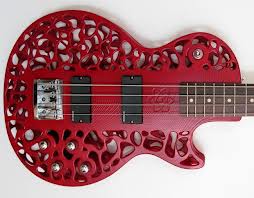
3D printed guitar

How does 3D Printing Work?

Three-dimensional printing is a process by which layers of material are stacked creating a physical object. Materials such as plastics, fabric fibers and even human tissue are fed into the machine to create the designs. Depending upon the machine, those layers could be created through stacking layers of light (FTI- film transfer imaging), fusing heated plastic filament or metal wire (FDM – fused deposition modeling) or laser technology with at least seven different types of metals (SLS – Selective laser sintering).

Sound complicated? Relax. I don’t pretend to understand exactly how the technology works. Do you know all of the exact technology behind how your smart phone works? Neither do I, but we still use our phones constantly.

What Benefit does 3D Provide?

Construction

Imagine being able to create an intricate architectural design to visualize exactly how your building or sculpture will look prior to construction. Imagine being able to create artificial limbs for accident victims or to correct birth defects. Imagine being able to create a spare part for a machine long after the model had been discontinued.

Through contour crafting it is possible to build an entire home: concrete foundation, plumbing, electrical wiring and all of the furnishings. A 2500 square foot house could be built in 20 hours. Imagine the benefit in restoring homes for victims of natural disasters.

Medical

Artificial limbs, prosthesis, can be created to assist accident victims and correct birth defects. 3D printing can produce medical devices such as those used in my spinal fusions. It is scary to think what could be created from human tissue as this technology advances.

Transportation

Prototypes of automobiles, planes, boats and other mobile devices can be created and tested; design adjustments can be made prior to the expensive final production stage.

Toys

Can you imagine giving a child a 3D computer to create their own toys? At least it would be more engaging and positive for their mind than watching violence on TV. A few decades ago a child was given an erector set; next came Legos. Imagine telling a child to go to their room and create their own toy. At this point the complexity of programming the machine prevents this scenario, but will that change in the future?

Blogger

How would a blogger utilize the services of a 3D printer? Imagine bringing your concept to life? The familiar quotation is “A picture is worth a thousand words.” Adding an image to your text enhances the visual appeal and engages the reader. Granted, becoming an excellent photographer to capture the 3D image to include in your post could present a challenge, but then you are up for a challenge. Tap your incredible imagination. Let me hear from you.

The possibilities are endless

What’s the Catch?

Three-dimensional printing is not new; 3D has existed for three decades. 3D printing has been too expensive, non-accessible, inefficient and too slow. Times are changing. According to Lisa Harouni of Digital Forming, detail and quality are improving; the price has been reduced to about $300 and the machine will now fit on a desktop.

What’s the problem?

The programming complexity makes the machine very difficult to use. At this point 3D Printing machines are not user friendly; however with rapidly advancing technology, this could change in the next few years. Three-dimensional printing has the potential to create a manufacturing revolution. Some are touting 3D printing as the answer to ending “made in China.” When manufacturing is cost effective, time efficient to produce, inexpensive to ship and accurate (machines eliminate the human error factor), 3D has the potential to bring the manufacturing industry back to America.

Will 3D Printing Replace Traditional Printing Companies?

No. 3D and traditional printing as we know it now serve two totally different purposes. It’s like asking if an exotic alcoholic drink will replace green tea. Both have their value, but they fill entirely different purposes.

The current fiercely competitive printing industry is expanding. A new online printing company will be challenged to the max to go head to head with the printing giants like Vista Print, PrintPlace.com, or PsPrint. The printing industry is not declining but thriving. Competition in the printing industry is intensifying. UPS and FedEx are trying to capture their own piece of the printing industry market.

A business card created with 3D printing shaped as an exact replica of an entire set of golf clubs may be fun and unique, but imagine attempting to place 20 of them in your wallet.

3D Printer in Every Home?

Does the possibility exist for 3D printers to be in most homes and offices? It’s possible. Is it probable? It was only a few decades ago when Ken Olsen, founder of the legendary minicomputer company DEC said, “there is no reason for any individual to have a computer in his home.” Now we all have at least one computer and probably several when you include our smart phones.

As the volume of information increases and more and more records must be created and retained, does it really make logical sense to create three-dimensional contracts, three-dimensional business cards, three-dimensional letters or postcards and three dimensional grocery lists? No. Will the marketplace still need business cards, legal documents, restaurant guest checks, and printed marketing materials? Yes. The majority of printed materials as we know them will continue to be of significance.

There is a greater likelihood of electronic media replacing some paper documents than 3D printing replacing traditional printed materials. Three-dimensional printing serves an entirely different function in the marketplace than traditional printed materials.

So did we spark your creative juices? How could you potentially take advantage of 3D printing in your online business?

Author’s Bio: At home in the Colorado Rocky Mountains, Elaine Love writes about small business and the mindset for success so essential for an entrepreneur. She is the author of Emotional Ice Water. Find her on Twitter @elainelove44 or Elaine4Success.com

Filed Under: Successful Blog, Tools Tagged With: bc, Design, printing, small business, technology

  • « Previous Page
  • 1
  • …
  • 4
  • 5
  • 6
  • 7
  • 8
  • …
  • 73
  • Next Page »

Recently Updated Posts

Is Your Brand Fan Friendly?

How to Improve Your Freelancing Productivity

How to Leverage Live Streaming for Content Marketing

10 Key Customer Experience Design Factors to Consider

How to Use a Lead Generation Item on Facebook

How to Become a Better Storyteller


From Liz Strauss & GeniusShared Press

  • What IS an SOB?!
  • SOB A-Z Directory
  • Letting Liz Be

© 2025 ME Strauss & GeniusShared