Successful Blog

  • Home
  • Community
  • About
  • Author Guidelines
  • Liz’s Book
  • Stay Tuned

Worse than Pick Your Brainers: Meet the Network Rustling Cowboy

August 6, 2010 by Liz

cooltext443794242_influence

Recently two folks I admire — Jason Falls and Gini Dietrich — have written some great thoughts on people who over stress a professional relationship by asking if they might “pick your brain.” If you’re a service professional — doctor, lawyer, social media practitioner — and you’re having this problem, follow those links; read the posts and the comments that they carry.

It’s those two posts that inspired this one.

Have a seat by the campfire and I’ll tell you a story of the cowboys who make the “pick your brain” folks look almost harmless — as if they’re merely apprentices to the people who write the bad PR bitches that keep showing up in our email inboxes. After all, so many of those “pick your brain” folks don’t realize they’re looking to learn at the expense of another.

The cowboys I’m thinking of are practiced at what they do.

Whoa Cowboy! We See You Trying to Rustle Our Netwworks?

Early this year, a cowboy rode into town. he took out his LinkedIn account, his email lists, and his telephone. He contacted people he never met immediately asking … asking everyone the same set of questions in about the same way and causing the same uncomfortable feeling in the people he contacted.

Cowboy’s First Phone Call

So the cowboy was efficient. He would bother to show much interest in the people he called and in fact, never started by asking them to participate in the event he was planning. When he called me, I let him talk for quite, asking questions about his event and how it worked and what he was looking for …

This is what the cowboy wanted from me.

  • Connections to my network to get speakers for his event.
  • Information on how to market to this city.
  • Access to my list even though he’d never met me.
  • Promotional help even though he made no offer of value in return.

I listened for about a half hour to be sure that he didn’t know a thing about me … other than I had a network in Chicago that might be worth tapping into.

I listened long enough to be sure that he never offered anything in return for what he was asking. Then I told him that I thought it was curious that he would be asking for my advice on his event and for access my network, but not being the least interested in who we are or how to return the value.

I called of few of my friends around the city and their stories were even more blatant than my own. I figure that might be because my friends are much nicer in situations like this than I am.

This cowboy wanted to rustle my network and we weren’t supposed to notice?

To Network Rustlers Everywhere

So, to cowboys out there everywhere, I’d like to say something clearly.

cattle_via_howlingforjustice

Take this word from me …

The people in my network are people not cattle.
I value them. I trust them.
I hold their trust as priceless.
I don’t and won’t ever sell them or their time for your money or your promise of attention.
I might occasionally be stupid enough give away my expertise,
but don’t try stealing my friends’ time or expertise

I’ll call you on it.
If you’re using me to get to them, I know you’ll just use them too.

Compared to their trust, whatever you need is irrelevant.

So get along now little doggie. We don’t cotton to folks who rustle networks around here. Build your own network. Do your own homework. Make your own relationships in ways that build community.

I had such fun writing this.

Have you had experience with network rustling cowboys?

–ME “Liz” Strauss
Work with Liz on your business!!

Buy the Insider’s Guide to Online Conversation.

I’m a proud affiliate of

third-tribe-marketing

Filed Under: Community, Strategy/Analysis, Successful Blog Tagged With: bc, LinkedIn, power networks, sobcon

Cool Tool Review: Wazala

August 5, 2010 by Guest Author

Todd Hoskins chooses and uses tools and products that could belong in an entrepreneurial business toolkit. He’ll be checking out how useful they are to folks who would be their customers in a form that’s consistent and relevant.

Cool Tool Review: Wazala
A Review by Todd Hoskins

A few years ago, small companies were constantly complaining about the eCommerce divide – the cost and headache of setting up an online store, collecting product images, managing transactions, and the dreaded shopping cart was separating the haves from the have-nots.

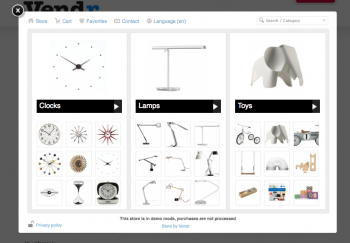
Wazala, formerly Vendr, allows anyone to be in the “have” category. It’s a huge breakthrough for small companies that have hard goods or digital goods to sell, but don’t have the resources for NetSuite. The technology has been there (Volusion comes to mind), with plenty of “turnkey” solutions.

The difference with Wazala is that it is a pop-up store, a store within your site. You don’t need a new domain or designer, or additional software. With copied and pasted code, I had a store on my WordPress blog in less than 10 minutes.

vendr

Costs range from free (up to 5 products) to $30/month for up to 250 products. Inventory tracking, product categorization, search, coupons, and discount codes are available for larger stores, along with integration for bookkeeping and fulfillment. Payments can be processed through PayPal or Google Checkout for all stores.

The one missing element is integration with affiliate programs, which is reportedly being developed. For now, if you run a successful blog or are a small to medium sized company, Wazala is a super, simple service if you have your own products to sell.

Summing Up – Is it worth it?

Enterprise Value: 2/5 – Sell direct and have just a few products? Then, yes.

Entrepreneur Value: 4/5 – 15 day trial gets you into eCommerce

Personal Value: 2/5 – Try selling your knitted cardigans on your blog. Why not?

Let me know what you think!

Todd Hoskins helps small and medium sized businesses plan for the future, and execute in the present. With a background in sales, marketing, and technology, he works with executives to help create thriving organizations through developing and clarifying values, strategies, and tactics. You can learn more at VisualCV, or contact him on Twitter.

Filed Under: Successful Blog, Tools Tagged With: bc, eCommerce, store, Todd Hoskins, Vendr

Five Things I’ve Learned During My Writing Journey

August 4, 2010 by Liz

cooltext455576688_blogging

By Terez Howard

I’ve been writing professionally for about 10 years, and the majority of those years were spent at the newspaper. I delved into blogging early this year, and I’ve learned a lot from this experience. These two writing avenues have taught me things about myself I didn’t even know.

I like writing on deadline.

When I first started writing for the newspaper, I was horrified when my editor threw me a breaking story that needed to be completed within a couple hours, so the story could appear in the same day’s newspaper. Now, I love that pressure. It might sound crazy, but I think the adrenaline rush helps me write better than ever, instead of agonizing over every word.

With blogging, I have yet to be on such a tight deadline. However, I’ve learned to not take five minutes over word choice. (Should I say choice or options?) When I blog, I try to be myself and just talk.

I don’t mind asking for help.

Working for the newspaper was a constant learning experience. Each and every day was different. When I was asked to cover a city council meeting when I usually covered Kiwanis Club meetings, I took the time to ask the regular reporter what to expect, what to listen for and what would make a newsworthy story.

As a novice to blogging, I researched how blogging was different from other writing and studied other blogs. I also asked and continue to ask more experienced bloggers for advice and direction. I don’t care if my questions seem stupid because I figure my questions can keep me from looking stupid.

I love to tell stories.

When I worked for the newspaper, I grew to enjoy telling someone else’s story. I felt like I was getting important information into the ears of the public. Feature stories were the best because they featured a person or group, who made some accomplishment or had an interesting story to tell. We can learn a great deal from simple stories.

I once got to write a story about the hometown bakery owner who used to be the manager for Wild Cherry. You know, “Play That Funky Music White Boy.” It was so fun to write!

When I blog, I try to tell stories. Most of the times, these stories are my own, and I have to remember that these stories have a point. Have you ever found yourself writing about something that happened to you only to get to the end and wonder what point you were trying to make?

Newspaper office or home office?

This one’s a draw. I think I like my home office more than my desk at the newspaper. At home, I can write whenever I have a spare moment, which is great with my rambunctious toddler. On the other hand, it can be difficult to jump on my computer to just check my e-mail with an active little girl tugging on my arm.

At the office, I had a set period of time from 8 to 4 every day to do my work. I got the job done. But I also had a lot of down time.

It’s not for the money.

Anyone who has ever worked for a newspaper, unless it’s a very huge paper, does not work for the money. A high school graduate, not a college graduate, could have easily earned what I did somewhere else. I stayed with the newspaper as long as I did because I enjoyed the work, writing people’s stories and being in an office full of wonderful people.

I blog because I love to write. Yes, I want to earn money with it, but I’m not looking to get rich. I’m not saying that you cannot earn a substantial income from blogging because I know it can be done. I just don’t want to.

What have you learned from blogging?

—
Terez Howard operates TheWriteBloggers, a professional blogging service which builds clients’ authority status and net visibility. She regularly blogs at Freelance Writing Mamas . You’ll find her on Twitter @thewriteblogger

Thanks, Terez!

–ME “Liz” Strauss
Work with Liz on your business!!

Filed Under: Successful Blog, Writing Tagged With: bc, blogging, LinkedIn, Terez Howard

The Difference Between Begging for and Building Influence

August 4, 2010 by Liz

The Economics of Influence

cooltext443794242_influence

People are using the word influence to mean many things these days. It’s easy to confuse influence with popularity.

Recently Jason Pollock commented on Twitter about the Fast Company Influencer Project Project @Jason_Pollack said, I signed up for the “influence project” but quickly realized those at the top were just being very spammy to be there.

Robert Scoble replied with some true words of wisdom … @Scobleizer said, “Seems to me @Jason_Pollock that people with real influence never have to point it out or beg for it.”

They have a point.

Are You Producing Influence?

People rich with influence understand it as a currency. True and lasting influence — like true and lasting wealth — is earned through investment of time and resources. But it’s also a way of thinking and valuing what we do and the people we do it with.

The difference between begging and building influence is the difference between giving to get and investing wisely.

  • The exchange rate. In economics, influence would be a local currency. It’s value is only worth what your network agrees that it might be. The ideal is that you might take a single contact to move people to action. Contests that require millions of votes to choose a winner are an example of hyperinflation.

    Power up your network. Be willing to work to prove your value.

    How can you connect with the people who most represent what you value?

  • The production costs. Producing influence takes resources — spent in building quality relationships, systems to maintain them, content to keep connected with them, and ways to grow those relationships. True influence grows from aligning our goals with others.

    Share your influence as an equal partner.

    How can others be better because you helped?

  • Specialization. People rich with influence have integrated their passions and skills into their sphere of influence. They choose their networks on values and ethics and by doing so have established an automatic barrier to entry.

    Know and value what has drawn you to each and all of your contacts.

    How do you describe your network?

  • Scarcity: Supply and Demand. If oak leaves were currency. They would only be valuable where oak trees don’t grow. People who have influence choose and feel no need to showcase their influence bank account. Their generosity is from a place of strength. They promote what they value in others, not what they hope will return.

    Value your word and the power it has.

    How do you know what not to influence?

When we know the value of our influence, we can invent it wisely in the people who invest back. We don’t feel a need to give our value promiscuously to every person who asks.

Who influences you by the way he or she influences others?

–ME “Liz” Strauss
Work with Liz on your business!!

Buy the Insider’s Guide to Online Conversation.

I’m a proud affiliate of

third-tribe-marketing

Filed Under: Strategy/Analysis, Successful Blog Tagged With: bc, influence, LinkedIn, social capital

3 Agency Models: How to Sell Pencils to Attract Fiercely Loyal Fans

August 3, 2010 by Liz

Which One Gets Your Buy In?

cooltext443809437_relationships

I’ve been visiting a lot of social media agency websites lately and I’ve been thinking about how good people are saying one thing and doing another. For example, how many times have you started a conversation with It’s important to listen. then proceeding to talk about why, without listening first ourselves?

Take my advice. I’m not using it.

I was visiting websites to find a great example for the keynote I’m working on. What I found is that companies sell products one of three ways.

Let’s imagine that execution is a given and that all agencies want to deliver high value to their clients. In other words, let’s say that they’re all basically offering the same set of pencils in a few different colors, a different package, and with a different experience.

1233446_set_of_crayons

Here’s what I found about how most agencies approach communicating what they do — how they sell that pencil and their ability to deliver the best pencil to the client.

Traditional Transactional Selling

Critical Mass cuts to the chase by answering the question of how to get customers to experience something they have to taste. They underscore their strength in application building and getting to the solution.

We knew that to truly appreciate Budweiser American Ale, you had to taste it — not an option online. The solution? Drive people offline. Our “Alefinder” app guided people to the closest American Ale, and closing the site (literally) for an hour every day, created the perfect window of opportunity to go get some. Cheers!

Critical Mass does a beautiful job of explaining their qualifications and experience. That’s information that new clients surely want to know. I can’t argue with that. [ I do find this ambiguous phrase closing the site (literally) for an hour every day from the quote above and others on the site show a struggle with seeing things through other eyes.]

criticalmass

That’s traditional transactional selling — features and benefits. Sell a pencil by explaining the specs and why your pencil is better. No matter how creative you get with the words, in the end you’re talking about how good you are at making pencils. You win clients who are fans of the best pencils.

Selling Through Prestiqe, Reputation, and Narrative

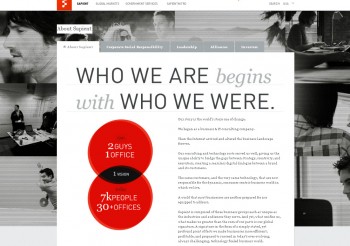
Sapient, which bnet called the Top of the Top 50 Interactive Agencies starts with story. They explain how their unique experience has given them one-of-kind abilities.

The same customers, and the very same technology, that are now responsible for the dynamic, consumer centric business world in which we live.

A world that most businesses are neither prepared for nor equipped to address.

Sapient does a beautiful job of using narrative to pull back the curtain, reveal something about their values, and defining themselves in a category of one. That last sentence in the quote raises them above the competition. The want elite clients who value prestige.

sapient

That’s selling though reputation and narrative — features and benefits are expected. Sell a pencil by explaining why your pencil will be the Stradivarius, because it will be made by people with unique pencil-making skills who transform pencils into art. In the end, the story is still your story and you win clients who value the prestige.

Selling to Attract with Fiercely Loyal Fans

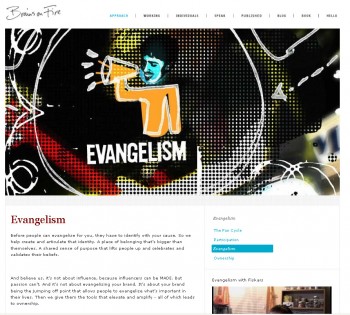
Brains on Fire changes the game entirely — connecting and demonstrating what they do. They talk to the client about creating fans not customers, not about themselves. Everything they discuss is in context of how they serve the mission of creating fans. The site is written with the personal pronoun “you” — something missing from most others.

Before people can evangelize for you, they have to identify with your cause. So we help create and articulate that identity. A place of belonging that’s bigger than themselves. A shared sense of purpose that lifts people up and celebrates and validates their beliefs.

And believe us, it’s not about influence, because influencers can be MADE. But passion can’t. And it’s not about evangelizing your brand.

Brains on Fire does a beautiful job of demonstrating that they believe in and have achieved a culture that thrives on building communities of fiercely loyal fans.

brainsonfire

That’s selling to build community and attract fiercely loyal fans. Execution and hard work are straight out stated as expected. The usual buzzwords — such as influencer — are pulled out and revealed as what they are. It’s the communities that are featured in the work not the agency. Sell a pencil by making heroes of the people who use your pencils. Feature their fabulous mathematical equations, poetry, art, writing and invite them to celebrate the role your pencil have played in making their lives easier, smarter, faster, and more meaningful. Invite them to swap stories and strategies for making pencils last longer and work better for them. Let them personalize and customize the pencils in ways that let them own your brand.

From the beginning, it’s been about the client and their fans. Fiercely loyal fans understand what it takes to attract fiercely loyal fans.

Who do you see that does a great job of selling a pencil in a way that attracts fiercely loyal fans?

–ME “Liz” Strauss
Work with Liz on your business!!

Buy the Insider’s Guide to Online Conversation.

I’m a proud affiliate of

third-tribe-marketing

Filed Under: Marketing /Sales / Social Media, Successful Blog Tagged With: bc, Brains on Fire, Critical Mass Agency, LinkedIn, relationships, Sapient, Strategy/Analysis

Get Your Out-of-Whack Back in Whack Again!

August 2, 2010 by Liz

Whack Your Process Models Back Into Shape

cooltext443809602_strategy

As I remember the number is 10% change, but when I say that people say it’s probably more like 20%. I tried looking up the research and I couldn’t find it. But the actual percentage doesn’t matter … because the effect is clear when tell you the effect of the change.

If you change the personnel on your team by 10%, all of your process models fall apart.

Go ahead tell me, it’s really 20% (you know who you are). Like I said the number doesn’t matter. The change does.

Think about it.

1066753_there_may_be_trouble_ahead_2

If you’re used to working alone and you’ve added one person to the project, you’ve changed by more by 100%. If you’ve had three people on the team and one leaves, you’ve cut your team by 33.33%.

Things like this happen all of the time. We add new people. People move to new roles. People leave for other jobs in other places. Volunteers and others hide out in caves or disappear into open spaces.

Yet we keep working in the same order, thinking the process is the same process. Except now, the process is out of whack, broken, and discombobulated. This happens to entrepreneurs and huge corporate teams. Are you there?

Twelve Signs that Your Project or Process Is Out of Whack

Here are 12 signs that your project or process is woefully out of whack:

  1. The next step doesn’t seem clearly visible.
  2. No one knows who to invite to which meeting.
  3. Emails are flying like crazy, but don’t seem to be helping.
  4. The people to keep in the loop seems to shift from everyone. That advisor group you might rely on has become undefinable.
  5. Your work seems to have too many moving parts.
  6. Your project doesn’t have enough brains, hands, or eyes to get done right, well, and on time.
  7. Procrastination is looking like a good thing.
  8. Moving forward would be easy if you could pinpoint which way that might be.
  9. You might have lots of resources, but don’t know how to get them working.
  10. When someone asks, “How can I help?” Your answer is a blank stare.
  11. Success isn’t feeling like an option.
  12. You spend more time talking about how to get the work done, than actually working on the project.

Recognize any of that? Let’s that whack back into things.

Get That Out-of-Whack Back in Whack Again!

Execution and productivity are a natural result of great process. A great process model takes advantage of your skills and minimizes the time it takes move things.

Stop. Redefine your process. An hour or two getting the process model right will speed communication, trust, and the quality of work exponentially.

If all of your models are out of whack do this for one typical project, then adjust the model as you move forward.

Here are some questions to get to the right process model.

  • What will the finished work look like?
  • Who does the finished work depend on?
  • Who are the key people who belong on the communication and command team? How can we keep that to key people who inform others who work them?
  • Who’s accountable for what pieces when?
  • How will the work get passed from one stage / team to another?
  • In what ways can the process flex? In what ways must folks check in before changing the process?
  • What tools will be used to communicate changes, issues, news, and updates?
  • Who will update the status of the project and how will that be done?

Whether you’re a team of one or a team of 30, a process that is back in whack saves time in decision making, improves communication, saves resources, lowers costs, and stops details and fires from running / ruining projects. Your confidence and trust in your work will grow as the process model takes shape and folks around you will see the progress as competence, power, and expertise.

How will you firm up your process models?

–ME “Liz” Strauss
Work with Liz on your business!!

Buy the Insider’s Guide to Online Conversation.

I’m a proud affiliate of

third-tribe-marketing

Filed Under: Strategy/Analysis, Successful Blog Tagged With: bc

  • « Previous Page
  • 1
  • …
  • 349
  • 350
  • 351
  • 352
  • 353
  • …
  • 1050
  • Next Page »

Recently Updated Posts

The Creator’s Edge: How Bloggers and Influencers Can Master Dropshipping

Is Your Brand Fan Friendly?

How to Improve Your Freelancing Productivity

How to Leverage Live Streaming for Content Marketing

10 Key Customer Experience Design Factors to Consider

How to Use a Lead Generation Item on Facebook


From Liz Strauss & GeniusShared Press

  • What IS an SOB?!
  • SOB A-Z Directory
  • Letting Liz Be

© 2025 ME Strauss & GeniusShared