Successful Blog

  • Home
  • Community
  • About
  • Author Guidelines
  • Liz’s Book
  • Stay Tuned

Will 3D Printing Replace Traditional Printing?

March 19, 2013 by Rosemary

By Elaine Love

The media is buzzing about the “newest kid on the printing block.” What marvelous potential exists for this new technology! Just think what 3D printing can accomplish for the medical community, the automobile industry, architecture and even the toy industry. Will 3D printing ever reach the widespread popularity of the print industry as we know and use it currently?

Pause and hit Rewind
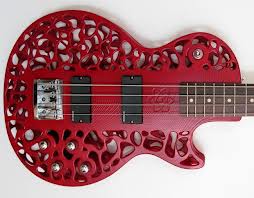
3D printed guitar

How does 3D Printing Work?

Three-dimensional printing is a process by which layers of material are stacked creating a physical object. Materials such as plastics, fabric fibers and even human tissue are fed into the machine to create the designs. Depending upon the machine, those layers could be created through stacking layers of light (FTI- film transfer imaging), fusing heated plastic filament or metal wire (FDM – fused deposition modeling) or laser technology with at least seven different types of metals (SLS – Selective laser sintering).

Sound complicated? Relax. I don’t pretend to understand exactly how the technology works. Do you know all of the exact technology behind how your smart phone works? Neither do I, but we still use our phones constantly.

What Benefit does 3D Provide?

Construction

Imagine being able to create an intricate architectural design to visualize exactly how your building or sculpture will look prior to construction. Imagine being able to create artificial limbs for accident victims or to correct birth defects. Imagine being able to create a spare part for a machine long after the model had been discontinued.

Through contour crafting it is possible to build an entire home: concrete foundation, plumbing, electrical wiring and all of the furnishings. A 2500 square foot house could be built in 20 hours. Imagine the benefit in restoring homes for victims of natural disasters.

Medical

Artificial limbs, prosthesis, can be created to assist accident victims and correct birth defects. 3D printing can produce medical devices such as those used in my spinal fusions. It is scary to think what could be created from human tissue as this technology advances.

Transportation

Prototypes of automobiles, planes, boats and other mobile devices can be created and tested; design adjustments can be made prior to the expensive final production stage.

Toys

Can you imagine giving a child a 3D computer to create their own toys? At least it would be more engaging and positive for their mind than watching violence on TV. A few decades ago a child was given an erector set; next came Legos. Imagine telling a child to go to their room and create their own toy. At this point the complexity of programming the machine prevents this scenario, but will that change in the future?

Blogger

How would a blogger utilize the services of a 3D printer? Imagine bringing your concept to life? The familiar quotation is “A picture is worth a thousand words.” Adding an image to your text enhances the visual appeal and engages the reader. Granted, becoming an excellent photographer to capture the 3D image to include in your post could present a challenge, but then you are up for a challenge. Tap your incredible imagination. Let me hear from you.

The possibilities are endless

What’s the Catch?

Three-dimensional printing is not new; 3D has existed for three decades. 3D printing has been too expensive, non-accessible, inefficient and too slow. Times are changing. According to Lisa Harouni of Digital Forming, detail and quality are improving; the price has been reduced to about $300 and the machine will now fit on a desktop.

What’s the problem?

The programming complexity makes the machine very difficult to use. At this point 3D Printing machines are not user friendly; however with rapidly advancing technology, this could change in the next few years. Three-dimensional printing has the potential to create a manufacturing revolution. Some are touting 3D printing as the answer to ending “made in China.” When manufacturing is cost effective, time efficient to produce, inexpensive to ship and accurate (machines eliminate the human error factor), 3D has the potential to bring the manufacturing industry back to America.

Will 3D Printing Replace Traditional Printing Companies?

No. 3D and traditional printing as we know it now serve two totally different purposes. It’s like asking if an exotic alcoholic drink will replace green tea. Both have their value, but they fill entirely different purposes.

The current fiercely competitive printing industry is expanding. A new online printing company will be challenged to the max to go head to head with the printing giants like Vista Print, PrintPlace.com, or PsPrint. The printing industry is not declining but thriving. Competition in the printing industry is intensifying. UPS and FedEx are trying to capture their own piece of the printing industry market.

A business card created with 3D printing shaped as an exact replica of an entire set of golf clubs may be fun and unique, but imagine attempting to place 20 of them in your wallet.

3D Printer in Every Home?

Does the possibility exist for 3D printers to be in most homes and offices? It’s possible. Is it probable? It was only a few decades ago when Ken Olsen, founder of the legendary minicomputer company DEC said, “there is no reason for any individual to have a computer in his home.” Now we all have at least one computer and probably several when you include our smart phones.

As the volume of information increases and more and more records must be created and retained, does it really make logical sense to create three-dimensional contracts, three-dimensional business cards, three-dimensional letters or postcards and three dimensional grocery lists? No. Will the marketplace still need business cards, legal documents, restaurant guest checks, and printed marketing materials? Yes. The majority of printed materials as we know them will continue to be of significance.

There is a greater likelihood of electronic media replacing some paper documents than 3D printing replacing traditional printed materials. Three-dimensional printing serves an entirely different function in the marketplace than traditional printed materials.

So did we spark your creative juices? How could you potentially take advantage of 3D printing in your online business?

Author’s Bio: At home in the Colorado Rocky Mountains, Elaine Love writes about small business and the mindset for success so essential for an entrepreneur. She is the author of Emotional Ice Water. Find her on Twitter @elainelove44 or Elaine4Success.com

Filed Under: Successful Blog, Tools Tagged With: bc, Design, printing, small business, technology

Online work is never “done”

March 7, 2013 by Rosemary

This morning I woke up to the latest Google+ change to the cover photo and did a classic face-palm. I thought that was done. Handled. Taken care of.

Except, when your business is online, there is no “done.”

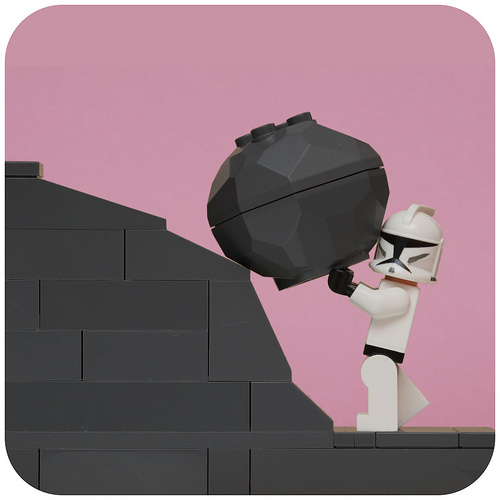
There’s a classic myth about King Sisyphus who was cursed to roll a huge boulder uphill only to watch the boulder roll back down and repeat the process. For eternity.

Perhaps that’s an extreme reference, but sometimes dealing with the shifting sands of online business feels that way, doesn’t it?

Don’t worry, we’re all in this together.

You can maintain your sanity with these handy tips:

Don’t get caught by surprise

Stay on top of breaking news in your niche and for online business in general. Sites like Mashable, ReadWrite, TechCrunch, and TheNextWeb all offer quick punches of information, and you can often get a heads-up on trends before they catch you flat-footed. Consider subscribing to the technical blogs of the big social networks, to get advance notice of design or other changes (like this post where Twitter warned of upcoming API changes).

Do your chores consistently

Set aside time each week for housekeeping, tweaking graphics, updating links, and fixing your site. If you schedule specific time to do this, you won’t end up shoehorning it in between client calls. Use a block of time consistently to line up chunks of content, or batch change graphics, or do other maintenance tasks.

Delegate if you can

Some repetitive tasks can be outsourced or delegated, so you can invest your own valuable time doing the things that only you can do. Find a virtual assistant, get a freelancer to write some content for you, or judiciously use automation tools to gain efficiency. One of Tim Ferriss’ key suggestions in The Four Hour Work Week is to use outsourcing as a time saver.

Finally, recognize that everyone else is scrambling to keep up too. We all have our boulders to roll.

(If you’d like to update your Google+ cover photo, you’ll need an eye-catching 2120 pixel by 1192 pixel picture that conveys your brand message.)

Do you have any tricks for keeping pace with constant online developments?

Author’s Bio: Rosemary O’Neill is an insightful spirit who works for social strata — a top ten company to work for on the Internet . Check out the Social Strata blog. You can find Rosemary on Twitter as @rhogroupee


Image: pasukaru76 via Flickr CC license.

Filed Under: Business Life, management, Motivation, P2020, Productivity Tagged With: bc, delegation, Design, online, outsource

Clarify Your Site’s Purpose and Stop the Terminator

February 28, 2013 by Rosemary

The average web page visit lasts less than one minute.

Humans are programmed to sort everything they see into familiar labels, or buckets. Our brains scan the immediate environment to find threats, food, competitors, and potential mates. Like the Terminator searching for John Connor, we make fast assessments and move on.

The same thing is happening with visitors to your blog or website.

You’re doing the same thing right now reading this blog post. You read the headline, decided it was applicable to your situation, and started scanning. Maybe these quick bullets will keep you reading.

Tactics for Building a Useful Web Presence

  • Use your Google Analytics to view landing and exit pages. If certain landing pages lead to an immediate exit, tweak the content. Keep testing what is resonating with your visitors.
  • Have a clear path. People don’t usually land on the home page and click a giant “buy” button immediately. Have a plan for how you want visitors to progress through your information, and where you want them to end up.
  • Use markers like arrows, visual flow, friendly text. Design can’t be an afterthought. In “Terminator” mode, people need simple visual clues about where to click next.
  • Make your “ask” very clear. Is your site supporting a business? What are you selling? Is it a hobby/journal blog? Are you supporting a non-profit? Don’t make your visitors guess.
  • Declutter. Set up a routine review of your blog or website, with the intention of taking out anything that’s not crucial. Old badges, social buttons, ads that aren’t getting clicks, be ruthless, like you are with your closet.
  • Stop sending people away to other sites. You may have noticed that a lot of the big bloggers have started removing their “follow me on…” buttons from the home page (replacing it with email capture instead). Consider whether you really want to send your visitors away like that.
  • Check your mobile experience too. Whip out your smartphone and look at your site. Is it fugly? Do something about it! Here’s a handy post from Shonali Burke if you’re running WordPress.

Why do you have a blog or website? How do you make that clear to your visitors?

Author’s Bio: Rosemary O’Neill is an insightful spirit who works for social strata — a top ten company to work for on the Internet . Check out the Social Strata blog. You can find Rosemary on Google+ and on Twitter as @rhogroupee

Filed Under: Blog Review, Checklists, Strategy/Analysis, Successful Blog Tagged With: bc, Blog Basics, Design, retention, traffic

Do Images Encourage Interaction?

February 8, 2013 by Rosemary

By Rob James

compelling imagesIf you own an online business and want to optimise your website, it’s important to consider the many benefits of using images to encourage interaction from users. Images can add an emotional connection to websites, and when combined with excellent layout, typography, and animation, can help to build a compelling website for your business. How do images engage users, then, and what are some of the more specific actions you can take to use images as part of your own site?

The building blocks of images on a site can range from anything from an effective logo to icons and animation, as well as images in side bars and articles – in most cases, these graphics and images serve a functional purpose – they grab the attention, and they provide a complement to the copy on your site. A basic page layout can consequently use images as sparingly as possible, and can rely on stock pictures tailored to your business, or ones that you’ve taken yourself.

Emotional Images

However, images on a site should be more than just functional – they should be able to provoke an emotional response from users in the shortest period of time. One way in which this becomes more effective comes when images are animated, or when they can be navigated like a game, and broken down to include click throughs and pop ups that produce videos – some examples of where images can become more animated can be found here. Producing interactive image maps, where information for a business is spread across a whole image with different clickable sections – a map of an office or a city with separate sections activated by clicking on different parts of the screen represent examples – can also make a site more engaging.

Chuck Longanecker has emphasised the importance of ‘emotionally intelligent interactions for encouraging conversions on sites; this involves using professionally created graphic design and high quality photographs to make a site look more like a glossy magazine lay out than a traditional web page. Longanecker cites examples from error message screens that use rich graphics and images as good examples of how even the most mundane parts of a site can be made more effective.

Remember User Experience

What this adds up to are sites that are tailored to your business, but that take the process of web design further by using HMTL5 and Flash coding to make a site rely on intuitive graphics, where drop down menus, sliding bars, and videos embedded into the site, rather than loading separately, promote a clean user experience. One good example of this in practice are sites that use full size backgrounds, and the minimum of copy, on their landing pages – fashion and car brands are particularly effective at this approach.

What can you do, then, to boost your own site? The first step to take is to either find or commission high definition images to use on your site, which can ideally be blown up to act as a full screen background – sites that take this approach look particularly great on HD tablets. Alternatively, look to a web design company that can take your existing site and rethink its graphic design – so much of what’s important now about a site is looking less and less like a simply laid out set of information, and more like an interactive puzzle that users can navigate.

Going forward, it’s also important to remember not to overload your site with different images, and to always make sure that you have the rights to use an image or graphic; Creative Commons images are available through sites like Flickr, while you can also license images from the Getty and other collections for a small amount of money. In addition, you can test out the success of new images and image layouts for your site through Conversion Rate Optimisation (CRO) – this involves running tests where users see different versions of the same site, and then checking to see which had the highest rate of conversions or click throughs.

Are you integrating compelling images in your site design? What’s your favorite resource?

Author’s Bio: Rob James is an online marketer who highly recommends Boxmodel mobile web development agency. Rob can be found blogging about a variety of technology related subjects, including computer hardware, mobile apps, web development, and SEO techniques.

Image: Flickr CC albdruck

Filed Under: Design Basics Tagged With: bc, Design, images, photography

The Necessity of Frustration

December 25, 2012 by Rosemary

Paintbrushes
Without doubt, no breakthrough

by Ric Dragon

Big Doubt, Little Doubt

Beginnings are typically joyous, euphoric occasions. Whether it’s a software project, a barn-raising, a romance, or a painting, the earliest stages are exciting, not yet informed by the difficulties that lie ahead.

The art of making paintings is remarkable. It doesn’t matter if the painter is portraying mountains and streams, or is creating an abstraction. Taking the three-dimensional world and portraying it on a flat surface is abstraction, and creating shapes and color is quite concrete and real. So it follows that a lot of the distinctions that are made about painting – whether it’s realism, abstraction, or some other genre – are somewhat moot. But what all painting shares is that there is no guidebook. Each painter is on their own in trying to figure out what it is all about.

Over the years, I’ve noticed that I look forward to starting paintings. The canvas, newly tacked over the stretcher bars, presents a vast area of whiteness. A brush loaded with paint is picked up – and that first mark is made. It’s exhilarating.

I also know what to expect about a third of the way into the painting: frustration. In those early years, it was unnerving: I’d be wracked with feelings of doubt and inability. Like an arctic explorer without a compass, I’d look around and realize that I didn’t have a clue as to where I was or why I was there. These aren’t the little niggling doubts that sometimes come to haunt us, but the big doubts. What does my existence mean?

For hundreds of years, practitioners of Zen Buddhism have been using doubt as a key to their practice. In the various approaches to Zen, the feeling of doubt is considered to be critical to finding awareness. In fact, koans, those baffling stories used in zen, seem designed to help bring about that total frustration. As one teacher exhorted, “let all of you become one mass of doubt and questioning.” Without this doubt, you can’t have breakthrough.

Self-doubt can be totally debilitating, too. If you understand, though, the importance of doubt in the creative process, you can more easily say to yourself, “heh, this is all part of the process – let’s just go with it.”

Happy break-through!

—-

Author’s Bio: Ric Dragon is the founder and CEO of DragonSearch, a digital marketing agency with offices in Manhattan and Kingston, NY. Dragon is the author of the “DragonSearch Online Marketing Manual” and “Social Marketology” (McGraw Hill; June 2012), and has been a featured speaker at SMX East, Conversion Conf, CMS Expo, and BlogWorld, on the convergence of process, information architecture, SEO, and Social Media. You can find Ric on Twitter as @RicDragon.


Buy the Insider’s Guide to Online Conversation.

Image: John-Morgan, Flickr Creative Commons License.

Filed Under: Motivation, Outside the Box, Successful Blog Tagged With: bc, creativity, Design

Why Can’t We seem to Keep Things Simple?

November 3, 2009 by Guest Author

A Guest Post by Kyle Lacy

relationships button

I was asked to write this guest post about the power of simplicity in blog design and honestly, I was at a loss for words. What does it mean to have simplicity in blog design? Are we discussing the concepts of the layout design? Or a universal view of all things blog? I am not here to talk about the back-end coding of a blog, the rules of user interface design, or minimalistic thoughts on design…but the ability to give your readers the easiest way to read your valuable CONTENT.

It is easy to say that the simpler the design the better. I mean… look at Google and Yahoo. Google has one of the simplest website designs… ever. The design hasn’t changed much since the creation of the search engine. While Yahoo… in all of the search world glory… has everything but a kitchen sink. Google has proved that simplicity wins in design but where does simplicity fit in blog design?

I could give you a list of the top 10 reasons why blog design should be simple… but honestly… we don’t have the time. There is one reason why your blog design should be simplistic in nature…

Readers should have the ability to scan your content without experiencing a headache or stress… which will eventually lead to a heart attack.. which none of us want…NO READER DEATHS!

I’m taking the Google route. Simplicity in blog design is key because YOUR content must be easy to scan by the reader. I am not here to preach. In no stretch of the imagination is my blog even close to simplistic… but it is closer than most. What do you want the visitor to experience when surfing your blog and your content?

Remember, your content is king. Design around your content.

Since design is the main topic of conversation in this post.. I wanted to share with you 5 blogs I find extremely BRILLIANT when it comes to simplistic design.

1. Blog What? Design

2. AI Alex

3. Dive Into Mark

4. Design Intellection

5. I am Neato

They focus on the content… period.

——
Kyle Lacy oversees a company called Brandswag, which focuses on design, branding and social media education. With offices in Indianapolis and Oklahoma City, Brandswag helps business owners connect with their customers and sustain profitability by presenting consistent images and messages in the marketplace. He recently finished writing Twitter Marketing for Dummies which can be found on Amazon.com
——

Kyle, thank you! This is the best on the subject I’ve seen in a long time.

–ME “Liz” Strauss
Work with Liz on your business!!

Buy the ebook. Learn the art of online conversation.

I’m a proud affiliate of

Teaching Sells

Filed Under: Design, Marketing /Sales / Social Media, Successful Blog Tagged With: bc, Design, Kyle Lacy, LinkedIn

  • « Previous Page
  • 1
  • 2
  • 3
  • 4
  • 5
  • 6
  • …
  • 8
  • Next Page »

Recently Updated Posts

Is Your Brand Fan Friendly?

How to Improve Your Freelancing Productivity

How to Leverage Live Streaming for Content Marketing

10 Key Customer Experience Design Factors to Consider

How to Use a Lead Generation Item on Facebook

How to Become a Better Storyteller


From Liz Strauss & GeniusShared Press

  • What IS an SOB?!
  • SOB A-Z Directory
  • Letting Liz Be

© 2025 ME Strauss & GeniusShared