Successful Blog

  • Home
  • Community
  • About
  • Author Guidelines
  • Liz’s Book
  • Stay Tuned

Why Automated Link Building is Bad For Your Business

March 22, 2013 by Rosemary

By Rob James

A few years ago, it was common practice for businesses and Search Engine Optimisation marketers to use automated link building to increase links to their sites, with the aim of boosting a website’s PageRank in Google. However, with Google clamping down on “black hat” SEO strategies in their Penguin and Panda algorithm updates, automated link building isn’t going to do your business many favours; instead, it’s better to focus on “white hat” and organic SEO to get the most out of search.

Primarily, automated link building is all about quantity, whereby you run software and join directories to multiply the number of backlinks to your page – blog comments, and filling blogs with low quality repeated content could also enable a single website to generate large numbers of links. However, while this might be an effective method for building up a page’s ranking, automated link building is less invested in getting good quality links from relevant sites, and has been increasingly punished by Google.

The main problem that Google has with automated link building is that it can effectively represent a form of spam – multiple links from low quality sites, or spamming comments boards with links, and posting content with awkwardly placed content distorts the actual relevancy of a page for users. In this context, your business may have a high search ranking, but not one that’s necessarily made up of the right kinds of associations.

Google’s Panda and Penguin algorithm updates were consequently designed to prevent PageRank, the main Google algorithm, from being manipulated. Panda has received 24 updates since February 2011, and crawls pages for low quality features and links to duplicate content – the emphasis with Panda is on duplicated and “thin” content, where the use of links isn’t contextually motivated, and closer to spam.

By comparison, Google Penguin, introduced in April 2012, comes down even harder on automated link building through directories – if you have a portfolio of links that are mostly from link farms and other low quality sites, then Penguin will ignore or rank these links as less relevant. It’s not perfect, but it means that Penguin is going to punish your ranking if you have too many links from low quality pages.

So, what kind of actions can you take to improve your SEO without automated link building? The most straightforward method is to focus on creating original content, and on getting high quality guest posts on blogs and pages that aren’t going to get singled out by Penguin – while there are ongoing questions about how effective Google can be at identifying the right pages to disregard, it’s clear that businesses will have to spend more time on creating great content.

It’s also important to optimise existing content and pages, and to ensure that your HTML and CSS on pages is clearly set up to ensure that they can be picked up by search engines; moreover, businesses can do their SEO a big favour by investing in social media content, which can be easily shared and recommended via social toolbars and buttons. The more organic links that you get from high ranking, trusted sites, the higher the chance will be that Google will increase the value of your own website.
Author’s Bio: Rob James is an online marketer and recommends DeepBlueSky web design to help you build a high quality site. In his spare time Rob can be found blogging about the many different linking techniques out there, which ones to apply, and which ones to avoid!

Filed Under: Blog Basics, Content, Links, SEO, Successful Blog Tagged With: bc, link-building, Links, Panda, Penguin, SEO

Steps to Optimize Your E-Commerce SEO

March 18, 2013 by Rosemary

By Brian Taylor

Optimizing the SEO on your e-commerce website is vital to selling more product. It will help your pages rank better on the search engines and keep prospective buyers on your pages longer, increasing conversions and sales. With that in mind we have put together a list of steps that you can use to optimize your e-commerce site’s SEO.

Read them, use them and watch them help increase your revenues greatly.

Concentrate more on each product page

Every single product that you have should have its own product page where as many questions can be answered as possible. It will need a great description, a unique title tag and unique description tags as well. Not only that but it should have relevant internal and external links and have all the social media sharing buttons as well so that it can be ‘shared’ online. Think of every product page as its own website and make sure that:

  • As many questions are answered about the product as possible so that a customer doesn’t have to ‘leave’ the page to finds an answer.
  • All technical specs about the product are included on the page.
  • The product title, the manufacturer of the product and the SKU are text, not images.

Take advantage of category and brand pages

These pages are very important. The average person is not going to be very specific when they first start searching for something online. For example, they won’t search for a ‘Honda Civic DL Sedan’ they will search for a ‘mid-sized car’ and then refine their search as they go. If you have a well done category page with all the possibilities listed someone who’s searching will be taken to the category page first and then be able to refine their search right on your website without leaving. These so-called ‘umbrella pages’ need to:

  • Have all the basic info for each product.
  • Have a descriptive category title on page and META.
  • Include at least a paragraph of content describing them to help prospective customers know what’s being shown as specifically as possible.

Create unique categories to group products

Even though you already have everything listed on your website you should create unique categories to be able to attract even more attention to specific items, like sale items at the end of summer for example. Most e-commerce sites won’t make a new page for ‘bikinis on sale’ but instead just make a ‘note’ on the existing webpage that they’re on sale.

Better to create an entirely new category (and page) to display these items so that they won’t be scattered all over your site but will all be grouped and found in one location.

Heavily incentivize user reviews

This may be the most important step. User reviews are the life-blood of many e-commerce websites. Just like positive reviews about movies will have people lining up at the theater for a new flick, positive user reviews will attract people to your site through SEO. And once they land, they will help persuade them to make a purchase.

The best thing you can do to get reviews is to give your customers an incentive to leave one like an extra discount or something similar. The more reviews the better and, if possible (and it is possible) they should be placed on the product page itself for even more selling power.

If you follow these steps your website will attract, convert and sell more products so don’t hesitate to start using them all ASAP and watch as your sales and revenues start to increase.

Author’s Bio:
Brian Taylor is the VP, Business Development at Forix SEO in Portland, OR. a team of crack SEO experts with an impressive record when it comes to results, experience, and expertise. Forix offers affordable and ethical SEO services in Portland helping small businesses with their Internet marketing needs.

Filed Under: Marketing /Sales / Social Media, SEO, Successful Blog Tagged With: bc, optimize, products, sales, SEO

Internet Marketing and What it Means for Businesses Today

February 4, 2013 by Rosemary

By Rebekah Griffiths


It’s clear that the internet is becoming an increasingly important aspect of everyday life. From watching the latest TV shows and films to shopping for food and the latest fashion trends, millions of people all over the world connect on a daily basis. This means that by making the most of a strong online presence, perceptive business owners are able to easily tap into a national or even global market. Statistics in recent years have pointed to the eruption of e-commerce; in the U.S. alone, online sales grew from around $70bn back in 2002 to well over $250bn dollars today.


What does it mean for businesses?


With such a huge and active audience available, today’s businesses are advised to bolster their print advertising with online marketing campaigns. Many choose to place an even greater emphasis on modern online methods than they do with other, more traditional marketing means such as flyer distribution, TV commercials, and radio ads.


There are a number of options available when it comes to reaching an online audience and a combination of these, including an intelligent web marketing campaign, can be, for many, the difference between success and failure.


Social media


Today, millions of people are connected to one another via social media. Sites like Facebook, Google+, and Twitter have millions of active users. What makes it easier for businesses to reach individuals on these platforms is the passive way in which they are approached. Marketing via social media is all about connectivity – making it worthwhile for customers to reach the business, rather than the other way round. Businesses can offer humorous or relevant content to users, who can then follow their activity for the latest industry news and offers.


Not only are businesses able to reach a much broader audience through social media; it also allows companies to engage closely with customers, identify trends, and process customer feedback.


In a day and age when consumers are increasingly choosing vendors based on the quality and convenience of the experience offered, providing customers with exactly what they are after is a sure-fire way of maintaining the brand image.


Web design


Just as a store front or print campaign must be both aesthetically pleasing and practical, so too must a company’s website; it should look professional while at the same time point customers in the right direction. In terms of design, a website can be constructed to bear the same colors, logo, and typefaces as the company’s existing branding – which will increase brand recognition with online visitors while portraying a consistent, recognisable company image. Pages can be written with clear, concise, and promotional content, and the most tech savvy businesses will be aware of the effectiveness of search engine optimisation (SEO).


What is SEO?


Search engine optimisation is all about making a website attractive to the most popular search engines today, such as Google and Yahoo. Since the vast majority of internet users will find the sites they need through the offerings of the search engine listings, this is a crucial consideration for businesses looking at online marketing.


By implementing content that is relevant to what potential customers are searching for, sites will be ranked higher in the search engine listings and can experience vastly improved site traffic, which in turn can impact hugely on custom.


What can it mean for a franchisor?


Online marketing enables a franchisor to allow its individual stores to attract customers because, just as online marketing can tap into an international or global audience, so too can it help attract customers on a more local basis – which could, for instance, include the residents of towns and cities near to a store location. Individual stores can each have a presence on social media sites, and SEO can draw in traffic from the locality and drive regional sales.

How are you combining traditional and social media marketing for your business?

Author’s Bio: 

Rebekah works for Engage Web, an internet marketing firm based in the UK. With UK-based and international clients, Engage Web provides a variety of web marketing services, including SEO, social media, and web design.

Filed Under: Marketing /Sales / Social Media, SEO, SOB Business, Successful Blog Tagged With: bc, digital marketing, SEO, social-media, web design

Google Quality Score – The Ultimate Guide

January 25, 2013 by Rosemary

By Deepak Gupta

Recently, Google took it upon itself to be the bastion of quality in the world of internet marketing. Every website promotion company is well aware of the recent search algorithm updates. However, it’s not only organic search that is being assessed by Google in terms of quality. Pay per click advertising or paid searches are subjected to quality checkpoints as well and in the end, a Quality Score is assigned to every keyword of your ad campaign.
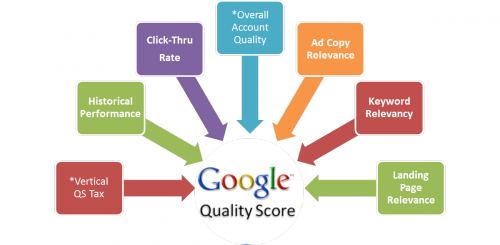
Google Quality Score Factors

According to the definition provided by Google itself: Quality Score is an estimate of how relevant your ads, keywords, and landing page are to a person seeing your ad. Having a high Quality Score means that our systems think your ad, keyword, and landing page are all relevant and useful to someone looking at your ad.
This definition may appear to be crystal clear, but very few marketers know how to deal with Quality Score. Here is a straightforward and simple guide that you can use in understanding Quality Score.

Understanding (not set) and (not provided) Keywords

Google Analytics (GA) is a tool that provides rich insights to a website promotion company as to how its paid search campaigns are doing. However, there are times that you cannot assess the quality of your campaigns because Google Analytics return (not set) or (not provided) keyword data when you extract a GA report. For a rookie website promotion company, this may be confusing and may even be used interchangeably although they are two very different concepts.

A (not set) keyword data occurs when something is missing between the GA tracking and the AdWords click. Typically, this happens with auto-tagging or when repetitive codes are found on pages or there are multiple GA accounts connected to your AdWords campaign.

Length of Display URL and CTR

An experienced website promotion company would know that a URL is not just a web address. In terms of PPC Quality Score, display URLs play a significant role, since one of the criteria used by Google to calculate for your Quality Score is the click through rates of your display URLs. Length and presentation of display URLs are critical factors as to whether searchers will click on your ad or not.

For one, Google will automatically add www to display URLs with fewer than 35 characters. Historical data will show that URLs without the www prefix get more clicks than those with the www prefix. Another not so known fact is that if you exceed the 35-character limit by two (37 characters) it is perfectly fine. Last, if you really can’t contain your URL within 35 characters, insert a few keywords so that when Google shortens it, your keywords are highlighted in the display URL. However, exercise extreme care as Google will decide how to shorten your URL. Basically, the rule of thumb is to target 35 characters without www.

The Surprise Perfect 10 and Pre-assigned Quality Scores

Getting a score of perfect 10 is every web promotion company’s dream. The excitement is equal to going viral in social media marketing services. But before you jump up and down, check for which keywords those perfect scores were given and most likely, you’ll find out that these keywords have zero impressions and zero clicks. Experts are now toying with and testing whether including “empty” keywords gets a perfect score of 10. Your ads won’t show up for these keywords. The goal is to increase the overall score for the entire campaign and raise an ad group’s eligibility for auctions.

Another crucial concept worth pointing out is that your ad groups and keywords have pre-assigned scores before you even launch your campaign and many experts have observed that most of these starting scores would be the end scores by the time a campaign is done. This particular information led PPC marketers to believe that you can actually modify your campaign’s architecture to boost your Google Quality Score even before you launch your ad campaign.

Multiple Groups for Keyword Match Type and Delaying the Use of Bid Management

Along with the campaign’s architecture, matching keyword types within ad groups can increase quality scores. To get the most impressions, it is encouraged that you use a number ad groups for all keyword match types that you want to target.

Finally, if your ad campaign is fresh and new, don’t use the automated bid management yet. Statistics will show that campaigns that were manually optimized during their early stages were more successful versus those that were introduced with the automated bid management system.

Google’s Definition of Quality Evolved

The Quality Score that every web promotion company is using today may not be the same a couple of years down the road. In fact, what Google considers as quality ad campaigns may not stand true in the near future. Who knows? Maybe social media marketing services will be closely tied into the PPC Quality Score. A lot of things can happen and the key is to always be on the lookout and satisfy whatever quality indicators there are.

Author’s Bio: The writer of this post is Deepak Gupta, who is an experienced internet marketing professional and active blogger. He is associated with a search engine optimization company in India that provides professional SEO services and takes care of the search engine marketing activities for clients.

Filed Under: Content, Links, Marketing /Sales / Social Media, SEO, Successful Blog Tagged With: bc, Google, optimization, quality score, SEO, social media marketing

How To Create Good SEO Content That Stands Strong

December 31, 2012 by Rosemary

By Carol Wales

Content

When it comes to search engine optimization, people all around the world prefer Google; It is one of the most popular and efficient search engines. Google used to favor websites that had more links to high page rank websites. In other words, a website could have a better ranking if it had more high PR links. This was considered as a vote of confidence in terms of the content of the website. Over time, there have been changes in the ranking criteria of Google; however, the prime focus is still the same – providing the best information to people. The new Google algorithm is based on quality signals and social media presence. Having informative and valuable SEO content is the key for developing a successful website or an online store. This is a tried, tested and a sure way of generating traffic and thereby driving sales.

How to create good content? Just keep these points in mind while you are creating.

Uniqueness

When you are creating content on any topic that is already present on many other websites, you must be creative with it and try to find a way of presenting this information in a unique way. Even if you see content on the same topic, research the other websites and check which points they have missed. You can incorporate new information, images and videos to enhance readability. You can also consider presenting the information in some other forum, for instance you can use an eBook instead of posting it in article directories or blogging websites. If you are operating a website, make sure it provides the most relevant information. The content can be added in the internal blog or in article directory or any other blogging website. Make sure that there is something different in the content published by you.

Right Keywords At The Right Time

Research and finalize the keywords you will be using. For creating good SEO content, it is essential to use the relevant keywords. Research commonly used keywords pertaining to your industry. You will come across many online software tools for finding new keywords. Google keyword tool is one of the most efficient tools that provides information on the global and local monthly searches of the keywords along with a wide range of keyword variations. Once you finalize the keywords, start using them in the content; however, make sure that it looks natural.

Precise

Web users normally have a short attention span. You must come up with short, precise and informative content that will hold the attention of the reader.

Headline With Keywords

Your headline is one of the strongest attributes of your content that creates the first impression in the minds of the readers. The title provides the users with an idea about what can be expected from the post. It also appears in the email newsletters, social media shares, RSS feeds and ofcourse in the search engines.

Highlight The Important Aspects

If you have written a long, in-depth article, there is no doubt that it will provide value to the users. However remember that brevity is most important. At times readers only scan pages for some important and interesting information. Highlight the crucial aspects through the use of a table of contents, headline and sub headings along with the right keywords. Preferably make use of short paragraphs so that it is easier to read.

Use Simple Language

When you are setting up a website for a global audience, using simple English is advisable so that it is easier to read and understand the information given. Also try to put yourself in the shoes of the reader so that you will know which information must be presented to them.

Accuracy

Make sure that whatever information you are providing is accurate and is up to date. If you are taking the information from somewhere, ensure that it is an authoritative resource.

Editing

Once you are done writing the article, make sure to proof read and edit it properly. If you have completed the post, do not publish it right away. Read it and give yourself time to edit it. By doing this you will be able to improve on the content further.

Including Images And Videos

An article with images and videos surely has an edge over just a plain article. When it comes to videos, add them only if you think they can provide value to the users. Images can perfectly synchronize with your post; whatever topic you are writing on, you can always find relevant images. Make sure you use high quality images that can also be viewed on mobile devices.

The content creation tips mentioned above are simple and can be implemented right away. You can count on these points in terms of creating the most impressive, efficient and readable content.

Author’s bio: Carol Wales specializes in writing on topics related to technology, search engine optimization and prominent web hosting platforms like Cloud Web Hosting, VPS and Dedicated Server UK. Her aim is to provide users with the most authentic information that can be utilized by them in the best possible way. She believes good content will always be the king and therefore she strives for the best.

Filed Under: Blog Basics, Content, SEO Tagged With: bc, content creation, keywords, SEO

Search Engine Ranking Factors: Understanding the Lingo

December 14, 2012 by Guest Author

by
Richard Soto

cooltext443809602_strategy

When it comes to the world of search engine optimization, we tend to use a lot of lingo, jargon and parlance that just doesn’t exist anywhere else. In fact, most of us don’t like these peskily arbitrary words. But without them, we would have no common language with which to ensure our sites are fully optimized, fully performing, and fully earning their weight in Web gold.

That being said, breaking into this messy world of confusing phrases can be rather difficult. In order to help you gain an initiation, we’ve compiled below a set of some of the more common search engine ranking factors, as well as what they mean for you and for semantics.

Let’s get started!

Search Engine Ranking Factors: Understanding the Lingo

On-the-Page Factors: These are those factors that are contained within the body of your content, no matter what that content may be, and are fully within your control to operate. These can be things like HTML tags, keyword densities, or even just the raw content of your site. All of this counts, and if you get the hang of it, the term on-the-page factors really does make a lot of self-explanatory sense.

Off-the-Page Factors: In comparison, these are those factors that are not controlled by you or your content. They’re typically the product of a third-party source, like a social networking site, a collection of backlinks, or even just your brand and the way that it’s perceived.

Violations: This is a very important word to understand, as it can very drastically affect the way in which your page and its content ranks. Any violations are bad violations, and if they’re left unchecked, they will seriously compromise your site’s performance. To give a definition to this word, a violations is essentially anything that a search engine sees within your content or third-party extensions that it doesn’t like. This could be something like a too-dense keyword set, or perhaps graphic content. No matter what the root, if Google or other search engines find a violation, they may black-list your site and all of its content.

Weighting: This is a more abstract sort of concept, but it’s one that’s very important in today’s SEO terms. Essentially, weighting is the practice of giving certain optimization tricks and tactics more importance than others. This is usually due to a change in the way that Google crawls websites. In essence, it’s like changing the lineup of your team before a big match. If you pick the right players for the job, they’re likely to perform well—and they’ll take the whole team up with them. It’s a complex and ever-changing idea, but it’s one that’s really quite simple at its core.

Author’s Bio:
Richard Soto is the President of VIP Realty, the premier firm in Austin Tx real estate. Contact VIP Realty for more information or visit us online for up-to-date real estate information and news. You can find him on Twitter as @viprealty

Thank you, Richard. Agreeing on the vocabulary is always the best start.

–ME “Liz” Strauss

Buy the Insider’s Guide to Online Conversation.

Filed Under: SEO, Successful Blog Tagged With: bc, LinkedIn, search engine ranking factors, search engine terms, search engine vocabulary, SEO, small business

  • « Previous Page
  • 1
  • 2
  • 3
  • 4
  • 5
  • 6
  • …
  • 16
  • Next Page »

Recently Updated Posts

Is Your Brand Fan Friendly?

How to Improve Your Freelancing Productivity

How to Leverage Live Streaming for Content Marketing

10 Key Customer Experience Design Factors to Consider

How to Use a Lead Generation Item on Facebook

How to Become a Better Storyteller


From Liz Strauss & GeniusShared Press

  • What IS an SOB?!
  • SOB A-Z Directory
  • Letting Liz Be

© 2025 ME Strauss & GeniusShared