Successful Blog

  • Home
  • Community
  • About
  • Author Guidelines
  • Liz’s Book
  • Stay Tuned

7 Reasons Business First Should Establish Expertise in a Single Segment or Vertical

April 5, 2010 by Liz

cooltext443809602_strategy

It sure seems counter-intuitive. A bigger market may seem to have more customers, but it’s also easier to get lost in.

Just choosing a smaller domain, a vertical and defining it sets a small business apart from all of the other small businesses that are trying to serve every customer on the planet and not doing much to attract any.

Becoming an expert in a small domain makes it easier to say “We’re the ones for you.” The you might be daycare centers, boomers, auto buyers, foodies, books buyers, cool apps afficiandos or exotic pet trainers — any definable group that has a group identity, talks to each other, and wants what you offer. The payoff in a smaller segment is often faster, greater, and more meaningful, especially when you start with a segment you’ve worked in, are a part of, and know intimately.

After all any small business should know what expertise it offers and be able to judge how well it is doing. It needs to know when new information is worth investigating and be able to apply it as needed.

Even the biggest brands started in one vertical … with good sense.

amazon-logo
  1. It’s easier for anyone to attain true expertise in a smaller domain or segment. Learning a single domain and it’s traditional technical basis will free you up to be creative. Learning an entire industry won’t offer the time to for mastery that breeds true innovation.
  2. The rules and procotols are more easily mastered. You get to know the conditions and the players and their positions more quickly. As, a result, you fit in more quickly and gain status faster.
  3. A smaller field of knowledge focuses your effort, concentrates your learning. Being brilliant at one thing is more valuable than being good at many — especially if many are good at the same things. People place more value folks who understand their issues intimately.
  4. It’s the best way to get your game on and get to know your customers. Mastering a smaller domain allows you to hone your skills more finely, understand nuance, recognize finer opportunities, and develop offerings that more clearly fit customer needs.
  5. Being an expert in a smaller space raises ROI. You apply the same knowledge to similar situations rather than change gears with each new client. You’re able to find ways to connect client work and research to lower your investment. Relationships go deeper and partnerships are more likely — you might share in development for different uses.
  6. A smaller pond enhances your visibility. It’s easier to see the stars in a smaller universe. You can build a network quickly and that network will stay with you and help you grow into new segments.
  7. As you gain visibility, you can extend your expertise and reach by moving into other niches and verticals strategically. With slow moves to related fields, your expertise grows exponentially. You can take on larger territory with out problems of scalability.

With those thoughts, it makes sense to start with a vertical you already know. If you were trained as a teacher or a lawyer, you might want to start near education or a law, where you already have depth and credibility. You can always overlay your marketing or social media passion on the vertical you know.

Remember when Amazon was only books?

What vertical suits the small business expert in you?

–ME “Liz” Strauss
Work with Liz on your business!!

Buy the ebook. Learn the art of online conversation.

Register Now!! for sobcon-vmc

Filed Under: Marketing /Sales / Social Media, Strategy/Analysis, Successful Blog Tagged With: bc, expetise, LinkedIn, small business

Listen … Are You Doing Enough?

March 23, 2010 by Liz

Italians, Prohibition, and Internet Strategy

cooltext443809602_strategy2

My grandmother, Liza, was born in northern Italy in 1884. She was as tall as I am. I’m not sure, but that might be why she immigrated to this new land.

When Liza arrived here at the turn of the twentieth century, she ended up in a village of about 1000 people. Almost all of them spoke Italian. Most of the men worked in nearby the coal mines. My grandma ran a saloon.

Somewhere along the line, Liza got married and had three children — my father, my uncle, and my aunt. All three grew up speaking two languages. In 1919, two things happened.

voteddrysmall
  1. The United States Congress passed the 18th Amendment, which banned the manufacture, sale, and transportation of alcohol.
  2. My dad — of course he wasn’t my dad yet — turned 12 that summer and left home.

My dad traveled about 7 days to get to the biggest town, two towns over and 30 miles away. He found a job, working as an Italian shoemaker’s helper for 50 cents a week. He found a place to live with a brother and sister who offered a room in their home. They were Italian immigrants … and bootleggers.

My first generation American worked for the shoemaker, worked in a factory, and worked in the 700-degree heat as man who silvered mirrors. He used tell stories about what he learned in every job he took. He also talked business in Italian and English at the dinner table of his landlord every night when he went home.

He never was a bootlegger, but he a learned lot from the guy who was. He used to say that had he been, we’d have been a lot richer when I was growing up. But that’s not my point. He was plenty successful as it was.

At the height of the American Depression — two more things happened.

  1. The 21st Amendment to the United States Constitution ended Prohibition on December 5, 1933.
  2. My dad and the bootlegger who became his partner opened a saloon that same day.

You might think that Internet strategy works differently. It doesn’t. The Internet is wider and faster. You don’t have to walk for days, but the people are the same.

Italian or English, Online or offline … strategy is a practical plan to use the conditions and your unique skills and position to act on opportunities as they come.

I’m sure there were lots of folks who talked about building a saloon when prohibition was over. But in that town my dad and his partner were the only ones who didn’t just talk.

Are you doing enough?

–ME “Liz” Strauss

Filed Under: Marketing /Sales / Social Media, Strategy/Analysis, Successful Blog Tagged With: bc, LinkedIn, relationships, Strategy/Analysis

THE Book on How to Reframe Your Business Strategy

January 19, 2010 by Liz

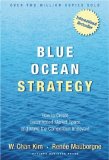
Blue Ocean Strategy

cooltext443809602_strategy

Some business books you read once and set aside or pass on. Some stay with you like a friend because from the first word you read, they made sense … almost as if you knew what they were going to say before they said it.

Great business books offer a read that

  • is seamlessly easy to follow
  • have no extraneous information to slow things down
  • add real “hit your forehead” meaning and back it up
  • and do all that in a way that satisfies and makes you want to pass on what you learned.

and the authors follow their own advice in the way they build their book.

Blue Ocean Strategy meets those criteria brilliantly.

The Blue Ocean Strategy Four Actions Framework explains how to purposefully reframe the way customers value what a business does. If you don’t know it, you’re really losing out on a key strategy to move your business into a category of one. The book explains how to …

51nojme72tl_sl160_
  • Eliminate unneeded features the industry takes for granted. Translation: what the customer doesn’t see, need, or want.
  • Reduce features and factors that are over-valued by the industry. Translation: what gets in the way of ideal customers wanting more.
  • Raise the value of what you keep above the industry standards
  • Create new features and combinations the industry hasn’t got which appeal directly to the ideal customers head and heart.

Blue Ocean Strategy is THE handbook on how to develop a unique, visible and compelling value proposition for yourself, your product or service, or your brand.

From the Amazon Review of Blue Ocean Strategy

Using dozens of examples-from Southwest Airlines and the Cirque du Soleil to Curves and Starbucks-they present the tools and frameworks they’ve developed specifically for the task of analyzing blue oceans. They urge companies to “value innovation” that focuses on “utility, price, and cost positions,” to “create and capture new demand” and to “focus on the big picture, not the numbers.” And while their heavyweight analytical tools may be of real use only to serious strategy planners, their overall vision will inspire entrepreneurs of all stripes, and most of their ideas are presented in a direct, jargon-free manner. Theirs is not the typical business management book’s vague call to action; it is a precise, actionable plan for changing the way companies do business with one resounding piece of advice: swim for open waters.

It’s going to be by my desk for a long time. Is it by yours?

–ME “Liz” Strauss
Work with Liz on your business!!

Buy the ebook. Learn the art of online conversation.

I’m a proud affiliate of

Teaching Sells

Filed Under: Strategy/Analysis, Successful Blog Tagged With: bc, Blue-Ocean-Strategy, game changers, LinkedIn, trust agents

10 Crucial Roles of a Social Media Director

December 28, 2009 by Liz

What Sort of Expertise Does a Social Media Expert Need?

cooltext443809602_strategy

Social Media Marketing budgets are on the rise. It’s been said that as many as 86% of Companies are planning a Social Media Marketing Bump this year. And social media job listings aren’t so hard to find anymore.

In 2010, a new job role of Social Media Director became quite the thing. It was given many names and a wide range of job descriptions. Although on a whole we humans have gotten good at being social, those in social media roles need more than expertise with online tools to lead a company’s direction successful on the social web.

Now, years later, we realize that any role on a social media team is about change: changing relationships, changing technology and change management in times of every more rapid change.

10 Crucial Roles of a Social Media Director

Macro and micro businesses get stuck in process models that they’ve outgrown, but keep using. Fear of change, love of past success, bias that interprets history in our favor leads us to repeat and re-imprint bad or outdated behaviors in our organizational brains.

To pull that off, a social media director needs to be role model, leader, learner, teacher, guide, friend, entrepreneur, but even more than that. If you want a company to embrace the social web, champion these ten roles as an action plan …

  1. be a role model … listen first; communicate authentically; don’t control the conversation (and choose wisely those you refer)
  2. become a fan … fall in love with the brand and its customers to protect its heritage and legacy
  3. be a follower … get to know the people who work there to find the champions and learn how the culture moves, learns, and thinks
  4. be about ROI …. study the business to protect it financially
  5. be a connector … work toward open silos so they communicate internally at light speed
  6. be inclusive … enlist marketing and PR to help build a strong, consistently authentic voice between the business and its customers
  7. be strategic … write a strategic plan of goals and measurements based on customers that naturally support growing product offers, strategic relationships, and the customer base
  8. be focused … choose online tools, tests, and tactics after you have the goals
  9. be innovative … integrate social business online and off
  10. be a community builder … make it look easy, fun, and meaningful

If you look inside those ten points you’ll see that the job really calls for about ten roles — strategist, change manager, brand manager, a marketing manager, a community builder, a campaign manager, a cheerleader, a business developer, a corporate trainer, and a social media professional who can use quantifiable social media data, tools, and measurements.

Last night, 1700+ Retweeted a Mashable Post about the 15,740 social media experts on Twitter. I can’t help but wonder whether all 15,740 are up to all ten of them.

Bet you see even more roles and action steps that I’ve left out. I’d love you to add your additions here.

–ME “Liz” Strauss
Work with Liz!!
Buy the Insider’s Guide. Learn how to write so that the Internet talks back!

I’m a proud affiliate of

Teaching Sells

Filed Under: Strategy/Analysis, Successful Blog Tagged With: bc, LinkedIn, social business, social-media, Strategy/Analysis

Stop Thinking Poor – Start Irresistibly Growing Your Business

November 30, 2009 by Liz

relationships button

No one does it on purpose. Who would? Why would they? Yet I’ve seen it. I see it now. Something negative happens. People hit a wall with their business. They pull back, retreat to safer ground to protect what they have. They question their commitment, their strategy, their decisions. This sort of risk mitigation can be a good thing

The problem happens when we start thinking poor.

Is Thinking Poor Managing Your Business Down the Drain?

7343_plug_down-the-drain

Whenever an unexpected life event, the economy, or kismet puts a hitch in our giddyup, it’s a natural response to question how we got where we are. Panic or just sheer exhausted frustration can lead us to believe our thinking was wrong from the start, that it’s time to change direction and save what we’ve got before we lose it all.

That’s thinking poor. Thinking poor leads us to throw away the good things without seeing them and to increase our chances of following them down into that hole. Some great examples of poor thinking include:

  • slashing the marketing budget across the board … reaching fewer customers won’t grow the business
  • discounting prices for unlimited periods … customers who value us only for discounts will leave when they’re gone
  • reducing services … just tells customers we don’t value them at the time we need them most
  • raising prices … passing on our pain to our customers doesn’t win their loyalty

We’ve seen plenty of examples of ways businesses think poor. Thinking poor is a reaction based in fear and weakness.

Great businesses work from strength, strategy, and commitment. We evaluate where we are, what got us here, and how we might adapt to keep moving forward. To do that we go back to the original strategy and check every premise to see which are still vibrant and which no longer work in the new environment. Here are some questions to help you do that.

  • Which parts of our old strategy still truly brings us closer to our customers? Which parts no longer work in the current market?
  • Which are our most robust markets? Who are our most reachable customers? How can we celebrate them and make them heroes?
  • What do those customers value about our products? How can we find out what they wish we would leave out of our offer? How can we invite them to help make our business stronger?
  • What small, high-value enticements might we add to our current offer that would get new customers to try us and entice old customers to try us again?
  • How might we repackage what we’ve offered before so that it becomes a new and vibrant offer for a market of customers that has already shown interest in what we are doing?
  • How can we invest more in skills, services, and learning how to get closer to what our customers want?

Each of these questions is centered in becoming more intimate with the people, the customers, who grow our business.

Delivering service, product, and value to customers by listening to those who are nearest to us is the fastest way to grow a thriving, stable business.

And it’s more fun than thinking poor …

What are you going to do today to start growing your business?

–ME “Liz” Strauss
Work with Liz on your business!!

Buy the ebook. Learn the art of online conversation.

I’m a proud affiliate of

Teaching Sells

Filed Under: Marketing /Sales / Social Media, Strategy/Analysis, Successful Blog Tagged With: bc, LinkedIn, Marketing /Sales / Social Media, social business, Strategy/Analysis

Why You Should Be Involved In Twitter While Having Your Own Blog?

September 22, 2009 by Guest Author

Blogging is fun! I started blogging casually since 2001, moving into my own domain name in 2004, and then decided to blog professionally on my own blog since June 2007.  For some reason or what, I checked out the traffic behavior of my blog.  I have come to realize that the traffic’s up and down has very much to do with the activity that I am doing inside and outside my blog.  The reason is very simple:  I started off without any traffic, hence I need to bring in the traffic!

Many ways to bring in the traffic

While you are blogging, you have unknowingly attracted crowd from the search engines.  You may have also attracted people to link to your attractive articles.  Or, you could have linked to an attractive blog post from a stranger, which caused a trackback link from that stranger’s blog.  Technically speaking, your blog posts are helping themselves to bring in the traffic. However, blogging alone is not enough.  You need to do more things to reach out to the untapped market out there waiting for you.  There are two ways you can do it.

  1. You can spend money to bring in the traffic.
  2. You can spend time to bring in the traffic.

By the way, I’m sorry to tell you that you have no choice but to choose “spend time to bring in the traffic” because I am going to talk about Twitter very soon. 🙂

Using social media to bring in the traffic.  It’s free! But it takes effort.

So far as I know of, the only way to reach out to the untapped market with a single cent is to participate in social media.  Because that’s the only way we can put in our information almost freely.  The social media website owners are more than happy to welcome you to introduce your sites to the visitors.  This is social media’s way of sustaining their businesses.

By the way, blogging is also a form of social media where people can comment on your blog and maybe providing links to their website.

Participating in the social media is all about building your own community who follows your thought leadership.  There are so many different social media websites out there of all kinds.  Well, it will be perfect if you can spend enough time to participate in all of them!  However, all of us  have less than 24 hours a day.  Hence, choosing one or two major social media is sufficient enough!  Or else, you may not be able to build a strong community supporting your thoughts. And I will strongly recommend you to participate in twitter as your first choice of building your strong community.

Why Twitter, and not other social media?

With more and more bigger players jumping into this large whale of tweets, Twitter is definitely a social media not to be taken lightly with.

Twitter has also matured over time.  I can still remember making my first few tweets and there is nobody listening to me.  I virtually have no local friends who can follow me on twitter.  I started to look out for the big names like Robert Scoble on Twitter.  I can still remember I can even chat with him back then.  Now, it’s so hard with so many people trying to talk to him on Twitter.  Back then, retweet was eventually invented by someone who just want to share a tweet he has seen.  It came in various forms such as “RT @charleslau the message”, “The message (via @charleslau)”, “Retweet the message (from @charleslau” and many more.  In fact, it is becoming more or less standardized now to be just “RT @charleslau the message”.

twitter-logoBecause Twitter is based on a very simple 140 characters, it turned out that there are a lot of growth to expand in Twitter because it provides a lot of API to leverage on to expand into different types of third party webwares.  As such, if you can establish your strong followers in time, you will soon be able to leverage on the future expansion that Twitter potentially has with many smart Social Media entrepreneurs out there! So far as I know, Twitter can be used show pictures, sound and links to your followers.  Some others even use Twitter to monitor certain things such as their health status, sleeping patterns, and even track what a plant wants to twitter about! With all the various tools establishing and more to come, your only goal today is to build a strong community around a certain topic which relates back to your blog!

How is Twitter linked to your blog?

While you may still be establishing your blog presence to the world, twitter is a good place to be more personal and to build your community with.  It’s like asking your interested visitors to subscribe to your blog posts, or even to subscribe to your newsletter via email.  Twitter is yet another form of establishment that you will want to work it out as you will learn and grow with this community.  Chances of them visiting your website is very high because they like you through your tweets!  Let’s see how you can start off by connecting yourself in Twitter…

Connecting yourself in Twitter

Twitter is indeed a whole new world out there where you are basically trying to woo more people into your own blog.  However, the methodology must be set properly.  First of all, you must not have the mentality of “What’s in it for me” in the twitter environment.  In twitter, it can be like micro-blogging where you get comments about your tweets.  It can also be like a chat room where you get to socialize with strangers (and of course your good old friends included). Let’s see some bad examples here:

  1. If you try to tweet the same message consistently over time, I can tell you safely that I will be the first one to unfollow you!  I am in Twitter to enjoy myself, while you are out there to hard sell me something!
  2. If you are caught tweeting affiliated links consistently as well, I will surely unfollow you!  It is so irritating to see affiliated links so many times.  Yes, I know you want to make money online… Can you just be more personal and talk to me with no money attached?
  3. Can you not be so robot?  There are some twitter accounts which are basically bots.  They do nothing but to churn out contents after contents.  If these contents are verified properly, I probably won’t mind to follow you so that I can retweet the benefits to my followers!  But if you are basically controlled by keywords, I will surely unfollow you!  That’s because keyword filtering is not always accurate.  I will rather follow people who are more human, and are willing to tweet quality stuff!

Now let’s see some good examples:

  1. If your twitter account is very clear about your topics, I will follow you because it’s part of my passion and beneficial to my followers.  You basically tweet really good stuff that it will not be good for me if I miss them!
  2. If you are really friendly to me, I would love to talk to you.  For that duration of chat, you can be really shocked that people may want to follow both of you just to listen to the conversation that they are interested in.
  3. Retweeted messages are very powerful.  They basically help me to transfer my friends’ tweets to my followers without much effort on my part other than just reading.  And because of the attraction in this tweet, it will just get retweeted a couple of times.  This will increase your followers pretty significantly.
  4. Tell your followers that you have just blogged a new post! We’ll love it!  Look! A chance to connect your blog to twitter.
  5. Do up your own Twitter wallpaper.  It really helps in your brand building for your overall business and eventually for your blog.

Conclusion

I wish to clarify that social media is definitely not going to be helpful to you if you are consistently looking out to make quick money out of it.  Social media is here to have fun!  It’s only with the more hardcore fans, they are more willing to spend some money to get a better deal!  Treat twitter as a brand awareness exercise for yourself.  Do everything that you can to get connected with the media with no strings attached.  Very soon, everybody will connect your blog and your twitter account as one brand! In other words, Think of what you can do to the social media, instead of what social media can do for you!

How has Twitter added to your blog?

This post was written by Charles. He has been an Internet reviewer since June 2007.  He pours his passion for Internet marketing and Internet branding into his Twitter account actively at @charleslau,

Filed Under: Marketing /Sales / Social Media, Personal Branding, Strategy/Analysis, Successful Blog Tagged With: bc, LinkedIn, social-media, Twitter

  • « Previous Page
  • 1
  • …
  • 13
  • 14
  • 15
  • 16
  • 17
  • …
  • 48
  • Next Page »

Recently Updated Posts

Is Your Brand Fan Friendly?

How to Improve Your Freelancing Productivity

How to Leverage Live Streaming for Content Marketing

10 Key Customer Experience Design Factors to Consider

How to Use a Lead Generation Item on Facebook

How to Become a Better Storyteller


From Liz Strauss & GeniusShared Press

  • What IS an SOB?!
  • SOB A-Z Directory
  • Letting Liz Be

© 2025 ME Strauss & GeniusShared