Successful Blog

  • Home
  • Community
  • About
  • Author Guidelines
  • Liz’s Book
  • Stay Tuned

What Influence Could Push You to the Magic that Is Missing?

January 6, 2010 by Liz

cooltext443794242_influence

It’s old news and I think we all know …

If we’re not adding value, we’re taking it away.

So we’re busy adding value, doing great things, working, building, being productive. We want to get on with what we know how to do well. We do something that adds to the big thing and it gets bigger and better.

Somewhere near every one of us is someone who thinks differently. He or she is smart as we are, but has different experience or a different view of how things work. He wants to add his own extra value. She has reasons to care and contribute. He might not know the process, the culture, or the traditions. One’s a coworker. One’s a customer. One’s a big brand client.

Most come with a job. We have to include them.

The temptation often is to move forward. Try to ignore them or keep them from the core of things. Add our value and show them when we’re done. That makes it hard for even the most collaborative and curious to find the right way to join in.

But what if we invite them? What if we ask these different thinkers to sit beside us, to invest in our quest and be part of the process?

They’ll bring ideas, thoughts, and opinions. They’ll influence what we’re doing. They will challenge our assumptions. People who think differently make us uncomfortable … and that can make communication and progress seem a lot slower.

The more different we find someone’s experience and thinking, the more we should consider his or her questions and reasoning. It’s the best safety net and idea test in the population. We love and understand our own thinking. Agree with the guy who thinks unlike us and we’ve got something hot cooking.

That difference — in their experience, how they see things, and how they do things — is added value we might be overlooking. That influence could the the one thing that pushes us to add the magic that was missing.

When do you invite a different influence to be part of what you’re doing?

–ME “Liz” Strauss
Work with Liz on your business!!

Buy the ebook. Learn the art of online conversation.

I’m a proud affiliate of

Teaching Sells

Filed Under: Marketing /Sales / Social Media, Motivation, Successful Blog Tagged With: bc, influence, LinkedIn, social web

Can Corporate Jets Help Aircraft Carriers Adapt to the Social Web?

January 5, 2010 by Liz

It’s a Metaphor and a Challenge

cooltext443809674_ideation

When I worked for a small publisher turning itself around, we were well aware of the disadvantage our size in terms of visibility, offer, and reach. Still we felt we were on the winning side, because we had advantages the corporate publishers had lost just because they had gotten big.

A friend of mine used to say, “It takes a long time to turn an aircraft carrier. Corporate publishers have the same problem. We’re like a Seafox, small but quick.”

It looks the same for small business and corporations on the social web.

  • Corporations have more structure. Think of the set relational culture and history of huge corporations. Think organizational structure and traditions.
  • Corporations have more to lose. Think stakeholders, stockholders, and financial histories. Think protecting reputation and market share that is huge.

Small business can focus, move, and respond quickly. A change of thinking and a few new people can change the culture in a few breaths. Communication is faster, so education is too. Could that be why smaller business is adapting more quickly to the social web?

But then, I keep thinking, “Aircraft carriers also transport jets.”

aircraft_carrier


Here’s the challenge:
Put your imagination to the test …

What sort of “corporate jet” can help corporations adapt to the social web?

–ME “Liz” Strauss
Work with Liz on your business!!

Buy the ebook. Learn the art of online conversation.

I’m a proud affiliate of

Teaching Sells

Filed Under: Marketing /Sales / Social Media, Successful Blog Tagged With: bc, ideation, lateral thinking, LinkedIn

14 Keys to a Community that Builds Your Business for You

January 4, 2010 by Liz

Last summer at AdTech, a VP at huge corporate brand extended her arms completely — way out in front her — and used her hands to gesture as she said something close to this about her goal for building a community:

I want to build a community in which peers are talking to peers openly.

I’m sure she didn’t mean it the way it looked … Her hands were so far away from her. — or sounded … peers talking to peers?

cooltext443809437_relationships

I couldn’t help thinking … Where will YOU be? Studying me? Is that what you think of me? I’m not a peer. I’m a person. I only do well in places where people “get” me.

Users. Consumers. Buyers. Customers. Leads. Eyeballs. Peers. Those are faceless, flattening labels. They come from the time of one-size-fits-all.

People are individual human beings complete with aspirations, intentions, ideas, opinions, habits, behaviors, thoughts, and emotions.

Which community would you join?

More Communities and More Time for Them

Online social communities aren’t a new thing. People have been linking and sharing via blogs since the 20th century. Organized social networking sites, such as Twitter, Facebook, MySpace, and LinkedIn have become a part of our lives.

Our communities are becoming more about communicating and being creative about what interests us. It’s all about making it relevant to the people we want to attract.
We’re participating more. We’re spending more time in communities. We’re building more of them. How do attract people to the communities we’re building that are perfect for them?

14 Keys to a Community that Builds Your Business for You

A building is not a business. A community is not a collection of profiles or a page on Facebook. People won’t visit our community because it’s pretty. People come because it offers them something they value.

If they value what you offer enough, those same customers will lend their heads, hearts, and hands to helping your business grow. They’ll not only help you build your business, but they’ll also protect it.

What attracts and creates a community that will do that?

From two people to more than plenty, a community is a social structure that shares personal values, cultural values, business goals, attitudes, or a world view. What binds it is a culture of social rules and group dynamics that identify members. In the most concise terms, an online social community is a group of like-minded individuals connected by relevant interactions and protected by a high-trust environment.

A high-trust community is an agreement, a pact or contract, like love or friendship. We can’t order, build, or wish our way to one. What we can do is attract people who want to join what we’re doing. The only way to do that is clear passionate commitment, obvious generosity, trustworthiness, and a touch of intentional serendipity … which looks something like this.

  1. Be a person (or people) who likes people. People work with, talk with, and relate to other people not a business.
  2. Articulate a clear and passionate vision worth investing in. Live your commitment. Get your hands dirty.
  3. Seek out people who would love what you’re doing. Find them where they are already gathering and talking. Join THEIR conversations. Get to know them.
  4. Be a beginner, but keep the vision. Learn from everyone who’s been anywhere near where you’re going. Learn to sort wrong from unexpected or different. Ideas that jar you could be the best ones.
  5. Invite everyone who “gets” the vision to help build this new thing. Look for ways to include their skills and their passions.
  6. Keep participation efficient and easy. Curb the urge to add cool things that get in the way of conversation and sharing.
  7. Let trust sort things. Model the standards of behavior. Keep rules to a minimum.
  8. Be visible authenticity. Lean toward full disclosure, but avoid over-exposure. Most of us look better with our clothes on.
  9. Protect everyone’s investment. Forgive mistakes. Ignore little missteps. Eradicate what is destructive. Know the difference by holding thing up to trust, values, and the community vision.
  10. Stop doing what isn’t working. Be lethal about keeping things easy, efficient, and meaningful.
  11. Promote your members … and honor your competition! Secure communities need both to thrive and get new ideas.
  12. Encourage mutation. Let the environment change to meet the changing needs of the people it serves.
  13. Celebrate contagion. Make it heroic to share what’s going on!
  14. Be grateful and always about the people. The community wouldn’t be a community without them.

An online community isn’t built or befriended, it’s connected by offering and accepting. Community is affinity, identity, and kinship that make room for ideas, thoughts, and solutions. What Is a Social Community?

It’s not “If You Build It, …”

We create vibrant, high trust community by letting other folks raise the barn with us, by being their first offering trust and a passionate vision, and valuing the trust and energy they give us.

It’s not if you build it, they will come. It’s if they build it, they’ll bring their friends.”

What attracts you to a community? What keeps you coming back again?

-ME “Liz” Strauss
Work with Liz on your business!!

Buy the ebook. Learn the art of online conversation.

Filed Under: Community, Successful Blog Tagged With: bc, Community, LinkedIn, Marketing /Sales / Social Media, social-media

A 12-Step Strategy to Fit Your Blog into the Social Web

December 31, 2009 by Liz

How Does a Blog Fit into All of This?

cooltext443809602_strategy1

Once upon a blogosphere, people on the web connected and talked through text, audio, and video, linking from blog to blog. That linking made a community of people who were related by content and conversations on those same blogs.

Then about 4 years ago, the blogosphere got interested in social media tools. Microblogs and social networks were new ways to reach out, connect, and talk. The blogosphere was evolving …

  1. As the blogosphere grew up, some members stood out. They were fluent, proficient, had abilities as practitioners and teachers. Their subscriber lists grew faster. Their voices were heard first and sounded louder. People started looking up to them. Smaller groups formed around what they said.
  2. As the blogosphere grew out, some members built new tools, new sites, and new communities. The businesses offered new things to do, new places to meet, to ways to interact. People looked out for others who even more like themselves. We had new choices. The larger community split off into more like-minded groups.

The effect has been that the community has diversified into smaller groups and spread out. The conversation is bigger, but it’s no longer concentrated on our blogs. The new sites and communities, the speed, mobility, and breadth of the tools attracted even more people to the check out this social web community.

Some of these folks found that they could be a part without having a blog.

Millions of people are spending their time on the social sites. They will out their many profiles with a to Facebook or LinkedIn. The commitment is lower and requires less editing.

How does a blog fit into all of this?
Having a blog was a having a home in that community — a place people could visit, get to know you, engage with you and your ideas.

It still does.

In fact, a blog is even more foundational. Have you noticed how noisy the Internet is? When people visit our blogs they can come in from the huge noise of the larger conversation stream. A blog can offer a respite. They get room to breathe and a chance to share a larger thought. But it’s time to step back, think strategically, and adapt to how people act now. Habits have changed.

According to PostRank study from 2007 to 2009 which followed 1000 of the most engaging feeds, they found:

  • 30% more people are engaging in the social web
  • less than 50% of that engagement is happening on blogs … it’s moved to social sites.
  • trackbacks linking blogs have dropped from 19% to 3%
  • Twitter, Friendfeed, and Facebook and other social sites have gone up from less than 1% to over 29%
  • Blog posts have a longer life-span. In 2007, 98% of the engagement occurred in the first HOUR. In 2009, only 36% of the engagement takes place in the first DAY.

Unless you’ve just started blogging, you’ve probably noticed some of that — fewer visitors than last year, how the conversation has moved away from the comment box to the social sites. But you might have missed how quickly more people are coming or that our post are lasting longer and reaching farther.

That calls for a serious new strategy as the Blogosphere evolves into the Social Web.

A 12-Step Strategy to Fit Your Blog into the Social Web

1208134_new_year_2010

Your blog numbers might be down, but the engagement in what you do and think could be growing exponentially. The bloggers and blogs that do well offer outstanding and meaningful content that is in tune with where folks engage naturally and easy to read and share with their friends.

Here are 12 Steps to consider to refit your blog to the Social Web.

  1. Mark your place … Find the tools you need to measure where your blog is today. Some include: Google Analytics, Woopra, Quantcast.com, Alexa.com, Technorati.com PostRankAnalytics,and Compete.com Identify and track information so that you have a historical marker.
  2. Do Reconnaissance … Use the tools and study conditions to find where your main audience spends their time. Look beyond Twitter, Facebook, and LinkedIn. Find the niches. Learn their habits. Starter tools include: Google Alerts, Search.twitter.com, addictomatic.com, and topsy.com Internet’s Largest Twitter Tools Resource List.
  3. Watch, Listen, and Make Alliances … Be constantly aware of what other people are doing. Ask for help. Turn great conversations into content. Invite savvy bloggers to write guest posts on topics they know more about.
  4. Clarify Your Identity / Message … Who are you and what do you talk about? In this fast-paced trust economy, people want to instantly who you are. Design and content need to say who you are. Does your design look like everyone else’s? Content is the main context of your web identity. It establishes your authority and your expertise. Google loves new content to index. People love new ideas.
  5. Define a Consistent Workable Plan … Identify 4-8 key niche topics you’ll write about and 4-8 types of blog posts you favor. You might make a blank monthly grid with the types across the top and the topics down the side. Even a loose plan — one that allows you to respond to new ideas and unexpected events in your area of expertise — will make the blogging work more predictable to you and more accessible to your readers.
  6. Use Best Practices … Save time by brainstorming several ideas first and later writing several drafts at one time. Then, you’ll have “almost ready” blog posts captured when you need them. Link out, cite, and promote others at least 6 times more than you promote your own work. Understand when sharing your work is passing on value and when it’s being a pain.
  7. Test Constantly … When and where will you publish? How often? Which days? Which time of day works for your audience? Should it be more or less than one a day?
  8. Mind the Details … Write outstanding headlines over outstanding content. Take more time than ever before making sure your ideas are sound and attractive. Target them to your niche. Loyal fans will see, read, and share.
  9. Network and Connect … Plan time at social sites and commenting on other blogs. Divide that time between people who do what you do and your ideal customers. Start conversations online and off. Be interested and interesting. Look for reasons to offer a hand.
  10. Innovate New Forms … Try a “Twitter trackback.” When you reply to a reader’s comment, take the link back to him or her. A quick tweet saying, @ReaderX I answered your great comment [link] promotes the reader as well as your reply.
  11. Feed the Content Community … Write content and answer questions wherever your readers are. Engage people where they are. Don’t hide all of your ideas and expertise on your blog. As Google starts indexing more social sites, this can only work better and better.
  12. Invite People Home … Constantly add resources and repackage content to readers to explore your archives again. When it’s appropriate, invite people back to see other things you’ve written or to make sure they don’t miss something they’ve said they need.

Having a blog is even more important now that the blogosphere is evolving into the Social Web. Blogs still offer the place where we can “go deep,” expressing thoughts with clarity and conviction, where we can talk and engage under our own terms of service. A power strategy can leverage your blog to grow your web presence, your business, and your brand.

What other strategies are you using to fit your blog into the Social Web?

–ME “Liz” Strauss
Work with Liz on your business!!

Buy the ebook. Learn the art of online conversation.

I’m a proud affiliate of

Teaching Sells

Filed Under: Blog Basics, Marketing /Sales / Social Media, Successful Blog Tagged With: bc, blogging, blogging-tools, business-blogging, engagement on blogs, How-to-Blog, LinkedIn, small business, tools of engagement

Is Influencer Marketing Limiting You?

December 29, 2009 by Liz

We Limit Ourselves When We Limit Our Words

cooltext443794242_influence

—
UPDATE:
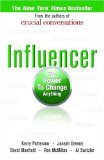
What is an influencer? Traditionally it has meant someone or something with psychological and social power to motivate change …

41xhu5sfuml_sl160_

—-

These days the word, influencer, has become almost a proper noun. Use it in the social media world and we assume that it tags a person who has a close relationship to folks we want to reach and the word, influence, has become an active verb, something we do …

When we talk about influencers in the social media space what we’re really talking about is influencer marketing … looking for people who have an advantage, authority, the agency to cause others to act.

51hf4kbjol_sl160_ 41owvvpembl_sl160_

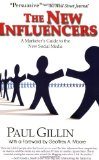
Influencer marketing is a form of marketing that has emerged from a variety of recent practices and studies, in which focus is placed on specific key individuals (or types of individual) rather than the target market as a whole. It identifies the individuals that have influence over potential buyers, and orients marketing activities around these influencers. —Wikipedia

If we check with folks and references who live off the Internet, influence has a much larger definition than that. Think about “driving under the influence of alcohol” and you’ll get grounded again. People who get folks to buy are not the only influencers at work in our world. And for every influencer / person we would like to move, someone or something is influencing us to choose them too. Here are a few influencers we don’t talk about enough.

  • Overheard conversations and subliminal aggregations of things we hear
  • Conditions in our environment, such as energy, time, resources
  • Assumptions in our thinking, including bias, curiosity, and ignorance
  • Emotional attachments we don’t suspect or those we have strong commitments to
  • Genetic disposition, such as fear or self-preservation
  • Our unique experiences, memories, and skills which shape our entire world view
  • The individual wiring of our brains and our cognitive processing
  • Books, movies, ideas, music, art, conferences, seminars, educational events
  • Compelling stories, even advertisements

Influence is what we allow to move our actions and thoughts. It’s all around us and available to explore in ways that provoke new thoughts and experiences. We limit ourselves and our thinking when we limit our words.

We limit our marketing by limiting how we define influencer too. Great strategy looks farther and deeper than that.

What influences you?

–ME “Liz” Strauss
Work with Liz!!
Buy the Insider’s Guide. Learn how to write so that the Internet talks back!

I’m a proud affiliate of

Teaching Sells

Filed Under: Business Book, Business Life, Successful Blog Tagged With: bc, business, influencers, LinkedIn

10 Crucial Roles of a Social Media Director

December 28, 2009 by Liz

What Sort of Expertise Does a Social Media Expert Need?

cooltext443809602_strategy

Social Media Marketing budgets are on the rise. It’s been said that as many as 86% of Companies are planning a Social Media Marketing Bump this year. And social media job listings aren’t so hard to find anymore.

In 2010, a new job role of Social Media Director became quite the thing. It was given many names and a wide range of job descriptions. Although on a whole we humans have gotten good at being social, those in social media roles need more than expertise with online tools to lead a company’s direction successful on the social web.

Now, years later, we realize that any role on a social media team is about change: changing relationships, changing technology and change management in times of every more rapid change.

10 Crucial Roles of a Social Media Director

Macro and micro businesses get stuck in process models that they’ve outgrown, but keep using. Fear of change, love of past success, bias that interprets history in our favor leads us to repeat and re-imprint bad or outdated behaviors in our organizational brains.

To pull that off, a social media director needs to be role model, leader, learner, teacher, guide, friend, entrepreneur, but even more than that. If you want a company to embrace the social web, champion these ten roles as an action plan …

  1. be a role model … listen first; communicate authentically; don’t control the conversation (and choose wisely those you refer)
  2. become a fan … fall in love with the brand and its customers to protect its heritage and legacy
  3. be a follower … get to know the people who work there to find the champions and learn how the culture moves, learns, and thinks
  4. be about ROI …. study the business to protect it financially
  5. be a connector … work toward open silos so they communicate internally at light speed
  6. be inclusive … enlist marketing and PR to help build a strong, consistently authentic voice between the business and its customers
  7. be strategic … write a strategic plan of goals and measurements based on customers that naturally support growing product offers, strategic relationships, and the customer base
  8. be focused … choose online tools, tests, and tactics after you have the goals
  9. be innovative … integrate social business online and off
  10. be a community builder … make it look easy, fun, and meaningful

If you look inside those ten points you’ll see that the job really calls for about ten roles — strategist, change manager, brand manager, a marketing manager, a community builder, a campaign manager, a cheerleader, a business developer, a corporate trainer, and a social media professional who can use quantifiable social media data, tools, and measurements.

Last night, 1700+ Retweeted a Mashable Post about the 15,740 social media experts on Twitter. I can’t help but wonder whether all 15,740 are up to all ten of them.

Bet you see even more roles and action steps that I’ve left out. I’d love you to add your additions here.

–ME “Liz” Strauss
Work with Liz!!
Buy the Insider’s Guide. Learn how to write so that the Internet talks back!

I’m a proud affiliate of

Teaching Sells

Filed Under: Strategy/Analysis, Successful Blog Tagged With: bc, LinkedIn, social business, social-media, Strategy/Analysis

  • « Previous Page
  • 1
  • …
  • 135
  • 136
  • 137
  • 138
  • 139
  • …
  • 190
  • Next Page »

Recently Updated Posts

Is Your Brand Fan Friendly?

How to Improve Your Freelancing Productivity

How to Leverage Live Streaming for Content Marketing

10 Key Customer Experience Design Factors to Consider

How to Use a Lead Generation Item on Facebook

How to Become a Better Storyteller


From Liz Strauss & GeniusShared Press

  • What IS an SOB?!
  • SOB A-Z Directory
  • Letting Liz Be

© 2025 ME Strauss & GeniusShared